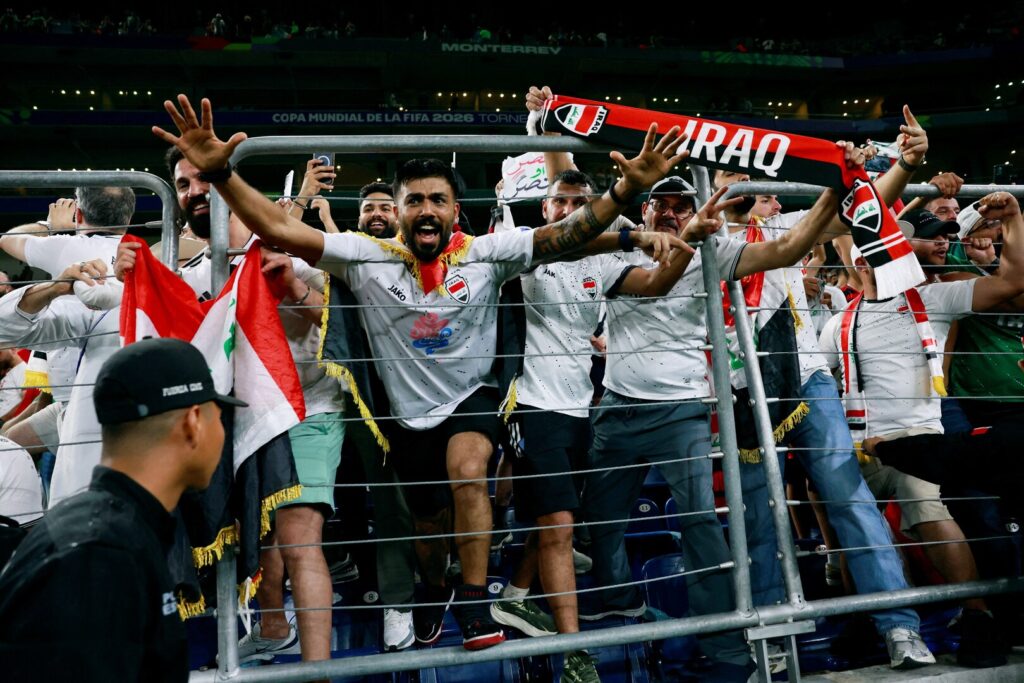
FILE PHOTO: Soccer Football - FIFA World Cup - Inter-Confederation Playoffs - Final - Iraq v Bolivia - Estadio Monterrey, Monterrey, Mexico - March 31, 2026 Iraq fans in the stands celebrate after qualifying for the FIFA World Cup REUTERS/Daniel Becerril/File Photo
Iraq’s historic qualification for the FIFA World Cup after more than 40 years is a moment of immense national pride and joy. The Iraqi team’s success has ignited celebrations across the country and among Iraqi communities worldwide. However, despite the triumph on the field, many Iraqi fans are facing significant challenges in traveling to the United States to witness their team compete.
The root of these difficulties lies in the stringent US visa policies that apply to Iraqi citizens. These rules have made it extremely difficult for Iraqi fans to obtain travel visas, thereby preventing many from attending the World Cup matches held in the United States. This situation has sparked disappointment and frustration among fans who view the tournament as a rare opportunity to support their national team on the global stage.
For Iraq, qualifying for the World Cup is a monumental achievement, considering the country’s tumultuous history, including decades of conflict, instability, and economic hardship. The journey to qualification has been filled with obstacles, yet the team’s resilience and determination have paid off.
However, the irony remains that while the team has broken barriers on the pitch, the nation’s supporters face virtual barriers due to immigration policies. Many Iraqi families who have long dreamed of uniting in support during the World Cup now see those dreams slipping away because of visa denials or prolonged application processes.
Fans have voiced their concerns and called on both the US authorities and FIFA to find solutions that can help facilitate travel for Iraqi supporters. Social media campaigns and public appeals have highlighted personal stories of fans who have been unable to secure visas despite meeting all application requirements.
Experts suggest that while national security is crucial, there should be provisions or special considerations in place for major international sporting events to allow fans from countries with restricted visa statuses to attend.
The US, as the host nation, has a unique responsibility to balance security concerns with the spirit of inclusivity that global sporting events promote. Easier access for fans could foster better cultural understanding and goodwill.
Meanwhile, Iraqi fans are making alternative plans to watch the matches locally or through broadcasts, but the absence of a live cheering crowd from Iraq in the stadiums is a somber reality.
This situation underscores a broader conversation about how immigration policies can inadvertently dampen the global unity and joy that events like the World Cup are meant to inspire.
As Iraq’s national team prepares to compete on the world stage, the hope remains that the spirit of the game can transcend borders and political challenges, inspiring hope and unity among Iraqis and football fans everywhere.