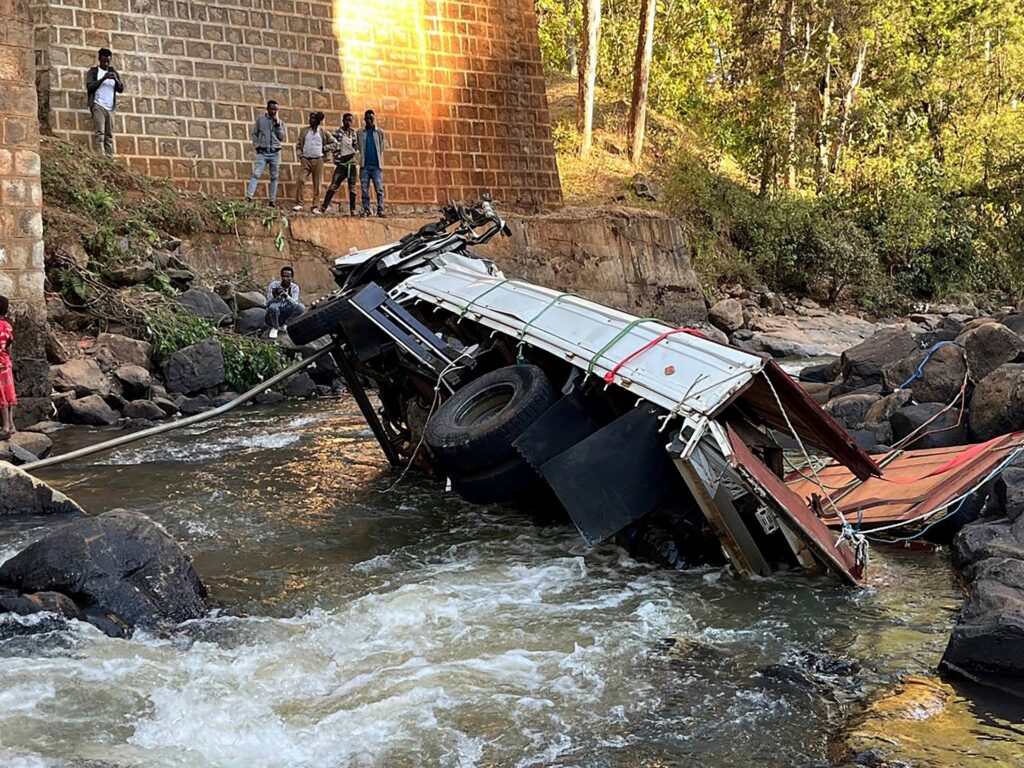
A tragic bus crash occurred in the mountainous region of Ethiopia, resulting in the deaths of at least 31 people. This devastating accident highlights the ongoing issues with road safety in Ethiopia, which is known to have some of the most dangerous roads globally.
Ethiopia’s challenging terrain, combined with inadequate road infrastructure and often poorly maintained vehicles, makes road travel perilous. The country has long struggled with high rates of traffic accidents, which are a leading cause of injury and death.
The bus was reportedly navigating a narrow, winding mountain road when it veered off course and crashed, causing numerous fatalities and injuries. Emergency crews were dispatched quickly, but the severity of the crash left little chance for many passengers to survive.
Authorities have launched an investigation into the causes of the accident, focusing on vehicle condition, driver behavior, road conditions, and whether any safety protocols were violated. Local officials have expressed condolences to the families affected and vowed to enhance road safety measures to prevent future tragedies.
This incident once again sheds light on the urgent need for improved transportation infrastructure and stricter enforcement of traffic safety regulations in Ethiopia. Investment in road safety education, better road design, and maintenance, as well as vehicle inspections, are crucial steps toward reducing the number of deadly accidents on Ethiopian roads.
Road traffic accidents remain a significant public health issue in Ethiopia, with rural and mountainous areas being particularly vulnerable due to difficult terrain and limited access to emergency services. Authorities and international partners are encouraged to collaborate on comprehensive strategies to improve road safety.
The loss of life in this accident is a somber reminder of the risks faced by travelers in Ethiopia and underscores the importance of continued efforts to make roads safer. The Ethiopian government is urged to prioritize infrastructure development and implement robust safety protocols to protect its citizens and visitors alike.