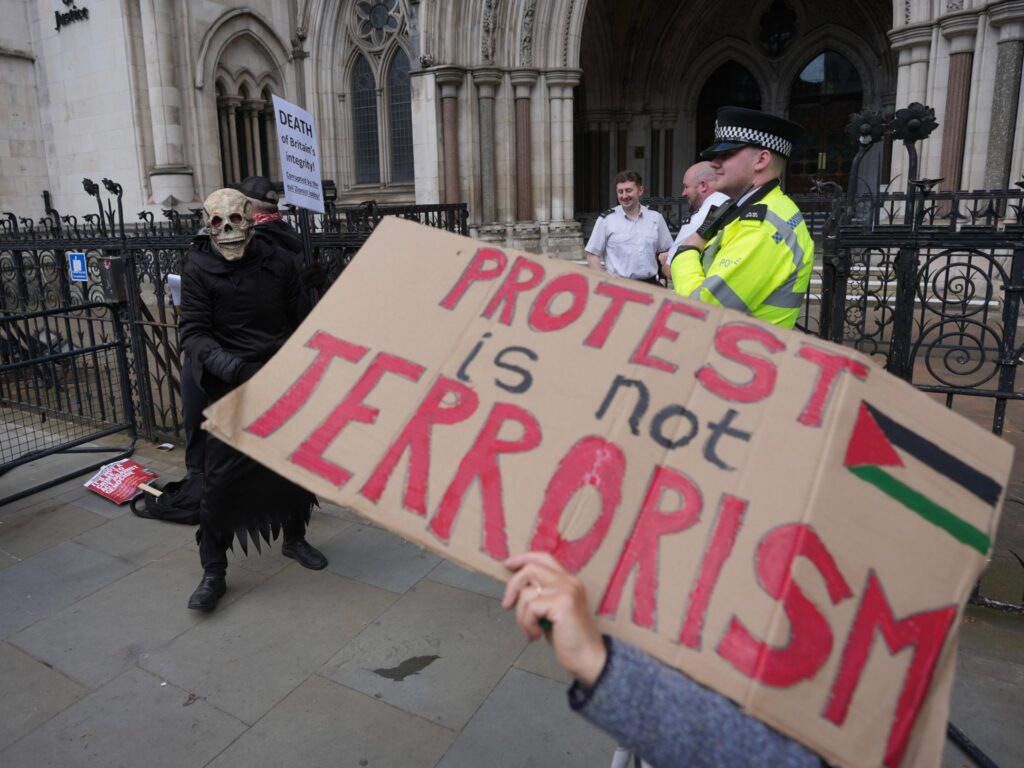
The Court of Appeal in the United Kingdom has upheld the government’s decision to ban the activist group Palestine Action, officially designating it as a ‘terrorist’ organization. This ruling marks a significant development in the UK’s approach to political activism, particularly concerning groups involved in the Israel-Palestine conflict.
Palestine Action has been known for its direct action campaigns, which the group claims are non-violent protests aimed at opposing arms manufacturing and supporting Palestinian rights. However, the UK government and the courts have taken a starkly different view.
According to the Court of Appeal’s judgment, the group’s methods and behavior did not align with that of a peaceful, non-violent direct action organization. Instead, it was considered to engage in conduct that falls under terrorism legislation. This includes disruption, intimidation, and damage, which the court determined were systematic and serious enough to warrant the label of a terrorist group.
The case centered around the balance between the right to protest and the need to protect public safety and national security. While protest and activism remain foundational democratic rights, the government argued and the court agreed that there is a threshold where such actions cross into criminal and terrorist behaviors.
This judgment is likely to have profound implications for other activist groups using direct action tactics. It signals a hardening stance by UK authorities against groups they perceive as threatening public order under the guise of political activism.
Critics of the ruling argue that it stifles legitimate dissent and could criminalize peaceful civil disobedience. Activists worry that the decision could be used to suppress voices advocating for Palestinian rights, framing complex political conflict in a security context.
Supporters of the ban contend that it is necessary to prevent violence and maintain law and order, arguing that any group employing intimidation or damage, regardless of their political motivations, undermines social cohesion and safety.
Palestine Action had conducted several high-profile protests targeting arms factories and companies supplying weapons to Israel. These demonstrations often involved occupying sites and causing operational disruptions, which authorities cited as examples of unlawful conduct.
The Court of Appeal’s decision confirms the government’s power to proscribe organizations whose activities are deemed to involve terrorism, emphasizing the importance of safeguarding national security while balancing civil liberties.
This legal precedent could impact future cases involving activist groups, framing how courts assess the line between civil disobedience and criminal activity. It highlights the ongoing challenges faced by democracies in managing protest rights within complex security environments.
Overall, the ruling reaffirms the UK government’s commitment to combating terrorism in all forms, including those emerging from politically motivated groups engaged in direct action protests.