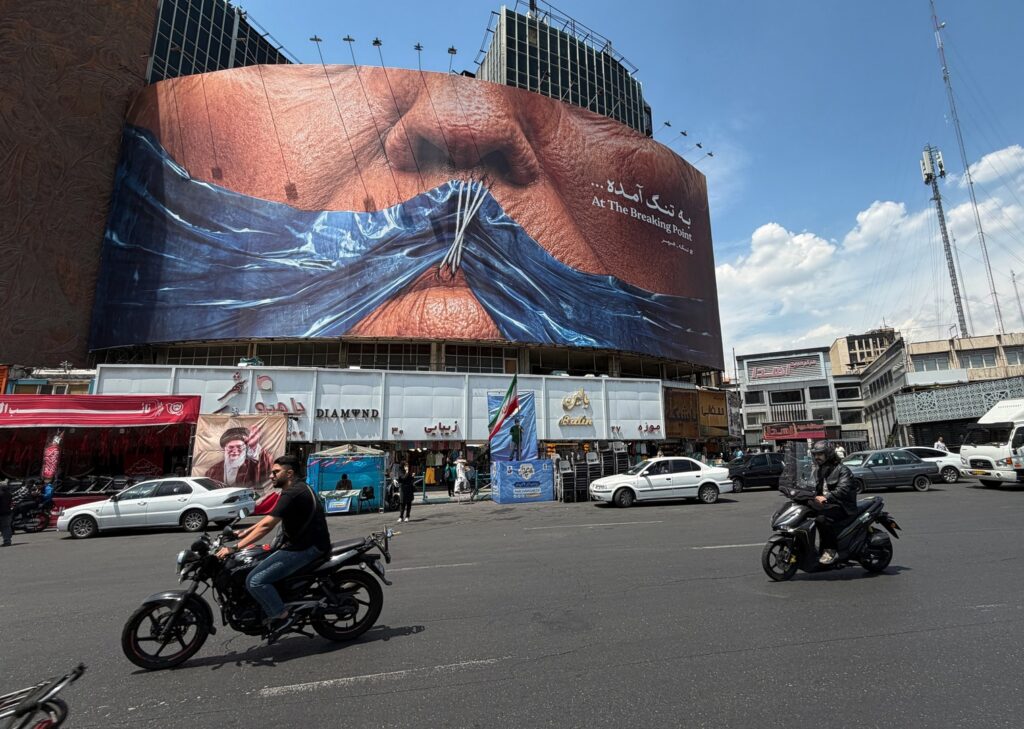
Vehicles drive past a billboard with graphic showing Strait of Hormuz and sewn lips of U.S. President Donald Trump in a square in downtown Tehran, Iran, Saturday, May 2, 2026. (AP Photo/Vahid Salemi)
In a groundbreaking development, the United States and Iran have jointly announced a memorandum of understanding aimed at ending the ongoing hostilities and reopening the strategically crucial Strait of Hormuz. This announcement marks a significant diplomatic breakthrough amid years of tension and conflict between the two nations.
The Strait of Hormuz is one of the world’s most vital waterways, serving as a passage for a substantial portion of the global oil supply. Its closure in recent times due to conflict has had severe implications on international trade and energy markets, creating instability and heightened geopolitical risks.
The memorandum signifies a mutual commitment to cease military engagement and work collaboratively towards peace and stability in the region. Both countries have expressed their intention to rebuild trust and resume diplomatic dialogue, aiming to pave the way for long-term peace initiatives.
According to officials involved in the negotiation, the agreement includes provisions for monitoring compliance with the ceasefire and ensuring safe navigation through the Strait. International observers are expected to play a role in overseeing these measures to foster transparency and confidence between the parties.
The announcement has been welcomed by international leaders and organizations who have long advocated for peaceful resolutions in the Middle East. Experts suggest that this could lead to a reduction in regional tensions, opening avenues for economic cooperation and improved security.
While the details of the memorandum remain confidential, the US and Iran have pledged to work through diplomatic channels to address other outstanding issues that have historically fueled conflict. Analysts emphasize that this step could be the beginning of a new era in US-Iran relations and might influence broader Middle Eastern geopolitics.
The impact of this agreement extends beyond these two nations, as it is likely to stabilize global energy markets and reassure investors concerned about supply disruptions. The reopening of the Strait of Hormuz ensures the smooth flow of oil and gas, critical to the world economy.
Despite the optimism, challenges remain. Both sides are aware that maintaining this understanding will require ongoing commitment, negotiation, and mutual respect to prevent future escalations. The international community will be watching closely to support the implementation and sustainability of the agreement.
In summary, the US-Iran memorandum of understanding represents a hopeful step toward ending conflict, restoring a vital trade route, and promoting peace in a region often marked by turmoil. This diplomatic milestone underscores the potential for constructive dialogue even after prolonged periods of hostility.