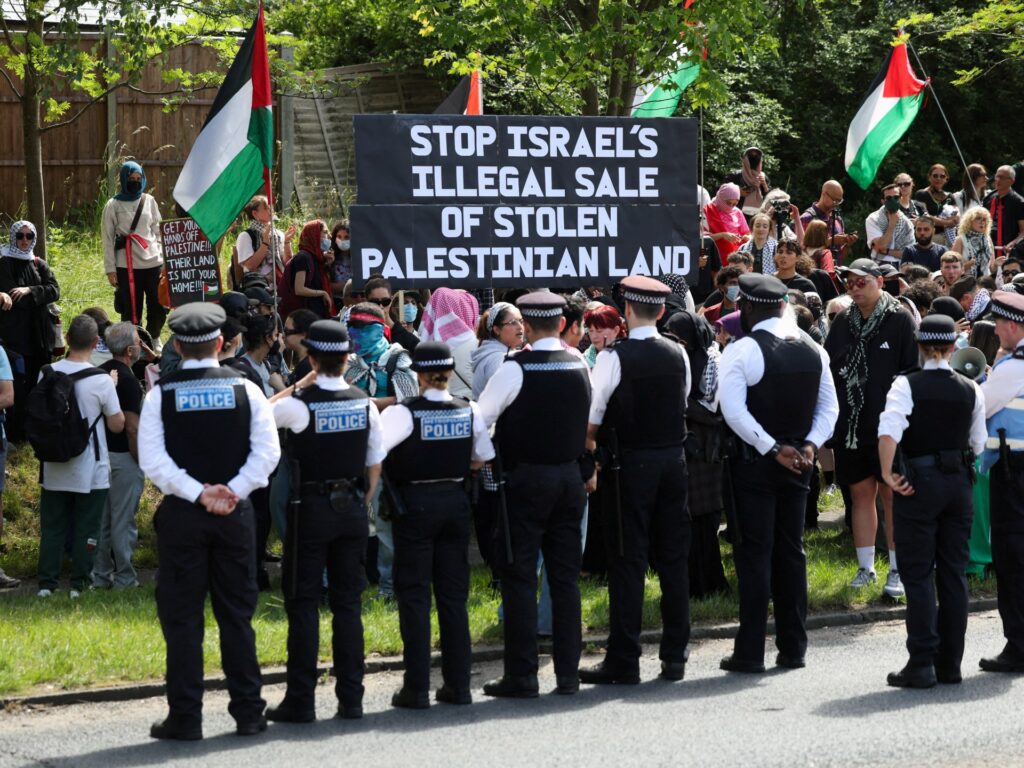
A wave of protests erupted in London as demonstrators gathered to denounce an event promoting the sale of land and properties in Israeli settlements. Activists and human rights groups condemned the event, labeling it a blatant violation of international law and a threat to peace in the Middle East.
The controversial event was organized to facilitate transactions involving land in Israeli settlements, which are widely considered illegal under international law, particularly the Fourth Geneva Convention. These settlements are located in territories occupied by Israel since the 1967 Six-Day War, including the West Bank and East Jerusalem.
Protesters accused the event organizers and participants of undermining efforts to achieve a fair and lasting peace between Israelis and Palestinians. They argued that promoting the sale of settlement land not only infringes upon Palestinian rights but also emboldens further expansion of these settlements, complicating peace negotiations.
Demonstrators held signs and chanted slogans such as “No to illegal settlements” and “Stop the occupation,” demanding that governments and international bodies take stronger stances against such activities. Many pointed to numerous United Nations resolutions that have condemned settlement construction and related land sales.
Human rights organizations involved in the protest emphasized that transactions involving settlement properties amount to complicity in a system that violates Palestinian human rights. These groups called for increased global pressure on both the Israeli government and companies facilitating these sales.
The London event organizers defended their gathering by describing it as a legitimate business forum, emphasizing private property rights. However, critics were quick to dismiss these claims, stating that under international law and numerous judicial rulings, settlements and the associated land sales are illegal.
Historically, the establishment of Israeli settlements has been at the center of the Israeli-Palestinian conflict, with millions of Palestinians displaced or restricted due to settlement expansion. The sale of such land exacerbates tensions, undermining prospects for a two-state solution.
The United Kingdom government faced calls from various political figures and advocacy groups to condemn the event and to reinforce its commitment to upholding international law. Some politicians urged more tangible actions to halt trade and investment linked to illegal settlements.
This protest in London is part of a broader international movement opposing Israeli settlement policies. Similar demonstrations have taken place in cities worldwide, reflecting growing global concern over the ongoing expansion of settlements and their impact on peace and human rights.
As this issue continues to unfold, the international community remains divided, with some countries vocal in their opposition to settlement activities and others more supportive or neutral. The controversy around land sales in these settlements underscores the complexity and urgency of achieving a peaceful resolution to this decades-long conflict.
The protestors vow to continue raising awareness and lobbying for policy changes aimed at ending illegal land sales and promoting justice and peace in the region.