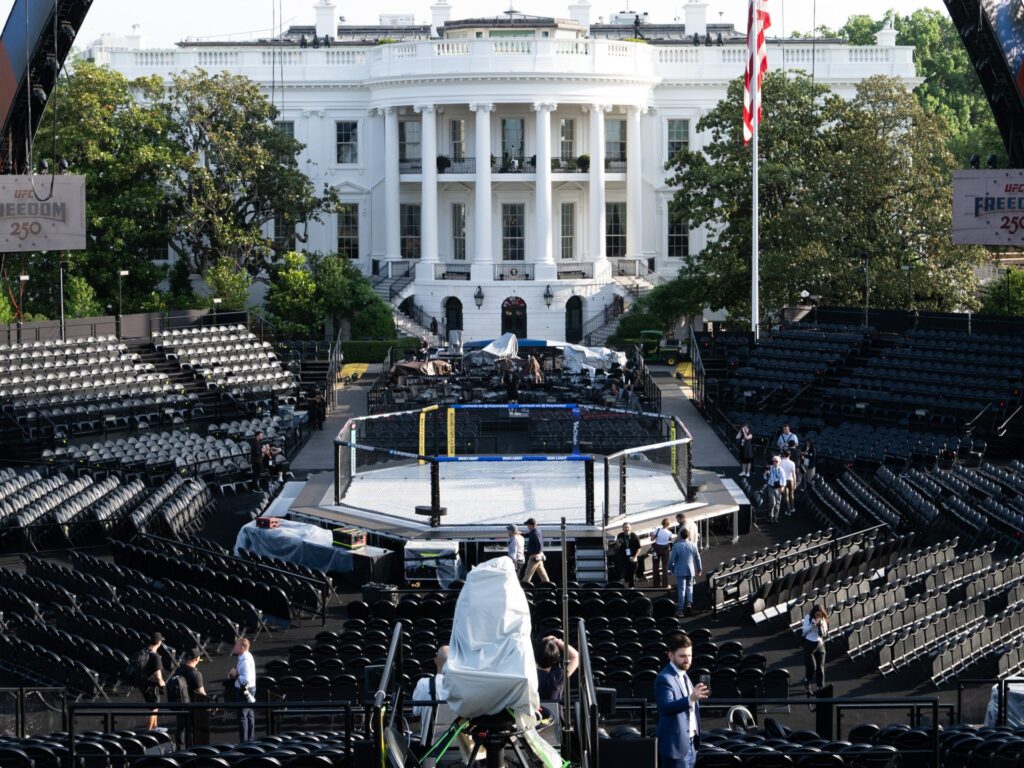
In a unique blending of politics and entertainment, Donald Trump has effectively turned combat sports, particularly MMA, into a potent political weapon. The latest MMA event held under Trump’s influence is not just a sporting spectacle but a vivid reflection of a career deeply intertwined with professional fighting and showmanship. Trump’s journey from the boardroom to the Oval Office has been marked by an unconventional embrace of combat sports, using the appeal and drama of fighting to galvanize political support and reshape public narratives.
The Oval Office octagon is more than just a ring for fighters; under Trump, it has become a stage where political messages are delivered through the visceral energy of combat sports. This approach leverages the raw emotion and cultural resonance of MMA to connect with a wide audience, particularly younger demographics that might be disengaged from traditional political discourse. Trump’s strategy capitalizes on the spectacle and primal nature of combat sports to evoke strong emotional responses, aligning his political persona with strength, tenacity, and a no-nonsense approach.
However, this fusion of MMA and politics is not without its risks. Critics argue that using combat sports as a political tool blurs the lines between entertainment and governance, potentially trivializing serious political discourse. There are concerns over the possible polarization such spectacles can cause, as well as the overshadowing of substantive policy discussions. The spectacle risks reducing politics to a form of gladiatorial combat, focusing more on spectacle than substantive dialogue.
Trump’s deep ties to professional fighting events date back several decades, with business ventures and promotional activities that have often intersected with his political ambitions. By hosting and endorsing MMA events, he taps into a passionate fan base and a cultural phenomenon that celebrates competition, resilience, and confrontation. This ethnic appeal has served to solidify a loyal constituency that identifies with the combative, unyielding image Trump projects.
While the political use of combat sports has been innovative, it remains a double-edged sword. The powerful symbolism of the octagon, combined with the gritty nature of MMA, can motivate supporters but also alienate moderate voters and stimulate backlash from opponents who view this strategy as circus politics. The event’s reception highlights the ongoing debate about the role of spectacle in modern political campaigns and the increasingly blurred boundaries between popular culture and governance.
In conclusion, Trump’s transformation of the MMA arena into a political battleground underscores a broader trend in contemporary politics: the rising influence of entertainment and cultural phenomena in shaping political landscapes. As this approach evolves, it will be crucial to monitor its impact on political engagement, public discourse, and the overall health of democratic processes. The Oval Office octagon symbolizes this new frontier, where the combative spirit of MMA mirrors the fierce competition and high stakes of modern political life.