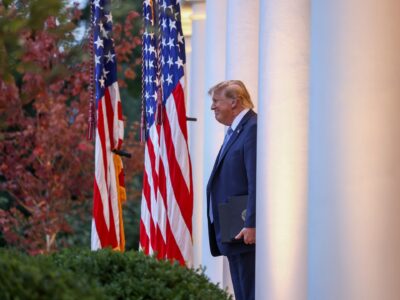
Former U.S. President Donald Trump recently made headlines by claiming that the United States successfully eliminated a key leader of Venezuela’s notorious Tren de Aragua gang. The Tren de Aragua gang, a powerful and violent criminal organization originating from the Venezuelan state of Aragua, has been notorious for its extensive illicit activities, including drug trafficking, kidnapping, extortion, and other forms of organized crime that have deeply destabilized parts of Venezuela and beyond.
Trump’s announcement sparked considerable attention and controversy. According to his statements, the U.S. government conducted an operation aimed at neutralizing the leadership of the gang, citing the threat that such criminal organizations pose to regional security and to U.S. interests. Although specific details about the operation were not disclosed, Trump emphasized that the targeted strike was successful and marked a significant blow to the overall influence of Tren de Aragua.
The Tren de Aragua gang is known to have expanded its operations outside Venezuela, extending its reach into neighboring countries and forging alliances with other criminal networks. This expansion has increased violence and instability, contributing to a broader regional security crisis. Experts have pointed out that taking out the gang’s leadership could disrupt its operational capabilities, but also caution that such groups often quickly adapt to leadership losses by promoting new figures who may be equally ruthless.
Venezuela’s government has not officially confirmed the incident, and details remain scarce. However, the U.S. claim underscores the ongoing strategic and security challenges in the region, highlighting the role that transnational criminal organizations play in undermining governance and fueling violence.
The claim also reignites debate on U.S. interventionist policies in Latin America. Supporters argue that such decisive actions are crucial to fight crime, drug trafficking, and terrorism that affect both Latin America and the United States. Critics, meanwhile, warn against potential sovereignty violations and the unintended consequences of armed interventions.
The Tren de Aragua gang, established roughly a decade ago, has grown from a local prison-based gang into a full-fledged transnational crime syndicate. Their influence has infiltrated political, economic, and social spheres in Venezuela, with dire consequences for civilian populations trapped in areas under their control.
International agencies, including U.S. and regional law enforcement, continue efforts to dismantle these kinds of organizations. Cooperation between countries is deemed essential to effectively combat cross-border criminal enterprises such as Tren de Aragua.
The U.S. claim of having killed a Tren de Aragua leader is an indication of a more assertive stance against organized crime groups that threaten stability in Latin America. As investigations and intelligence are followed up, more information may emerge on the impact and legitimacy of the operation.
Meanwhile, human rights organizations urge caution and transparency to ensure that such operations respect international law and minimize harm to civilians.
In summary, Trump’s announcement about the killing of a Tren de Aragua leader by the United States has reignited discussions about the fight against transnational gangs, the role of U.S. involvement in Latin America, and the broader struggles for peace and security in the region. The situation remains fluid, with many awaiting further confirmation and analysis from officials and independent observers.