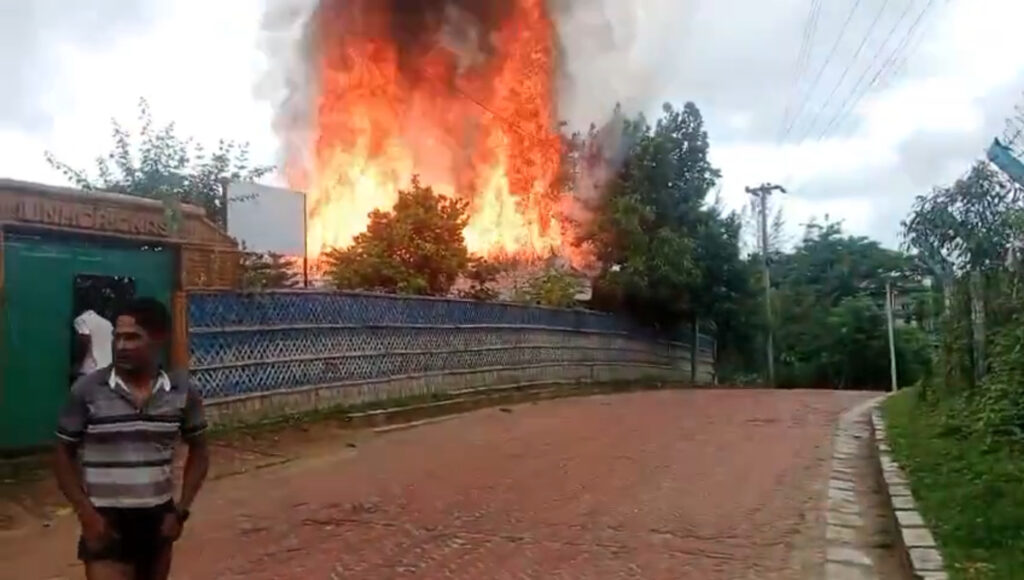
A devastating fire has engulfed the Kutupalong refugee camp in Bangladesh, recognized as the world’s largest refugee settlement. This catastrophic blaze has caused widespread destruction and left thousands of displaced individuals in urgent need of assistance.
Kutupalong camp, situated in southeastern Bangladesh, hosts over 700,000 Rohingya refugees who have fled persecution and violence in neighboring Myanmar. The camp has long been a critical shelter for this vulnerable population, providing a semblance of safety albeit under challenging living conditions.
The fire reportedly broke out suddenly, spreading rapidly through the densely packed makeshift shelters. The camp’s narrow pathways and highly flammable structures, predominantly made of bamboo and plastic sheeting, exacerbated the situation, making containment extremely difficult for emergency responders.
According to eyewitness accounts, the fire started late in the afternoon and quickly expanded, destroying thousands of homes and communal facilities. Smoke billowed across the camp, turning day into night and prompting frantic evacuation efforts.
Local authorities, firefighting teams, and international aid organizations immediately mobilized resources to combat the blaze and assist survivors. Despite their efforts, the sheer scale of the fire presented significant challenges in terms of containment and rescue operations.
Initial assessments indicate substantial damage to infrastructure, including shelters, water sources, food distribution points, and sanitation facilities. These losses pose serious risks to the health and well-being of the refugee population.
Humanitarian groups have expressed deep concern about the displaced residents, many of whom are now without homes, belongings, or access to essential services. Authorities are prioritizing temporary shelter, medical care, and provision of basic necessities for those affected.
This fire accentuates the vulnerabilities inherent to refugee camps where overcrowding and inadequate infrastructure can turn emergencies into tragedies. Experts warn of potential outbreaks of diseases due to compromised sanitation and limited clean water.
In response, international agencies called for an urgent scale-up of humanitarian assistance, emphasizing the need for long-term strategies to improve living conditions and prevent future disasters in the camp.
The Bangladesh government reaffirmed its commitment to support the refugee community while coordinating with global partners to address immediate relief needs and plan reconstruction efforts.
As the smoke settles, the focus shifts to recovery and rebuilding. The resilience of the Rohingya community remains crucial as they face yet another daunting challenge in their quest for safety and dignity.
This tragic event underscores the broader crisis of forced displacement in the region and highlights the urgent necessity for concerted international action to protect and assist vulnerable refugee populations worldwide.