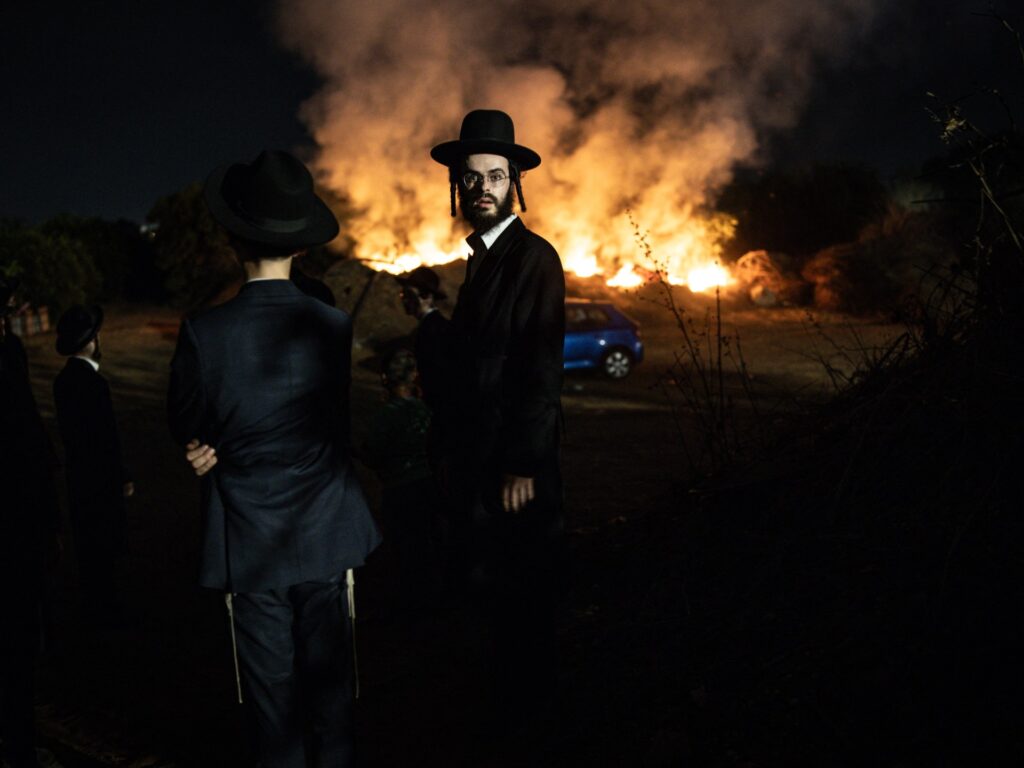
Violence has intensified in Israel as protests against the military draft of ultra-Orthodox Jews escalate, stirring significant unrest across the nation. These demonstrations have not only heightened tensions on the streets but also threatened to destabilize Israel’s fragile coalition government and dramatically reshape the country’s political landscape.
The core of the unrest revolves around the mandatory conscription of ultra-Orthodox Jewish men into the Israeli Defense Forces (IDF), a policy that has been a point of contention for decades. Traditionally, many in the ultra-Orthodox community have been exempt from military service, allowing them to focus on religious studies. However, recent government moves to increase enlistment among this group have sparked widespread protests.
Protesters argue that the draft infringes on their religious freedoms and lifestyle, leading to large, often chaotic rallies in major cities. These protests have sometimes turned violent, resulting in clashes with police and military personnel. Several injuries and arrests have been reported as law enforcement attempts to maintain order.
The political fallout from the protests is significant. Israel’s coalition government, which includes parties with both secular and religious agendas, is under immense pressure. The ultra-Orthodox parties, key members of the coalition, are divided on the issue, with some advocating for stricter adherence to exemptions and others supporting the draft reforms.
Analysts suggest that this divisiveness could trigger a governmental crisis or even early elections if a compromise is not reached. The debate over military service cuts across broader societal fault lines in Israel, touching on questions of equality, national identity, and the role of religion in public life.
Meanwhile, the impact of the protests extends beyond political corridors. Business operations in affected areas have seen disruptions, and public sentiment is growing increasingly polarized. Many Israelis support the idea of equal service obligations for all citizens, while others sympathize with the religious community’s stance on preserving their traditional exemptions.
This period of turmoil presents a critical juncture for Israeli society. The government’s response in the coming weeks will likely play a decisive role in defining the country’s approach to military service and its broader social cohesion.
As Israel navigates these turbulent times, the international community watches closely, recognizing the potential consequences these internal disputes may have on regional stability and the nation’s strategic future. The resolution of this contentious issue will be pivotal in shaping Israel’s social and political trajectory in the years to come.