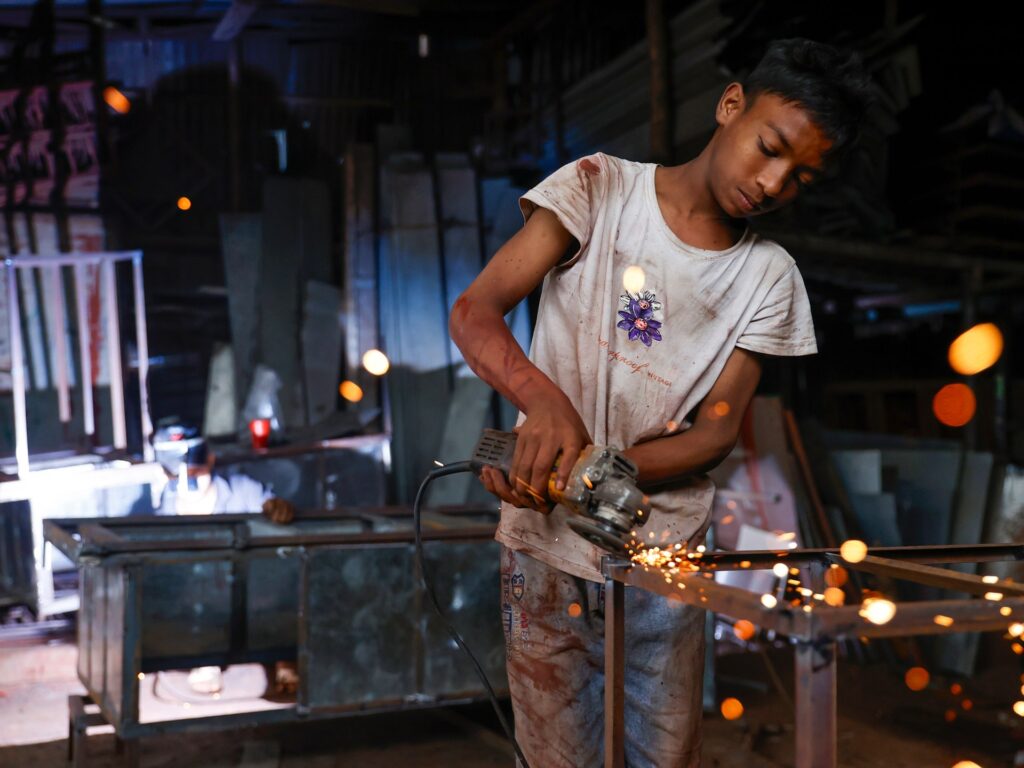
On the World Day Against Child Labour, the spotlight is once again on a grave global issue that affects millions of children around the world. According to recent statistics, approximately one in every seventeen children worldwide is engaged in child labour. This alarming figure highlights the ongoing challenge of protecting children from exploitation and ensuring their right to education and a safe childhood.
Child labour remains a widespread problem fueled by poverty, lack of access to education, conflict, and economic instability. Children are often pushed into work at a very young age, depriving them of the chance to learn, grow, and enjoy their childhood. Addressing this issue requires a deep understanding of the industries that commonly rely on child labour and contribute significantly to its prevalence.
Agriculture is the largest sector employing child labourers globally. Many children work alongside family members on farms, often involved in planting, harvesting, and tending livestock. In some regions, children are exposed to hazardous conditions, such as the use of harmful pesticides or heavy machinery. This not only endangers their physical health but also impedes their educational opportunities.
Another major sector is mining and quarrying. Children, particularly in developing countries, work in dangerous environments extracting minerals such as gold, diamonds, and cobalt. The conditions are often unsafe, with risks of injury, respiratory problems, and long-term health issues. These children usually work informal hours, without protection or adequate pay.
The manufacturing industry also employs a significant number of child labourers, especially in textiles and garments. Many children work in factories that produce clothing, footwear, and other manufactured goods, often under poor working conditions. The pressure to meet high demands and low costs drives some companies to exploit child workers.
Additionally, the service sector — including domestic work, street vending, and hospitality — also relies heavily on children in many regions. These jobs are often informal and unregulated, putting children at risk of abuse, exploitation, and neglect.
Efforts to combat child labour have included international agreements like the International Labour Organization’s (ILO) conventions, national laws, and grassroots movements focused on education and poverty alleviation. However, progress is uneven, and the COVID-19 pandemic has further exacerbated vulnerabilities by pushing more children into labour due to economic hardships.
The global community must intensify efforts to eradicate child labour by targeting the root causes such as poverty, lack of education, and weak enforcement of labour laws. Businesses have a responsibility to ensure ethical supply chains free from child labour. Consumers can also play a role by supporting brands that commit to fair labour practices.
On World Day Against Child Labour, it is crucial to remember that every child deserves a childhood free from exploitation. Only with coordinated efforts from governments, civil society, businesses, and individuals can the tide be turned against child labour, securing a safer and more just future for millions of children worldwide.