The United States has launched attacks on multiple locations in Iran following the downing of a US Apache helicopter in the Strait of Hormuz. The assault targeted key sites including Qeshm Island, Sirik, Jask, and Bandar Abbas. This military action escalates tensions dramatically in the already volatile Gulf region.
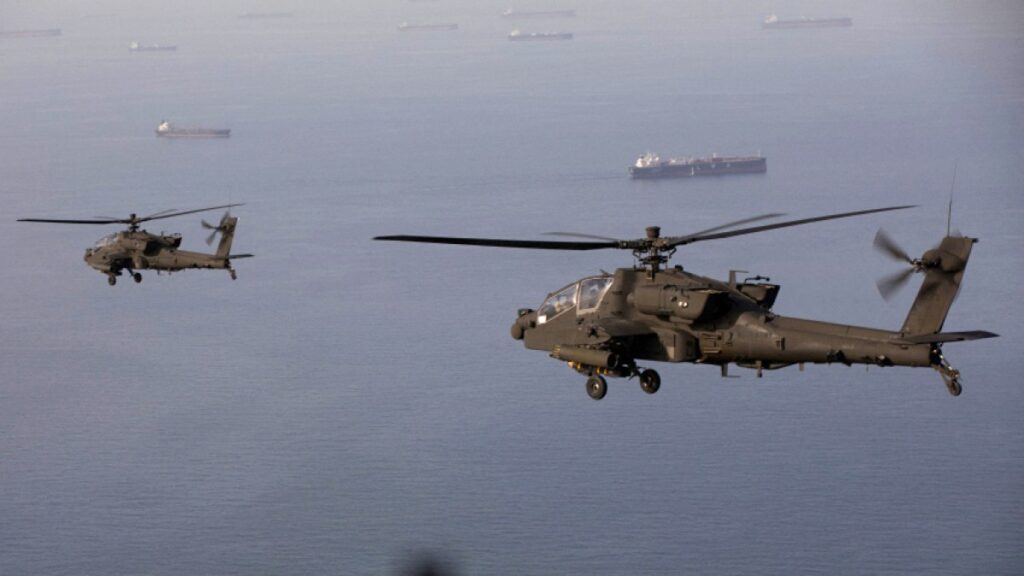
The incident began when a US Apache helicopter was reportedly shot down near the critical maritime passage of the Strait of Hormuz, a vital artery for global oil shipments. The US government swiftly attributed the helicopter’s downing to Iranian forces, prompting President Donald Trump to publicly blame Tehran for the attack.
In response, US military forces carried out precision strikes on Iranian military installations across the said locations. The choice of targets appears to be strategic, aiming to diminish Iran’s military capabilities and assert US presence in the region.
Qeshm Island, known for its strategic maritime position, suffered significant blasts. Similarly, the cities of Sirik and Jask, which are important port areas along the Strait, were hit. Bandar Abbas, a major Iranian port city and military base, also experienced bombings.
This move marks a significant escalation in the confrontation between the United States and Iran, highlighting the fragile security environment in the Persian Gulf. Iran, on its part, has condemned the US attacks, vowing retaliation and escalating the threat of further military conflict.
The international community has expressed grave concerns over the potential for this regional conflict to expand, affecting global oil markets and international stability. Many countries have called for restraint from both parties and urged diplomatic solutions to defuse the situation.
The downing of the Apache helicopter is seen as a serious provocation, with the US viewing it as an unprovoked act of aggression. Meanwhile, Tehran has disputed US claims and accused Washington of destabilizing the region.
The Strait of Hormuz remains a flashpoint for tensions due to its strategic importance and the frequent military posturing by multiple nations. The recent incidents underscore the risks of miscalculation that could lead to a broader conflict.
As the situation develops, all eyes are on the responses from Iran and the US, with the potential for further military operations and diplomatic engagement. The geopolitical stakes are high, with regional allies and global powers closely monitoring the unfolding events.
This recent US strike on Iranian targets is a serious development in an ongoing saga of rivalry and conflict, reflecting the complexities and dangers of contemporary Middle Eastern geopolitics.