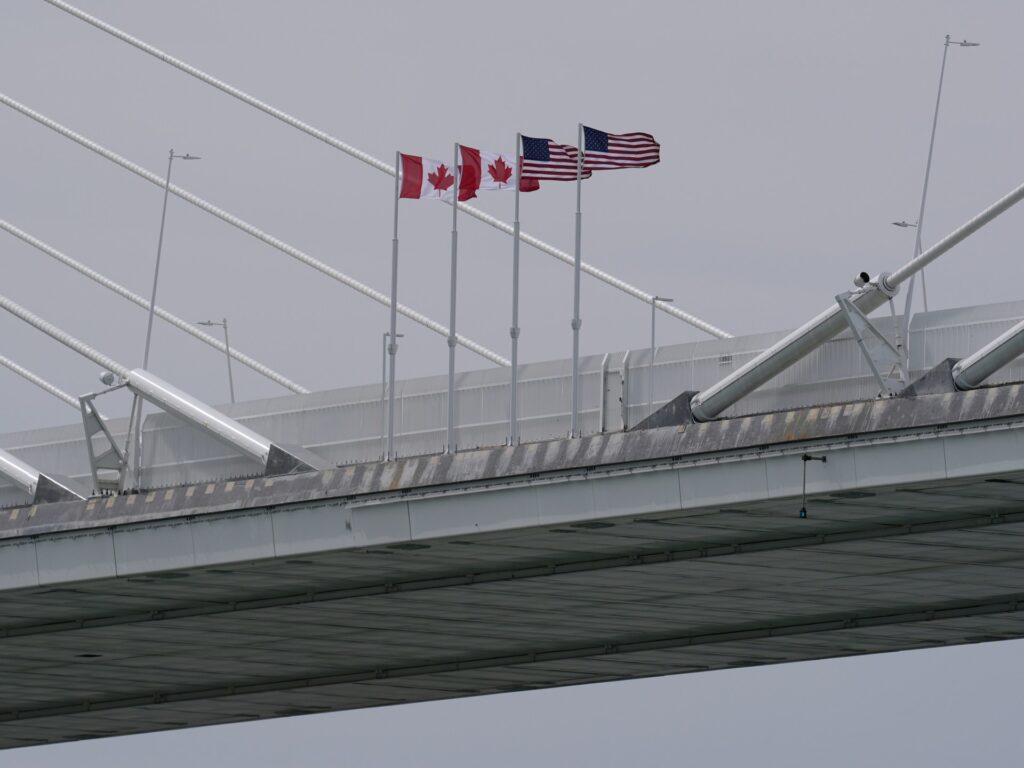
Canada has officially confirmed the opening of the Gordie Howe International Bridge, a significant infrastructure project connecting Windsor, Ontario, and Detroit, Michigan. The announcement comes despite threats from then-President Donald Trump to halt the opening of this important cross-border bridge.
The Gordie Howe Bridge, named after the legendary NHL player, is a massive undertaking jointly owned by the Canadian and Michigan governments. It aims to improve trade, travel, and economic ties between the two countries by providing an additional crossing over the Detroit River, one of the busiest international borders.
This new bridge is expected to ease congestion at the existing Ambassador Bridge, which has been the primary connection between the two cities for decades. By opening the Gordie Howe Bridge, Canada and Michigan anticipate a boost to bilateral commerce and regional development.
President Trump had expressed concerns and threatened to stop the opening of the bridge, citing various reasons including traffic and security issues. Nevertheless, Canadian officials have reaffirmed their commitment to proceed with the project, emphasizing the importance of collaboration and mutual benefits.
The completion and final opening ceremony of the Gordie Howe International Bridge mark a milestone in Canada-U.S. relations, underscoring shared economic interests and cross-border cooperation. The bridge will feature state-of-the-art infrastructure, customs facilities, and traffic management systems designed to streamline travel and enhance border security.
Local businesses and governments have largely welcomed the news, highlighting the potential for increased trade, tourism, and job creation. The project was partly funded by Canadian and U.S. federal, state, and provincial sources, demonstrating a joint investment in the region’s future.
Despite initial political challenges, the bridge’s eventual opening serves as a testament to the perseverance of cross-border partnerships. The Gordie Howe International Bridge is set to become a key corridor facilitating the movement of people and goods between Canada and the United States for decades to come.