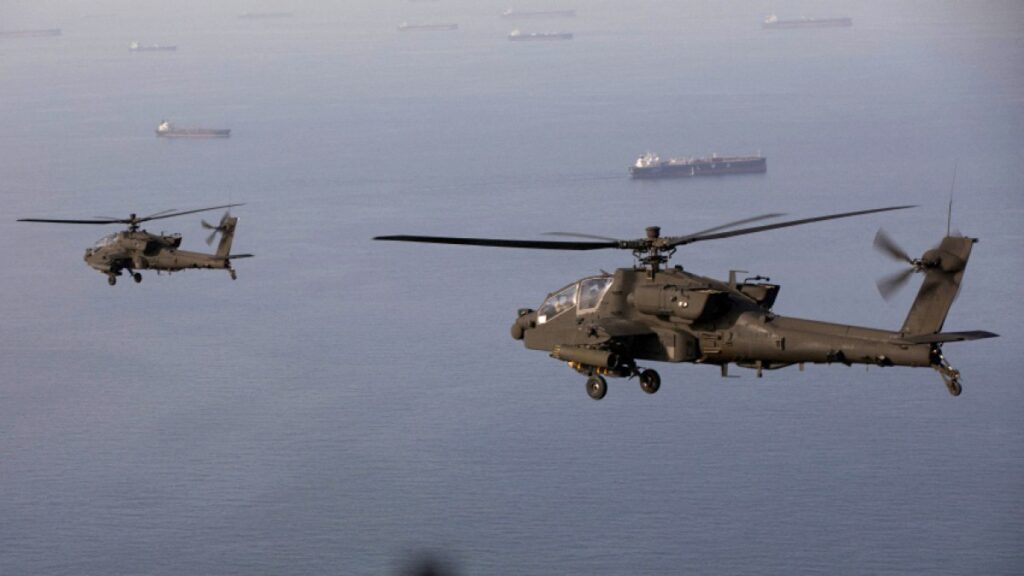
In a tense escalation of Middle East tensions, US President Donald Trump has publicly accused Iran of shooting down American helicopters over the strategic Strait of Hormuz. The incident reportedly involves multiple US helicopters attacked by Iranian forces, though all crew members were rescued safely.
President Trump stated emphatically that Washington must respond to the attack, underscoring the seriousness with which the US views the incident. “Although our pilots were safely rescued, this assault cannot go unanswered,” Trump declared in a statement from the White House.
The Strait of Hormuz is a crucial maritime chokepoint through which a significant portion of the world’s oil trade passes. Any conflict in this region risks a wider geopolitical confrontation, affecting global energy markets and international security.
Details of the incident remain sketchy, with US military sources confirming that helicopters conducting patrols in international waters near Hormuz were targeted by Iranian forces. Military officials are currently assessing the extent of the damage and casualties, confirming only that all helicopter crews survived the attack.
The US administration considers this attack a stark violation of international law and a direct threat to freedom of navigation in a key commercial artery. The Pentagon has reportedly increased the readiness of American forces stationed in the region, with military assets on heightened alert in response to perceived Iranian aggression.
Diplomatic channels are reportedly active, with Washington engaging allies and international bodies to condemn the act and prepare for a coordinated response. The White House has stressed that any military or diplomatic measure taken will be carefully calibrated to avoid escalating the conflict further while ensuring American interests and personnel are protected.
Analysts warn that such confrontations heighten the risk of a broader conflict between the United States and Iran, potentially drawing in regional allies and destabilizing the Middle East further. The incident recalls previous serious encounters in the region, including drone shoot-downs and naval skirmishes amid rising tensions.
On the domestic front, the president’s firm stance has garnered both support and criticism. Supporters praise the administration for demonstrating resolve against Iranian provocations, while critics warn that retaliatory actions could lead to unintended consequences and prolonged conflict.
The international community watches closely as the situation develops, urging restraint from all parties and emphasizing the importance of dialogue over military escalation.
In summary, the downing of US helicopters over Hormuz marks a significant flashpoint in US-Iran relations. With pilots rescued but tensions escalating, President Trump’s vow to respond signals a potential shift toward a more confrontational US posture in the region. The coming days will likely be crucial in determining whether this incident leads to renewed hostilities or a concerted effort at de-escalation.