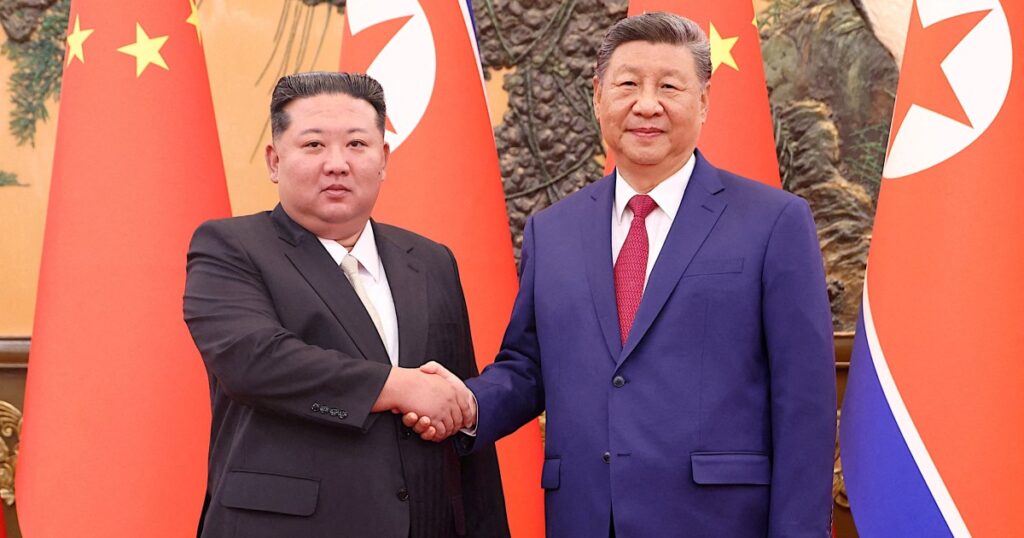
Chinese President Xi Jinping’s landmark visit to Pyongyang—the first since 2019—marks a significant milestone in the complex and often ambivalent relationship between China and North Korea. Often described metaphorically as ‘as close as lips and teeth,’ the bilateral ties encompass both deep strategic cooperation and frequent tensions, underpinning decades of political, economic, and security interests.
The relationship between China and North Korea has historically been shaped by shared ideology and common security concerns, primarily aimed at counterbalancing the influence of the United States and its allies in the Asia-Pacific region. Since the Korean War, China has stood as North Korea’s principal ally, providing critical economic aid, diplomatic backing, and military support.
However, the alliance has not been without turbulence. Pyongyang’s pursuit of nuclear weapons and missile tests, often in defiance of international sanctions led by China itself, has caused strains. Beijing finds itself caught between enforcing United Nations sanctions and preserving its strategic partnership with North Korea.
Xi Jinping’s visit comes at a pivotal moment amid evolving regional dynamics. The visit reinforces China’s commitment to maintaining stability on the Korean Peninsula and highlights Beijing’s role as a key diplomatic player. It also signals strong support for Kim Jong-un’s leadership despite growing international isolation.
During the visit, both leaders exchanged assurances of solidarity and discussed avenues to strengthen economic cooperation, including infrastructure development and sustained trade relations. China remains North Korea’s largest trading partner and primary source of energy supplies, making economic stability in Pyongyang vital to China’s own regional interests.
The political symbolism of Xi’s presence in Pyongyang cannot be understated. It challenges the narrative of diminished ties following years of North Korea’s nuclear provocations. Moreover, it underscores China’s strategic calculus to counterbalance U.S. influence while fostering stability along its borders.
Nonetheless, the relationship is a nuanced balance—a mix of mutual dependence and strategic caution. China’s domestic priorities and international standing influence its approach to North Korea. While supportive, Beijing is wary of actions that may exacerbate tensions or lead to instability that could cause an influx of refugees or disrupt trade.
Experts highlight that the phrase ‘as close as lips and teeth’ aptly captures the nature of this bilateral relationship—intimately connected yet not without friction. The political, economic, and security dimensions intertwine to create a partnership that is resilient but sensitive to regional and global pressures.
Looking forward, Xi’s historic visit may pave the way for renewed dialogue involving multiple stakeholders aimed at denuclearizing the Korean Peninsula while safeguarding the interests of all parties. The trip also reaffirms China’s pivotal role in shaping the peninsula’s future amid complex geopolitical rivalries.
In summary, Xi Jinping’s first visit to Pyongyang since 2019 highlights the highs of a deep-rooted alliance and the lows of strategic disagreements. It encapsulates the enduring, dynamic, and sometimes contradictory nature of China-North Korea ties—an alliance that remains critical to the balance of power in East Asia.