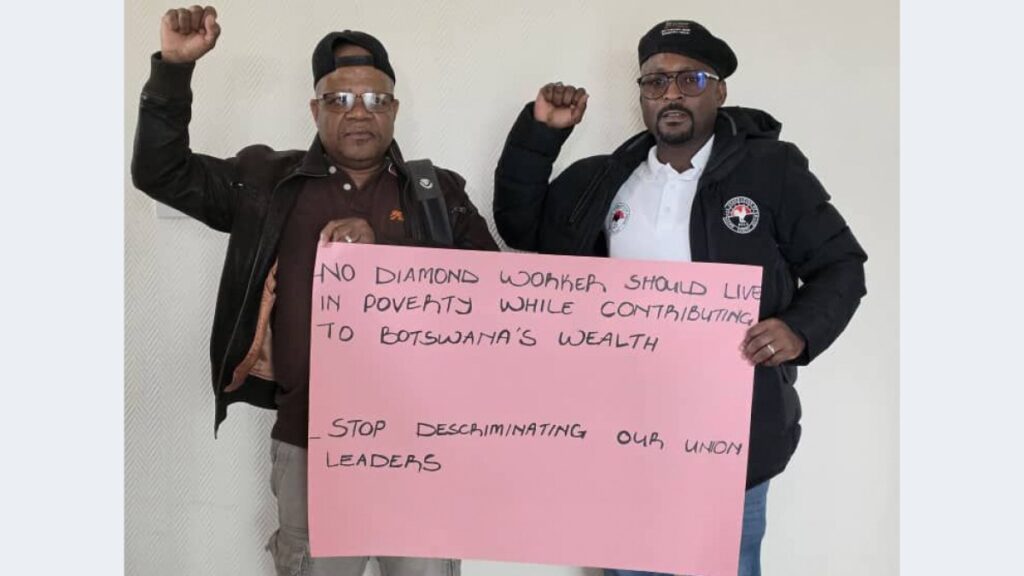
Botswana, a country whose economy is heavily reliant on diamond mining, is grappling with significant challenges as global demand for diamonds weakens and production levels decline. This downturn is impacting not only the national economy but also the livelihoods of countless miners who live precariously on the edge of survival.
Diamonds have been the backbone of Botswana’s economy for decades, contributing substantially to government revenue, employment, and export earnings. However, recent shifts in the global market have created a slump that threatens this economic foundation. The decrease in consumer demand for diamonds, partly due to economic uncertainties worldwide and changing consumer preferences, has led to reduced sales and lower prices.
As demand drops, diamond production in Botswana has also been affected. Mines are scaling back operations, leading to fewer job opportunities and reduced incomes for miners. Many workers, who often live in vulnerable conditions to begin with, now face even greater financial hardship. This has sparked concerns about poverty and social stability in communities dependent on mining.
Experts warn that if the situation continues, Botswana’s economy could suffer long-term damage. The government has relied heavily on diamond exports to fund public services and development projects, so a prolonged slump could stall progress in infrastructure, education, and healthcare.
In response, Botswana’s government and diamond mining companies are exploring strategies to mitigate the impact. These include diversifying the economy to reduce dependence on diamonds, investing in other sectors like tourism and agriculture, and promoting value addition within the diamond industry to capture more wealth locally.
There is also a push to improve the social safety nets for miners and their families, aiming to provide support during this period of uncertainty. Training and re-skilling initiatives are being considered to help workers transition to alternative employment opportunities.
However, these solutions will take time to implement effectively. Meanwhile, the miners remain on the frontline of this economic crisis, facing daily struggles to sustain their livelihoods.
The Botswana diamond slump highlights the vulnerabilities of economies heavily dependent on a single resource. It underscores the need for resilience and adaptability in the face of global market fluctuations.
As Botswana navigates this challenging period, the focus must be on protecting its citizens, stabilizing the economy, and building a diversified and sustainable future for all.