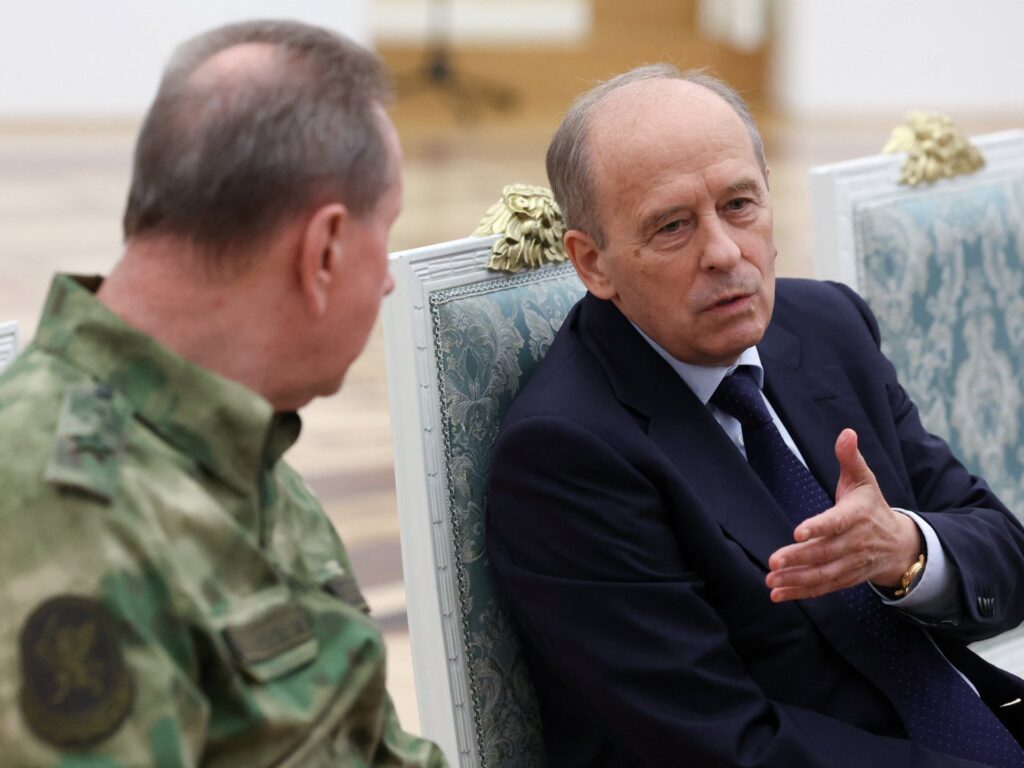
Recently, the head of Russia’s Federal Security Service (FSB) asserted that Western powers might be considering the use of former ISIL fighters as a weapon against Iran. This claim has generated significant attention and skepticism among analysts and experts in the field of international security and Middle Eastern geopolitics.
The FSB chief suggested that these ex-ISIL militants, some of whom are detained or displaced in various conflict zones, could be mobilized by Western countries to destabilize Iran or foment unrest against the Iranian regime. The statement implies a new dimension in proxy conflict tactics, where non-state militant actors associated previously with extremist agendas might be repurposed for strategic goals.
However, many analysts cast doubt on this claim. The complexities involved in repurposing former militants who have largely been neutralized or contained pose significant challenges. These fighters have diverse backgrounds and motivations, and their alignment with Western objectives is far from assured.
Additionally, the operational logistics of deploying such groups effectively against a state like Iran, which maintains a robust internal security apparatus, would be highly challenging. Iran’s intelligence and security services are experienced and have a keen ability to counter insurgency and terrorism threats within their borders.
Experts point out that the idea of weaponizing ex-ISIL fighters might be more of a political statement or psychological tactic aimed at projecting external threats and justifying internal security measures. It also could be part of broader narratives around the geopolitical tensions involving Russia, the West, and Iran.
Historically, the manipulation of militant groups has been a feature of Middle Eastern conflicts, but the context differs significantly. Former ISIL fighters are often fragmented, ideologically driven, and lack unified command, reducing their utility as organized proxies.
Moreover, Western governments have faced criticism and legal constraints in handling detained militants and displaced persons connected to ISIL. The use of these fighters as proxy forces risks exacerbating instability and humanitarian concerns already prevalent in the region.
In conclusion, while the Russian official’s claim highlights a potential threat scenario, the feasibility and practicality of weaponizing ex-ISIL fighters against Iran remain highly questionable. The complexities of militant group dynamics, Iran’s security capabilities, and international legal and ethical considerations make this an unlikely strategy.
This discourse underscores ongoing tensions and the multifaceted nature of security dilemmas in the Middle East, reminding observers to critically evaluate political statements against analytic evidence and operational realities.