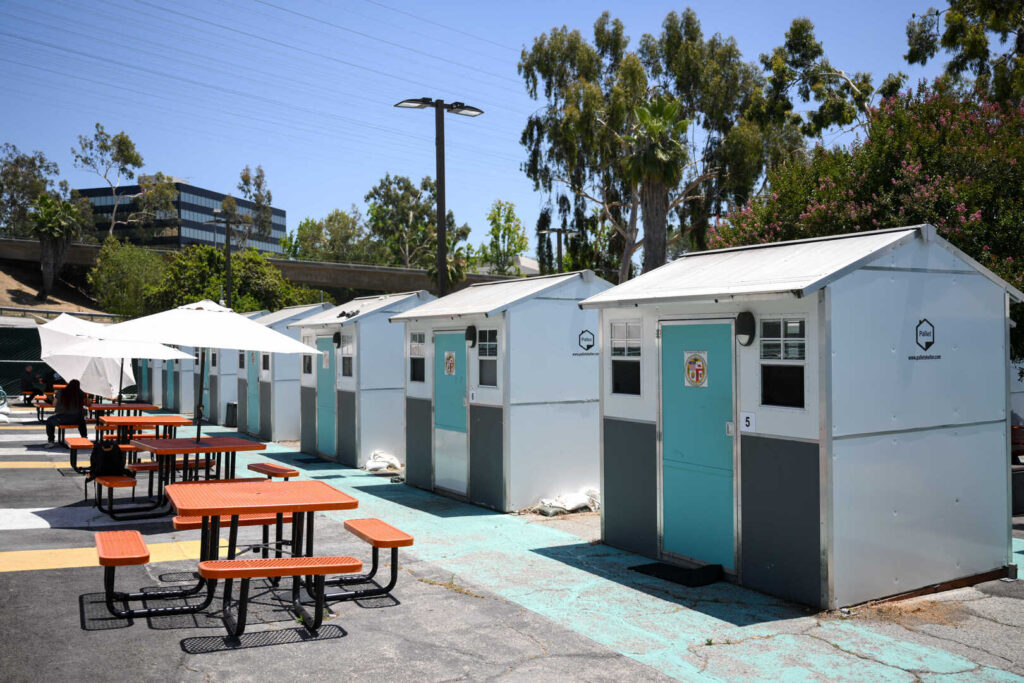
Pallet Shelters stand inside a Tiny Home Village managed by Hope The Mission for interim homeless housing in the Eagle Rock neighborhood of Los Angeles, California on June 1, 2026. Los Angeles, the second-largest US city prepares to host eight World Cup soccer matches this summer, followed by the 2028 Olympics. Infamous for its squalid encampmentslocated right on the sidewalks or beneath massive highway overpassesthe "City of Angels" has been pulling out all the stops over the past three years to house its homeless population. Democratic Mayor Karen Bass has made this a top priority, ramping up initiatives to fund thousands of housing spots, whether in hotels or in "tiny homes" (Photo by Patrick T. Fallon / AFP)
Los Angeles has launched an ambitious effort to reduce homelessness by housing thousands of individuals in city-backed tiny homes. This initiative comes at a time when the city is under the international spotlight due to the World Cup, bringing increased attention to local social issues.
Homelessness has long been a pressing issue in Los Angeles, with tens of thousands living on the streets and in temporary shelters. The tiny homes program seeks to provide dignified, safe, and affordable housing as a direct solution to this crisis. These compact dwellings are designed to offer private, secure spaces for individuals and families, enabling them to stabilize their lives.
City officials have collaborated with nonprofit organizations and private partners to build and maintain these tiny communities across Los Angeles. Each tiny home typically measures around 150 square feet and includes essential amenities such as a bed, heating, and electricity, providing a significant upgrade from street living.
The initiative has been praised for its innovative approach and potential to alleviate pressure on overcrowded shelters and emergency services. Residents benefit not only from shelter but also from access to support services such as counseling, job training, and healthcare, helping them work towards self-sufficiency.
Public response has been broadly supportive, recognizing the urgency of addressing homelessness compassionately. However, some critics argue that tiny homes are a temporary fix and call for more systemic changes in housing policy and affordable housing supply.
With the World Cup bringing global focus to Los Angeles, the tiny homes program demonstrates the city’s commitment to inclusive and humanitarian urban solutions. Officials hope that the success of the project will inspire similar efforts in other cities grappling with homelessness.
Overall, Los Angeles’ city-backed tiny homes program is a groundbreaking effort aimed at moving thousands off the streets, providing them with stable living conditions and hope for a better future. As the city continues to host international events and grow economically, addressing homelessness remains a critical social priority that requires sustained attention and innovative solutions.