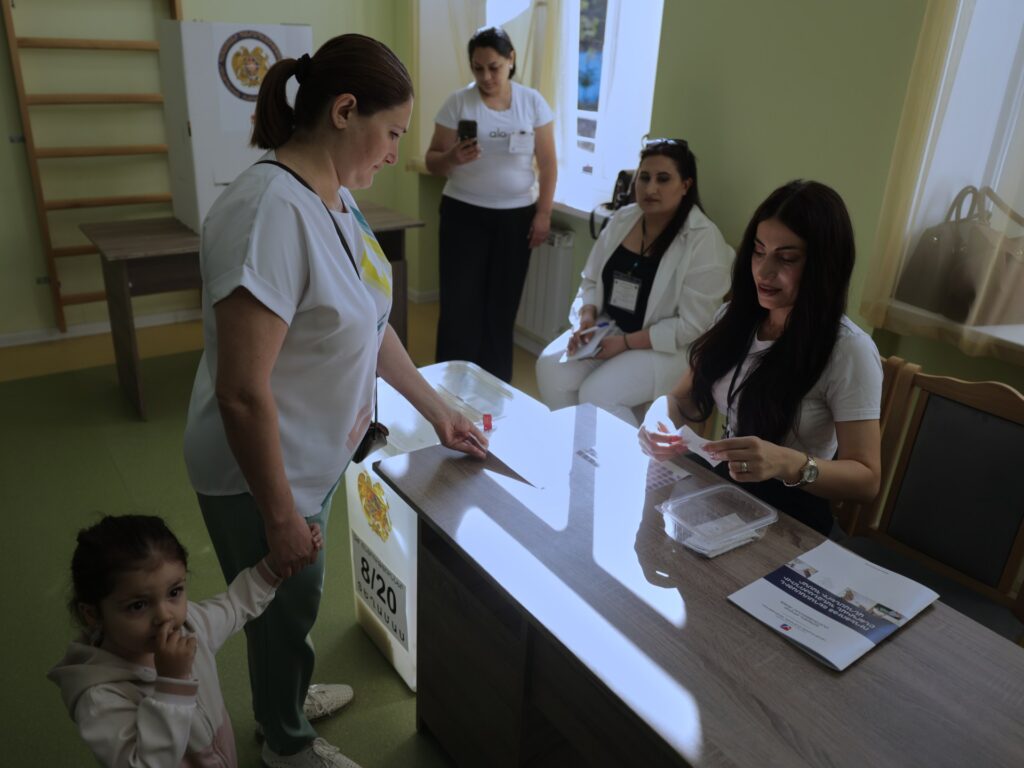
Armenians are heading to the polls in a pivotal election that serves as a litmus test for the current Prime Minister’s strategic shift towards Europe at a time when the country faces significant pressure from Russia. This election has mobilized a political contest featuring two major blocs alongside 17 parties, all set against the backdrop of national security concerns and questions of identity that have dominated the campaign discourse.
The prime minister’s pivot towards Europe marks a significant reorientation in Armenian foreign policy, aiming to strengthen ties with Western institutions. Analysts view this move as an effort to diversify Armenia’s alliances amid strained relations with Moscow following heightened Russian assertiveness in the region. This alignment shift has provoked both support and criticism domestically as well as from geopolitical observers.
The election campaign has been intensely shaped by security issues, considering Armenia’s ongoing conflict dynamics and geopolitical vulnerabilities in the South Caucasus region. Voters are deeply concerned about national sovereignty, security guarantees, and the country’s future direction in an unpredictable environment. These issues have overshadowed traditional economic topics, reflecting widespread anxiety over Armenia’s physical and political survival.
Identity politics have been another crucial theme of the election, with debates around Armenia’s cultural heritage, diaspora relations, and integration into broader international frameworks taking center stage. Candidates have sought to appeal to a populace that wrestles with questions about their national narrative and the country’s role in a rapidly changing global landscape.
The presence of two major political blocs has intensified competition, reflecting a polarized electorate. One bloc is generally seen as supportive of deeper integration with European structures, emphasizing reforms and modernization. The opposing bloc tends to advocate for maintaining closer ties with Russia and preserving traditional alliances that have historically underpinned Armenia’s security.
Other smaller parties contribute diverse perspectives, ranging from nationalist to liberal platforms, each attempting to mobilize segments of society concerned with various social, economic, and cultural issues. The multiplicity of parties highlights the complex socio-political landscape in Armenia and the challenges of governance in a deeply divided context.
International observers are watching the elections closely, as outcomes will not only influence Armenia’s domestic policy but also its foreign relations. The results could either validate the prime minister’s European pivot or strengthen the position of forces favoring a return to traditional alliances, particularly with Russia.
The election comes at a time when Armenia is navigating a difficult post-conflict recovery process following renewed hostilities in the region. Voters are looking for leadership that can ensure peace, stability, and economic growth while managing external pressures effectively.
This election holds significance beyond Armenia’s borders, contributing to the broader geopolitical recalibration in the South Caucasus. Armenia’s strategic choices will reverberate throughout the region, influencing security architectures and alliance formations.
As Armenians cast their ballots, they are making a consequential decision about their country’s future path: whether to embrace a European-oriented trajectory with its promise of reform and integration, or maintain traditional security partnerships amid uncertain geopolitical realities.
The complexity of the election underscores the multifaceted challenges facing Armenia today—a nation at the crossroads of history, caught between competing visions of identity, security, and international alignment. The forthcoming results will provide critical insights into the Armenian public’s preferences and the direction the country will take in the near future.