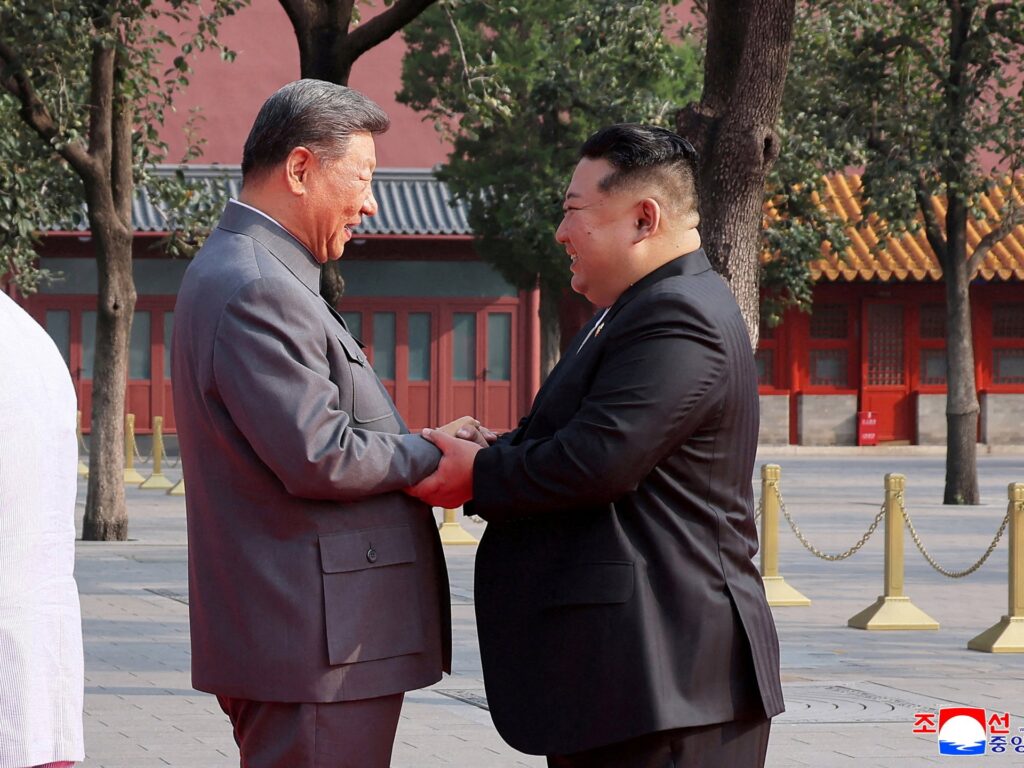
Chinese President Xi Jinping is making a historic visit to North Korea, marking his first trip to Pyongyang in seven years. This visit comes at a crucial moment, against the backdrop of significant military developments in the region.
The geopolitical landscape of Northeast Asia is currently experiencing heightened tensions. North Korea’s advancing missile programs and repeated tests have drawn international concern and sanctions. Meanwhile, China remains North Korea’s main ally and economic partner, playing a pivotal role in the region’s stability.
President Xi’s visit is seen as an effort to reaffirm China’s support for North Korea while seeking to balance regional security interests. The timing suggests Beijing’s desire to engage directly with Pyongyang amid increasing U.S. and South Korean military activities along the Korean Peninsula.
During this trip, discussions between Xi Jinping and North Korean leader Kim Jong-un are expected to address security cooperation, economic assistance, and diplomatic strategies to ease sanctions and foster dialogue. China aims to maintain its influence over North Korea and prevent further escalation that could destabilize the area.
This visit also highlights China’s broader strategic approach of asserting its leadership role in regional affairs, countering U.S. influence, and reinforcing its commitment to a key neighbor. The trip signifies Beijing’s willingness to deepen ties despite international criticism over North Korea’s military provocations.
Observers note that Xi’s engagement could also pave the way for renewed diplomatic efforts towards denuclearization talks, although progress remains uncertain. The visit underscores the complexities of balancing alliances and addressing security concerns in one of the world’s most volatile regions.
Overall, President Xi Jinping’s visit to North Korea is a calculated move to strengthen bilateral relations in the face of mounting military developments and geopolitical tensions, aiming to secure stability and China’s strategic interests in Northeast Asia.