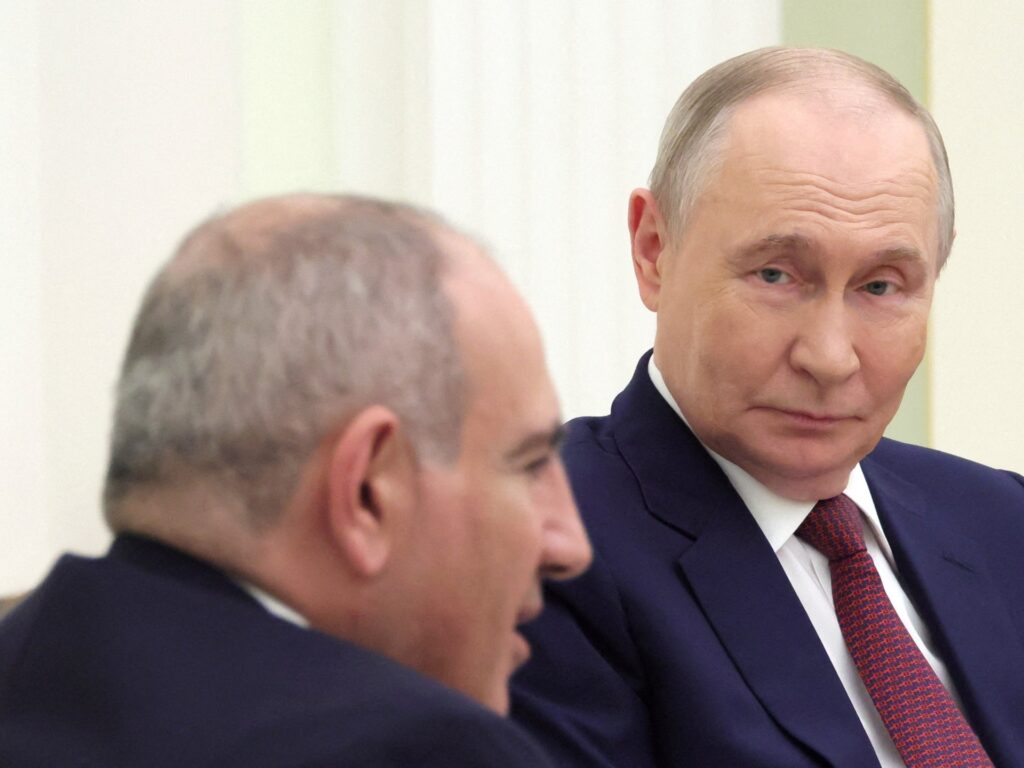
Armenia is witnessing a significant shift in its geopolitical stance as its Prime Minister has firmly rejected Russia’s demand for holding a referendum on the country’s potential integration with the European Union. This development marks a notable deterioration in the traditionally close relations between Armenia and Russia, a longtime strategic ally.
In recent times, Armenia has been visibly leaning towards strengthening its ties with Western institutions, particularly the European Union. The Armenian government sees closer association with the EU as a pathway to economic development, democratic reforms, and enhanced regional stability. However, this pivot towards the West is causing unease in Moscow, which views the South Caucasus as within its sphere of influence.
Russia’s demand that Armenia hold a referendum to determine its stance on EU integration comes amid broader geopolitical tensions. Moscow appears to be increasing pressure on Yerevan to maintain its allegiance to the Eurasian Economic Union and the Collective Security Treaty Organization, both dominated by Russia. The Kremlin fears that Armenia’s drift westward could undermine its regional dominance and encourage similar moves by neighboring countries.
The Armenian Prime Minister’s outright rejection of the referendum proposal underscores the country’s determination to pursue an independent foreign policy that is not dictated by Moscow. This stance resonates with a growing number of Armenians who favor stronger EU ties to foster democratic governance and economic modernization.
The fallout from this episode is manifold. Diplomatic relations between Armenia and Russia have become strained, with Moscow reportedly reducing military cooperation and economic support. This comes at a critical time since Armenia continues to face security challenges, especially in relation to the Nagorno-Karabakh conflict and regional tensions with Azerbaijan and Turkey.
Analysts observe that Armenia’s balancing act between maintaining traditional alliances and pursuing new partnerships is a delicate one. The rejection of Russia’s referendum demand may risk further alienation from Moscow but simultaneously opens avenues for enhanced engagement with Europe and possibly the United States.
International observers caution that Armenia’s move could trigger a recalibration of power dynamics in the South Caucasus. How Armenia navigates this evolving landscape will have implications not only for its own sovereignty and development but also for regional peace and stability.
The Armenian government has expressed a commitment to transparent dialogue with all parties and a peaceful resolution of conflicts through diplomatic means. Meanwhile, the EU has welcomed Armenia’s overtures and has promised support for reform initiatives.
In conclusion, the Armenian Prime Minister’s rejection of Russia’s demand for a referendum signifies a pivotal moment in Armenia’s foreign relations. The country is clearly charting a course towards greater integration with Western institutions despite the risks of alienating a traditional benefactor. This dynamic underscores the broader geopolitical shifts occurring in the region as nations reevaluate their alliances amidst changing global power structures.