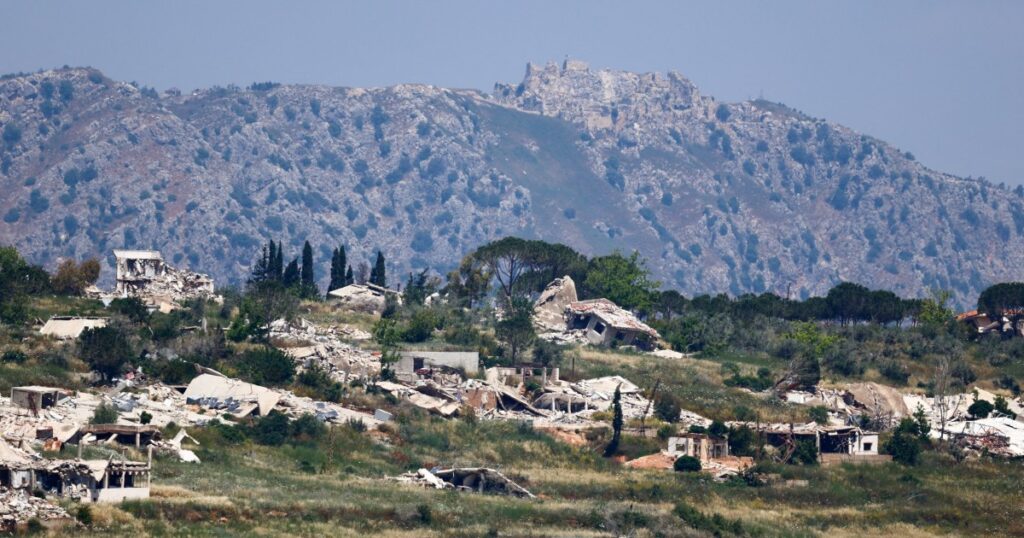
Beaufort Castle, also known as Qala’at al-Shaqif, is an ancient fortress located in southern Lebanon, near the border with Israel. It holds immense historical and strategic significance, making it a focal point in the ongoing conflict between Israel and Hezbollah.
Dating back to the Crusader period, Beaufort Castle has been a site of numerous battles and military engagements over centuries. Its elevated position on a hill provides commanding views of the surrounding terrain, including key routes that connect Lebanon with Israel. This vantage point has historically given controlling forces considerable military advantage.
In recent decades, Beaufort Castle became a stronghold for Hezbollah, the Lebanese Shiite militant group and political party. Hezbollah has used the fortress as a strategic base for launching attacks and monitoring Israeli movements across the border. The castle’s fortified structure and location have made it a critical point of defense and control for Hezbollah in southern Lebanon.
Israel’s capture of Beaufort Castle is part of a broader military campaign aimed at weakening Hezbollah’s operational capabilities. By seizing control of this key fortress, Israel hopes to disrupt Hezbollah’s ability to attack Israeli territory and gather intelligence. The capture symbolizes a strategic victory, undermining Hezbollah’s presence in the area and denying them a crucial stronghold.
The battle for Beaufort Castle also reflects the deep historical and military tensions between Lebanon and Israel. It underscores the ongoing struggle for control of border regions that have long been contested by various forces.
In summary, Beaufort Castle is more than just a historical monument; it is a strategic military bastion that plays a central role in the conflict between Israel and Hezbollah. Israel’s recent capture of the fortress highlights its importance in the broader campaign to curtail Hezbollah’s influence and enhance security along the Israel-Lebanon border.