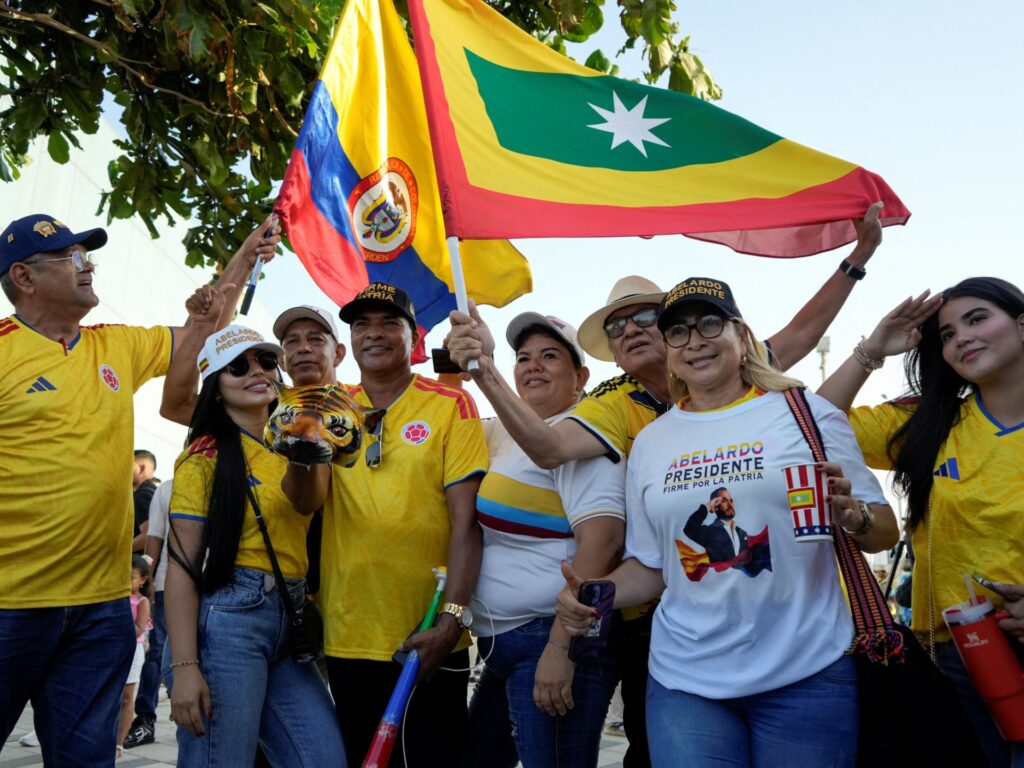
Colombia is gearing up for a decisive presidential runoff election scheduled for June 21, as left-wing Senator Iván Cepeda and far-right newcomer Rodrigo De la Espriella emerged victorious from the initial round of voting. This development marks a significant moment in Colombia’s political landscape, illustrating the polarized electorate and the wide spectrum of political ideologies vying to lead the nation.
The first round of the election witnessed a high voter turnout, reflecting the engaged citizenry eager for change and resolution on critical national issues. Security emerged as a paramount concern among voters, influencing campaign rhetoric and voter preferences. Colombia has long grappled with challenges related to public safety, guerrilla warfare, drug trafficking, and social unrest, making the topic of security a linchpin in the electoral debate.
Iván Cepeda, representing the left-wing coalition, campaigned heavily on promises of social justice, peacebuilding, and addressing inequality. His track record includes advocacy for human rights and efforts to strengthen democratic institutions. Cepeda’s supporters are hopeful that his presidency would steer Colombia towards reconciliation and progressive reforms.
On the opposite side, Rodrigo De la Espriella, a political newcomer with far-right affiliations, capitalized on public concerns over security and order. His campaign focused on stringent law enforcement policies, combating crime, and restoring stability, resonating with voters who prioritize safety and national sovereignty.
The runoff election will be tightly contested, with both candidates striving to expand their appeal beyond their traditional bases. Analysts suggest that the election outcome will significantly influence Colombia’s domestic policies and its role on the international stage.
Security concerns have dominated the debate, with both candidates proposing contrasting approaches. Cepeda emphasizes social programs and dialogue with marginalized communities as pathways to peace, while De la Espriella advocates for tougher police measures and increased military presence.
The international community is closely watching Colombia’s electoral process, given the nation’s strategic importance in Latin America and its long-standing internal conflicts. A peaceful and democratic transition of power is widely seen as essential for regional stability.
As campaigning intensifies in the days leading up to June 21, citizens and observers alike await the final verdict with anticipation and hope for a future that balances security with justice and democracy.