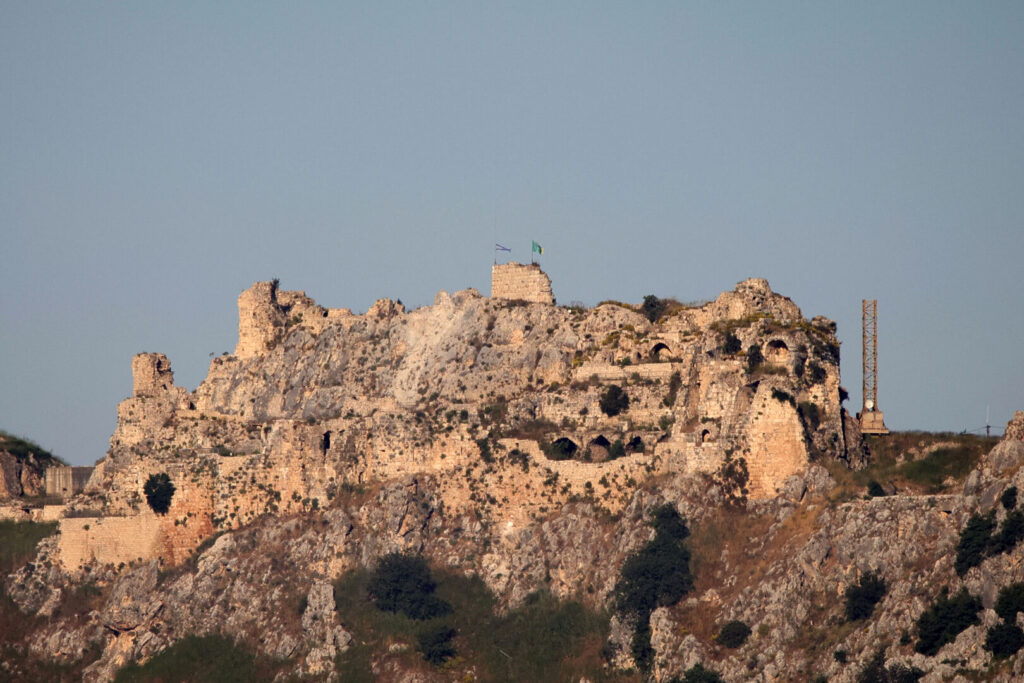
An Israeli flag flies over the medieval Beaufort Castle, known locally as Qalaat al-Shaqif or Shaqif Arnoun, as seen from the Marjayoun area of southern Lebanon on May 31, 2026. Israeli Defense Minister Israel Katz said on May 31 that the army had seized the medieval fortress of Beaufort, in southern Lebanon, where it has expanded its operations against the pro-Iranian Hezbollah. Forty-four years after the heroic Battle of Beaufort, and on this day of remembrance for the soldiers who fell during the First Lebanon War (1982), soldiers have returned to the summit of Beaufort and once again raised the flag of Israel there, the minister said on his Telegram channel. (Photo by AFP)
In a significant development amidst rising tensions in the region, Israeli forces have crossed north of Lebanon’s Litani River and successfully seized control of the medieval Beaufort Castle. This castle, a historic landmark dating back to the 12th century, holds strategic and symbolic importance, situated in the southern part of Lebanon overlooking vital access routes.
The Beaufort Castle has long been a focal point during conflicts given its elevated position and historical military significance. Originally built during the Crusader period, it has witnessed numerous battles and has changed hands several times over the centuries. Its recapture by Israeli forces marks a notable shift in the ongoing military dynamics in southern Lebanon.
Crossing the Litani River is a major tactical move. The river often serves as a de facto boundary, and stepping beyond it signals a deepening of military engagement in the area. Israeli forces reportedly made the move to enhance their operational reach and secure positions that prevent hostile forces from gaining control over crucial terrain.
The operation to capture the Beaufort Castle reportedly involved coordinated efforts with specialized units, underlining the importance attributed to this historic structure in the current conflict. The Israeli military has emphasized that the seizure is part of broader objectives aimed at stabilizing the region and neutralizing threats emanating from militant groups operating in southern Lebanon.
Lebanese authorities and various local factions have condemned the crossing as a violation of sovereignty and territorial integrity. The event has sparked tensions and drawn international attention, with calls for restraint from global diplomatic players who stress the importance of preventing escalation.
Analysts suggest that control over such strategic locations could influence future negotiations and security arrangements. The castle’s vantage offers critical surveillance capabilities, potentially allowing for better monitoring of cross-border activities.
This latest development adds to the complex tapestry of geopolitical and military challenges in the region, underscoring the fragile state of peace and the enduring legacy of territorial conflicts in the Middle East. As the situation unfolds, the international community watches closely, advocating for dialogue and peaceful resolution to prevent further bloodshed.
In sum, the capture of the 12th century Beaufort Castle by Israeli forces after crossing the Litani River is a landmark event in the current conflict landscape, merging historical symbolism with contemporary military strategy. Its implications will likely be discussed in diplomatic circles and military analyses for months to come, emphasizing the enduring intersections of history, culture, and conflict in this part of the world.