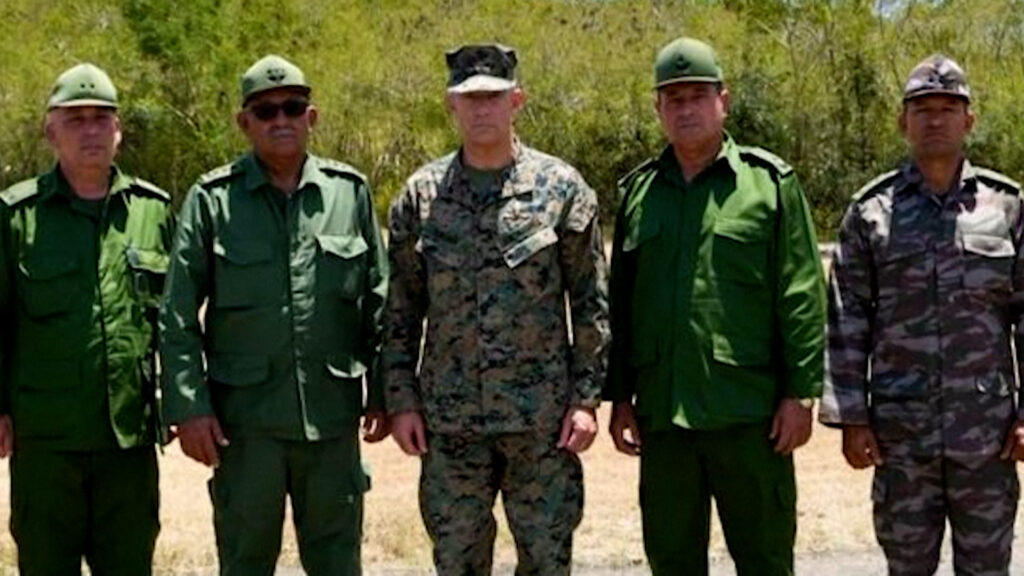
In a noteworthy development, senior military officials from Cuba and the United States engaged in a rare face-to-face dialogue near the Guantanamo Bay naval base. The talks have been described by Cuban officials as ‘positive,’ signaling a potential thaw in relations concerning the contentious U.S. military presence at Guantanamo.
The meeting, which took place in close proximity to the Guantanamo Bay detention camp, was one of the few direct interactions between the two nations’ military representatives in recent years. Historically, the relationship between the U.S. and Cuba regarding this territory has been strained, with Cuba continuously calling for the closure of the base and the return of the land.
Details of the discussions have not been fully disclosed, but sources suggest that topics could have included security cooperation, protocols around military activities, and humanitarian concerns related to the detention facility.
Cuban officials expressed cautious optimism following the discussions. The ‘positive’ characterization points to an atmosphere of dialogue that could lead to further engagements or confidence-building measures between the two countries.
The context of these talks is significant due to the strategic importance of Guantanamo Bay. The U.S. naval base, established over a century ago, has been a focal point of diplomatic tension and human rights debates, especially regarding the detention camp.
Experts observe that while the meeting does not immediately signal any policy changes, it represents a critical step toward maintaining open channels of communication. Smooth military-to-military relations may aid in managing any incidents that arise and contribute to broader diplomatic efforts.
Analysts further suggest that Cuba calling the meeting ‘positive’ might encourage the U.S. to continue engagement, potentially leading to future talks on issues beyond military matters, including trade and immigration.
This interaction between the Cuban and U.S. military could mark a gradual shift in a historically rigid stance and indicates an openness on both sides to discuss and possibly resolve longstanding issues connected to Guantanamo Bay.
As global and regional geopolitical dynamics evolve, such dialogues may play a pivotal role in reshaping Cuba-U.S. relations. Observers worldwide will be watching closely to see whether this initial positive engagement leads to sustained cooperation or remains an isolated event.
In conclusion, the recent meeting near Guantanamo Bay represents a fresh chapter in the complex relations between Cuba and the United States. It underscores the importance of dialogue in addressing sensitive military and diplomatic issues and could pave the way for more constructive interactions in the future.