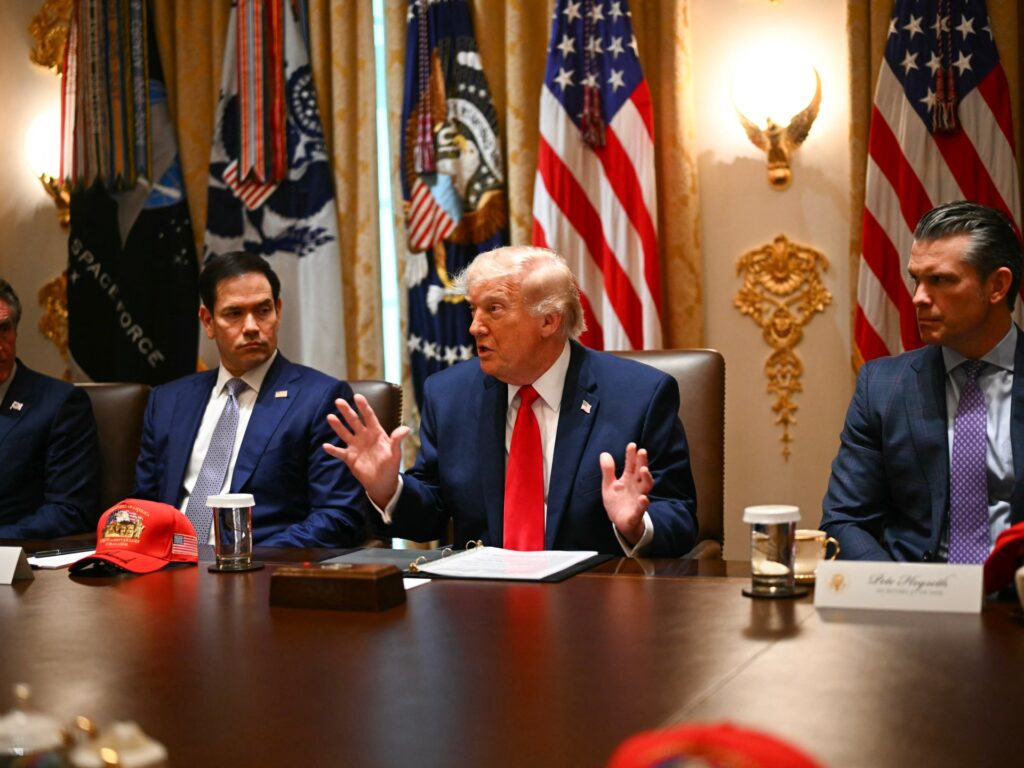
Former U.S. President Donald Trump has declared that a “final determination” will soon be made regarding a possible nuclear deal with Iran, signaling a critical juncture in ongoing negotiations. The announcement comes amid enduring tensions and profound mistrust between Washington and Tehran, two adversaries long divided by geopolitical and ideological conflicts.
Since the U.S. withdrew from the 2015 Iran nuclear agreement, officially known as the Joint Comprehensive Plan of Action (JCPOA), relations have sharply deteriorated. The deal, originally designed to curb Iran’s nuclear program in exchange for lifting economic sanctions, has been under strain as both sides accuse each other of bad faith and violations.
Trump’s latest remarks suggest that a definitive policy on re-engaging with Iran might be forthcoming, potentially reshaping the geopolitical landscape in the Middle East. “We are at a point where a final determination on the Iran deal must be made,” Trump stated in a recent interview, underscoring the importance of decisive American action.
However, deep mistrust clouds the dialogue. Iran’s top negotiator has responded by emphasizing the need for concrete measures rather than mere rhetoric. He urged all parties to focus on tangible steps that demonstrate compliance and good intentions, rather than prolonging stalemates through empty words.
The Iranian official’s stance reflects the broader skepticism in Tehran regarding Washington’s reliability and intentions. Past years have seen fluxes of hope and disappointment, with each side accusing the other of reneging on commitments. This skepticism complicates efforts to restore the deal or negotiate a new framework that satisfies both participants and addresses concerns about Iran’s nuclear ambitions and regional activities.
International actors and allies, including European nations, Russia, and China, have consistently urged restraint and dialogue to avoid escalation. They have highlighted the JCPOA as a critical pillar of regional security and warned that failure to revive the deal could lead to increased instability and possibly conflict.
The U.S. has maintained that any renewed agreement must include more stringent safeguards and address issues beyond the original deal’s scope, such as Iran’s ballistic missile program and influence in regional conflicts. On the other hand, Iran demands that sanctions be lifted unconditionally and that its right to peaceful nuclear energy be respected.
As the situation develops, the world watches closely, aware that the outcome will have far-reaching implications for nuclear non-proliferation efforts, regional peace, and global diplomacy. The coming days are crucial, as the Trump administration’s “final determination” may either pave the way for a new era of engagement or deepen divisions with profound consequences.
This pivotal moment underscores a broader narrative of mistrust and the complex interplay of diplomacy, power, and security that dominates U.S.-Iran relations. Observers remain cautiously optimistic yet prepared for possible setbacks, recognizing that while words are important, actions will ultimately dictate the path forward in this high-stakes international issue.