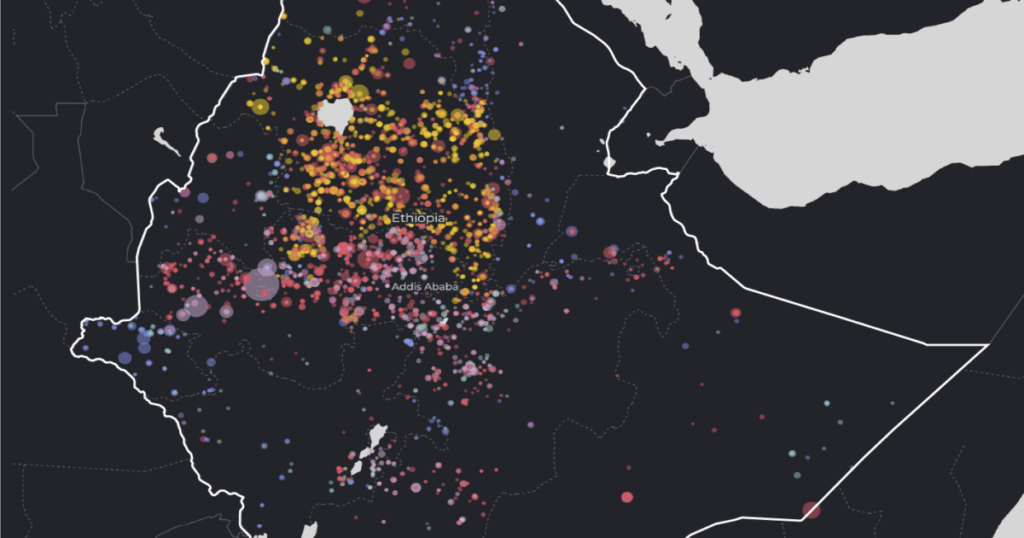
Ethiopia, a country rich in cultural diversity, has faced nearly continuous conflict since 2020, primarily driven by ethnic tensions and disputes over political power and resources. The most intense fighting has been concentrated in the regions of Tigray, Oromia, and Amhara, each home to influential ethnic groups with distinct identities.
The Tigray region, located in the northern part of Ethiopia, is predominantly inhabited by the Tigray ethnic group. Since late 2020, this region has been a focal point of armed conflict between the Tigray People’s Liberation Front (TPLF) and the Ethiopian federal government. The fighting has led to significant displacement and humanitarian crises, exacerbating ethnic divisions and straining the country’s stability.
Oromia, the largest and most populous region, is mainly home to the Oromo people. Historically marginalized, the Oromo have sought greater political representation and economic opportunities. The region has witnessed violent clashes among ethnic factions and against federal security forces, driven by demands for autonomy and recognition of cultural rights.
Amhara region, situated in the north-central part of Ethiopia, is primarily inhabited by the Amhara ethnic group. The area has experienced conflict related to territorial disputes, particularly with neighboring ethnic groups and regions. Political tensions in Amhara have often intertwined with national politics, influencing the broader conflict dynamics.
These conflicts are deeply rooted in Ethiopia’s complex ethnic federalism system, where administrative boundaries often overlap with ethnic territories, leading to disputes over land and political power. The government’s efforts to manage these tensions have included military interventions, peace negotiations, and attempts at political reforms, but lasting peace remains elusive.
Understanding Ethiopia’s ethnic map is crucial for grasping the conflict’s causes and potential pathways to resolution. The country’s 80-plus ethnic groups each have unique languages, cultures, and histories, which contribute to a rich mosaic but also pose challenges for national unity.
Since 2020, international attention has focused on addressing the humanitarian fallout and supporting mediation efforts. Aid organizations work under difficult conditions to provide relief to displaced populations, while diplomats seek to broker ceasefires and promote dialogue among conflicting parties.
The ongoing strife in Tigray, Oromia, and Amhara underscores the need for inclusive political solutions that respect ethnic identities while fostering cooperation. Ethiopia’s future stability depends on balancing diversity with unity and addressing grievances that fuel unrest.
As Ethiopia continues to navigate these complex challenges, the world watches closely, hoping for a peaceful path forward that safeguards human rights, promotes development, and honors the country’s vibrant ethnic heritage.