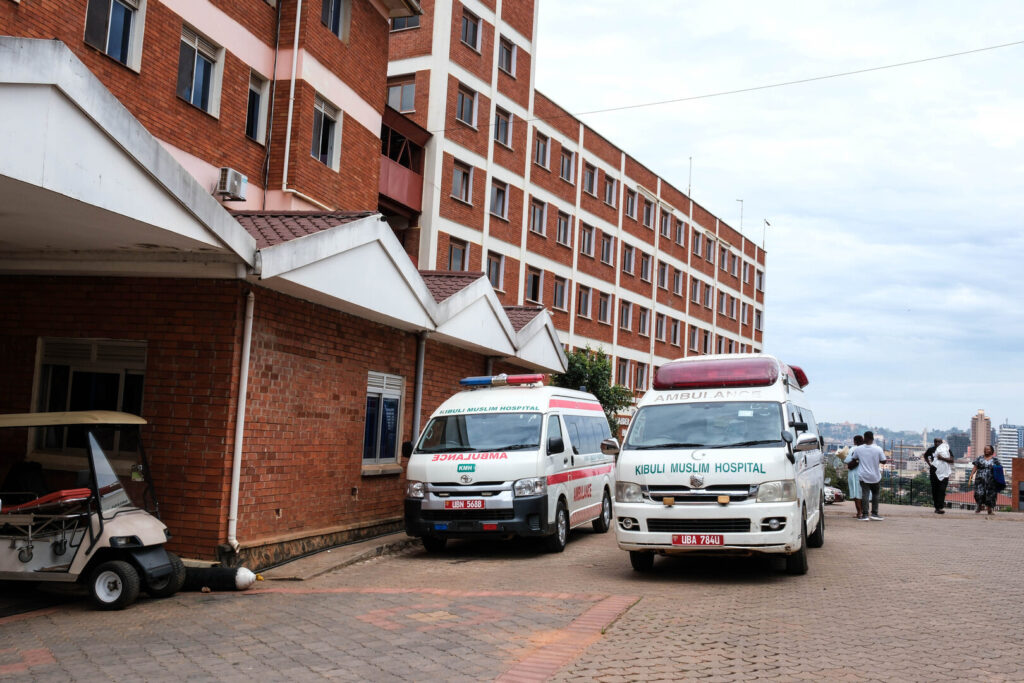
A general view of the Kibuli Muslim Hospital, where an Ebola patient died in Kampala, Uganda, Saturday, May 16, 2026. (AP Photo/ Hajarah Nalwadda)
Uganda has taken the precautionary measure of closing its border with the Democratic Republic of Congo (DRC) for a period of four weeks. This decision aims to contain the spread of the Ebola outbreak that has recently emerged in the region. The closure is part of Uganda’s broader public health effort to prevent the disease from crossing into its territory and potentially causing a wider epidemic.
Ebola, a severe and often fatal illness, has been a recurring challenge in Central Africa, with outbreaks causing significant concern due to the virus’s high fatality rate and its rapid transmission through human-to-human contact. The current outbreak in the DRC has prompted neighboring countries to implement strict measures to safeguard their populations.
The border closure will affect several crossing points between Uganda and DRC, where there is usually substantial movement for trade, family visits, and other social activities. Uganda’s government has emphasized that this action, although disruptive, is necessary to ensure the health and safety of its citizens.
Health authorities in Uganda are working closely with international organizations such as the World Health Organization (WHO) to monitor the situation and provide any needed support for Ebola preparedness and response. Surveillance, contact tracing, and public awareness campaigns are being intensified at all points of entry and within the communities.
The move has been met with understanding by many residents near the border, who recognize the gravity of the Ebola threat. However, there are concerns about the economic impact of the closure, especially for traders and informal workers whose livelihoods depend on cross-border activities.
Uganda’s swift action exemplifies the importance of regional cooperation and proactive steps in managing infectious disease outbreaks. The country’s efforts aim not only to protect its population but also to assist in the broader containment strategy for the Ebola outbreak in Central Africa.
The situation remains fluid, and health officials continue to assess new developments and adjust their strategies accordingly. For now, Uganda’s border closure represents a critical line of defense against one of the most dangerous viral threats in the world today.