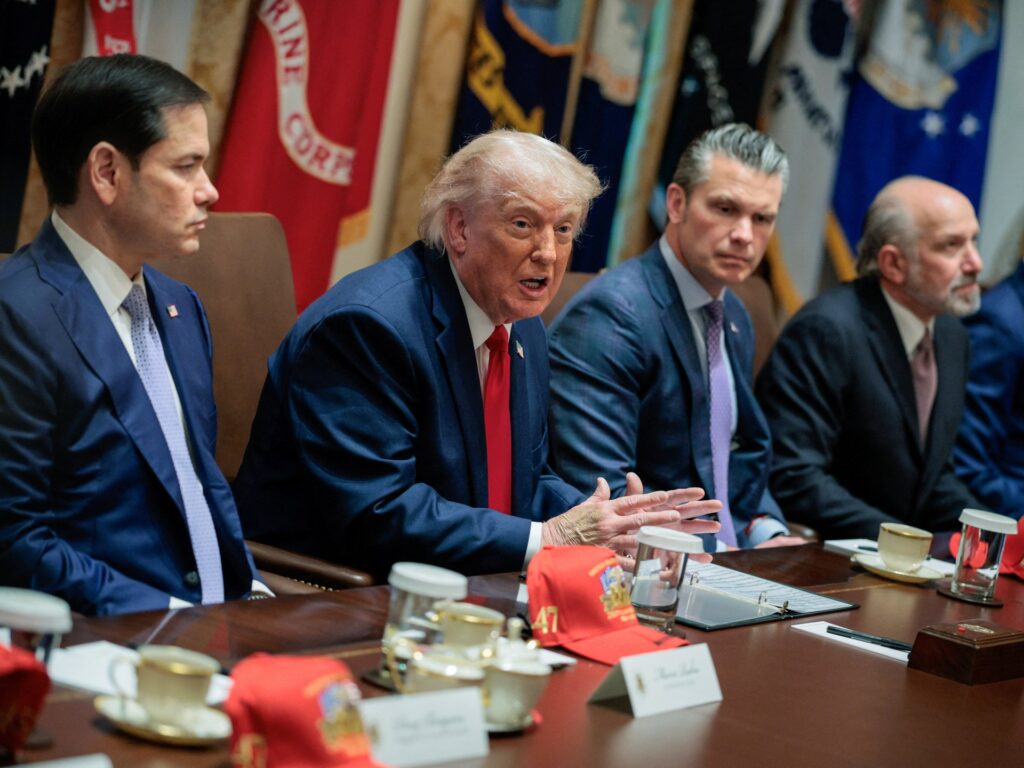
Former President Donald Trump has declared that no agreement involving Tehran will permit Iran to control the strategically vital Strait of Hormuz. This waterway is a critical chokepoint through which a significant portion of the world’s oil supply passes, making its control a matter of major geopolitical importance.
Trump’s statement underscores his hardline stance against Iran’s influence in the region. He emphasizes that any deal with Iran must explicitly prevent Tehran from exerting control over the Strait, ensuring it remains open and secure for international navigation and commerce.
The Strait of Hormuz, situated between the Persian Gulf and the Gulf of Oman, is one of the world’s busiest maritime routes. Approximately 20% of global petroleum passes through this narrow passage, linking major oil producers in the Middle East with global markets. Control over the Strait translates into significant leverage over global energy supplies.
Iran has previously threatened to close the Strait in response to international sanctions or military build-up, raising concerns among global powers about regional stability and energy security. Trump’s comments come amid ongoing tensions between the U.S. and Iran, particularly regarding nuclear negotiations and sanctions.
During his presidency, Trump withdrew the United States from the Iran nuclear deal, also known as the JCPOA, citing flaws he believed emboldened Tehran. Despite his exit, Biden’s administration has attempted to re-enter negotiations, though challenges persist.
Trump’s recent remarks could be seen as a reiteration of his administration’s policy to exert maximum pressure on Iran to curb its regional ambitions, including its military reach and nuclear development.
Experts highlight that maintaining open passage through the Strait of Hormuz is crucial not only for energy markets but also for regional and international security alliances. Countries like Saudi Arabia, the United Arab Emirates, and others in the Gulf have a vested interest in preventing any single power from dominating this passage.
Global powers including the United States, European nations, and allies in Asia regularly conduct naval patrols and joint exercises in and around the Strait to ensure safe passage and deter any attempts at blockage.
Trump’s assertion that ‘‘no one will control the Strait of Hormuz’’ serves as a message to Iran and the international community that the U.S. remains firmly committed to preserving freedom of navigation and preventing any disruption to global energy flows.
This stance is significant given the complex dynamics involving Iran’s regional policies, the economic impact of sanctions, and ongoing debates about the best approach to dealing with Tehran’s nuclear ambitions.
While negotiations and diplomatic efforts continue, the Strait of Hormuz remains a focal point in broader geopolitical strategies, and Trump’s comments reaffirm the critical importance of this maritime route in global politics and economics.
In conclusion, Donald Trump’s declaration reinforces the geopolitical significance of the Strait of Hormuz and frames it as a non-negotiable aspect of any future dealings with Iran, emphasizing U.S. resolve to ensure the Strait remains free from Iranian control.