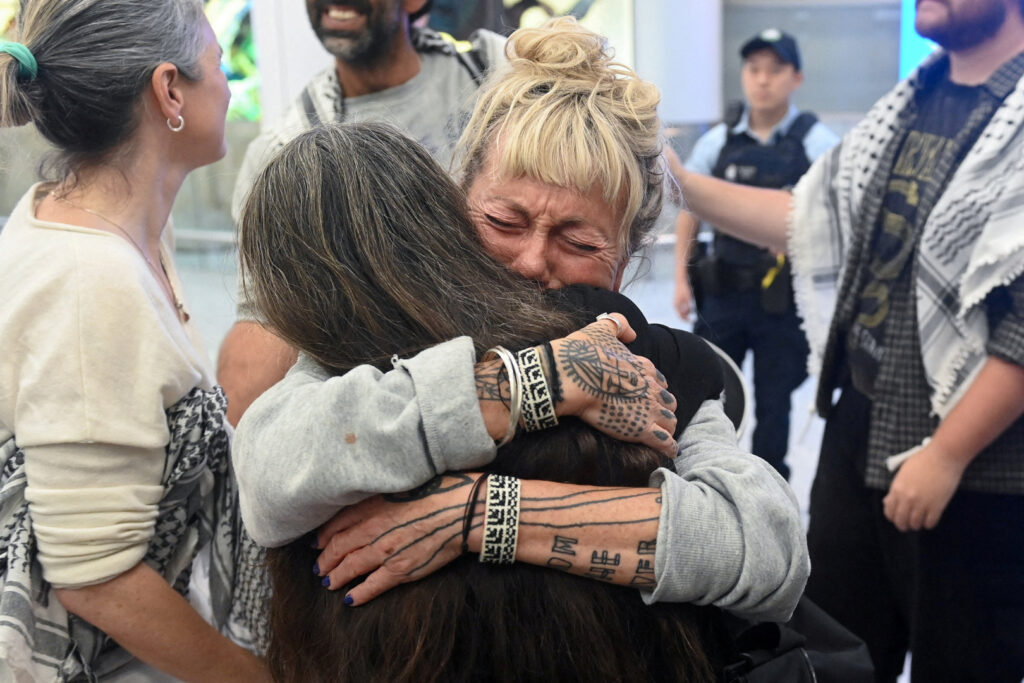
Juliet Lamont, an Australian member of the Gaza-bound Global Sumud Flotilla, which was intercepted by Israeli forces, receives a hug as she arrives at Sydney International Airport, Sydney, Australia, May 25, 2026. REUTERS/Jeremy Piper TPX IMAGES OF THE DAY
A group of Australian activists who took part in the Gaza-bound aid flotilla have returned safely to Sydney, reuniting with their families and loved ones after a tense and traumatic ordeal. The flotilla, organized to deliver humanitarian aid to the Gaza Strip, was intercepted during its mission, leading to confrontations with authorities. Upon their return, the activists shared harrowing accounts of the events, describing physical abuse and mistreatment during the interception.
The activists expressed a mix of relief at their safe return and outrage over the treatment they endured. Their accounts include beatings, verbal abuse, and harsh conditions while in custody. Despite the physical and emotional toll, the activists remain steadfast in their commitment to raising awareness about the humanitarian situation in Gaza.
Family members and supporters welcomed them back warmly, highlighting the courage and dedication of the activists. The flotilla incident has sparked international debate about the legality and morality of the blockade on Gaza, as well as the use of force against aid workers trying to deliver assistance.
The Australian government has been urged to investigate the treatment of the activists and to advocate for the protection of humanitarian missions in conflict zones. Meanwhile, the returning activists plan to continue their advocacy work, calling for an end to the blockade and for greater efforts to alleviate the suffering of the people in Gaza.
The situation remains tense, with ongoing discussions about the rights of aid workers and the political complexities surrounding the Gaza Strip. The activists’ stories have brought renewed attention to these critical issues, sparking conversations on human rights, international law, and the role of civil society in conflict resolution.
With their return, the Australian activists hope to galvanize public support and to encourage governments to take a firmer stance on humanitarian access to Gaza. Their experience underscores the risks faced by those engaged in activism and humanitarian efforts in volatile regions.
As the international community watches closely, the repercussions of the Gaza flotilla incident continue to unfold, emphasizing the urgent need for dialogue and peaceful solutions in the region.