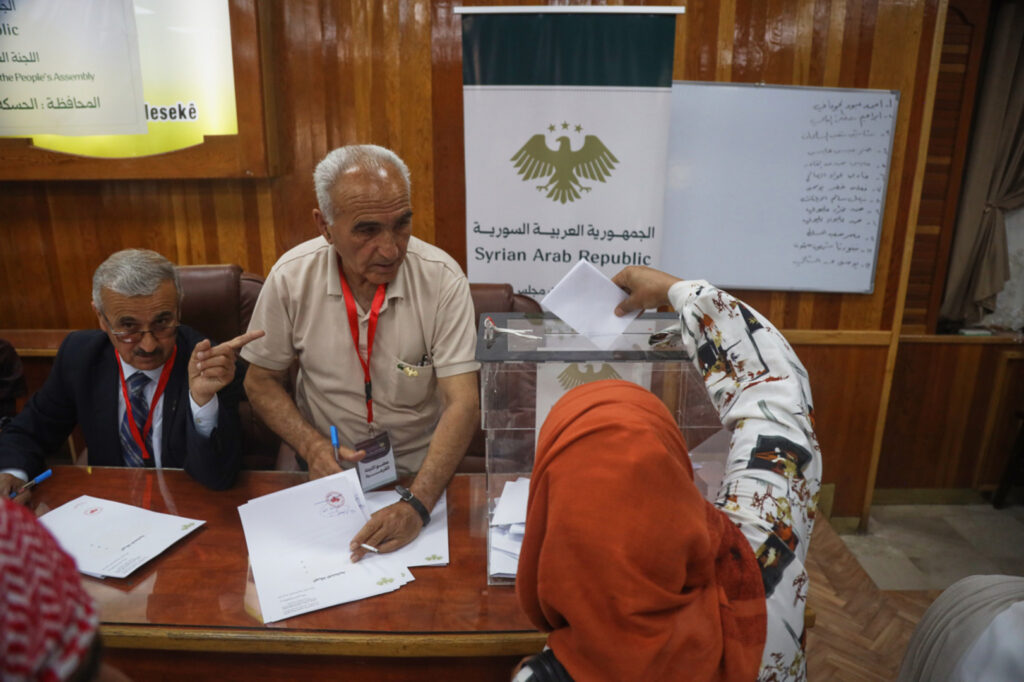
A voter casts a ballot during follow-up parliamentary elections in Hassakeh, northeastern Syria, Sunday, May 24, 2026. (AP Photo/Baderkhan Ahmad)
Syria recently conducted legislative elections in the northern regions formerly under Kurdish control, including the Hasakah province and the town of Kobane. This electoral process marks a significant political shift in these areas, which have experienced years of autonomous administration amid the country’s ongoing conflict.
The elections were closely observed by both local populations and international watchers, as they signal the reintegration of these districts into the Syrian government’s framework. The voting process aimed to elect representatives to the Syrian parliament, with candidates campaigning on issues of reconstruction, security, and governance.
In Hasakah, a diverse area with a mix of Arab, Kurdish, and Assyrian communities, the elections were seen as a test of the Syrian government’s ability to restore order and political inclusiveness after years of warfare and semi-autonomous rule by Kurdish groups. The Syrian government has emphasized national sovereignty and the importance of legislative representation to promote unity and development.
Kobane, notable for its resistance against ISIS and its significant Kurdish population, also participated in the elections. The town’s residents faced challenges including security concerns, displacement, and infrastructural damage but turned out to vote as part of the broader process of political normalization.
Al Jazeera’s Heidi Pett reported on the ground from these locations, highlighting the cautious optimism among voters and officials alike. The elections were conducted under tight security, with government forces ensuring a stable environment for voting despite sporadic tensions.
The outcome of the elections is expected to influence Syria’s political landscape, potentially affecting future negotiations on decentralization and governance. Observers note that while the elections represent a step towards political reintegration, significant challenges remain in addressing the aspirations of local populations and rebuilding war-torn communities.
Overall, the legislative elections in former Kurdish-controlled areas represent a critical moment in Syria’s ongoing attempt to rebuild state authority and foster national reconciliation following more than a decade of conflict.