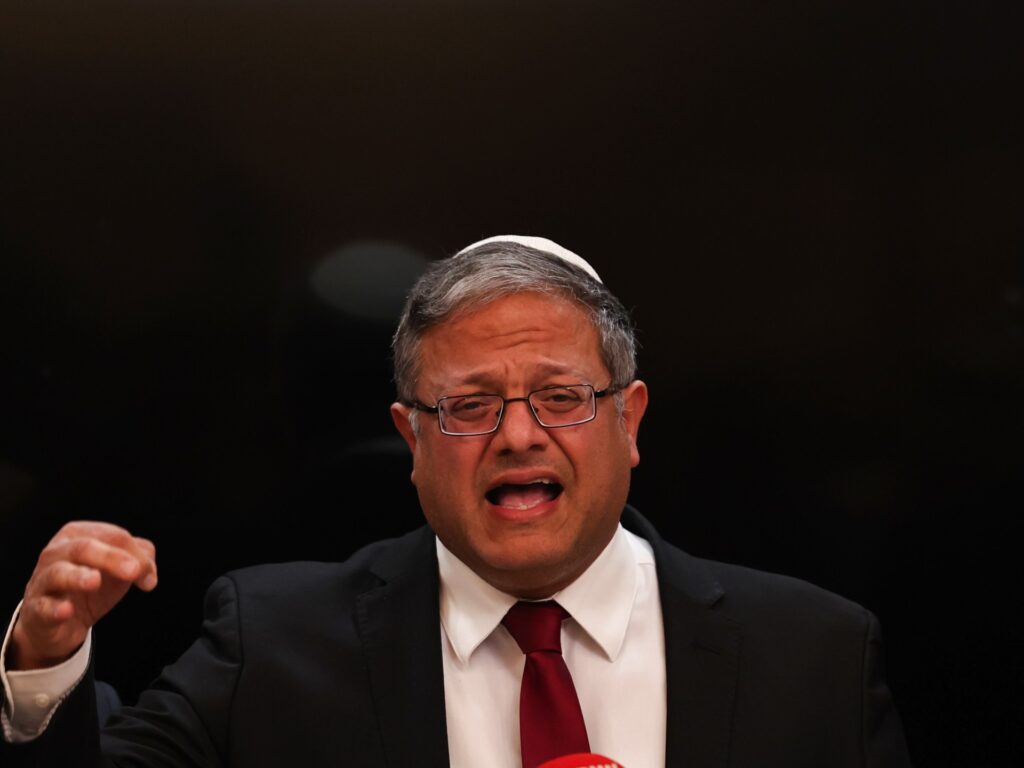
In a bold and controversial move, Israeli far-right Minister Itamar Ben-Gvir recently released a video taunting activists aboard a flotilla attempting to deliver aid and challenge the Israeli blockade. This video has ignited a firestorm of criticism worldwide and severely undermined Israel’s multimillion-dollar ‘Hasbara’ public relations campaign, which is designed to shape international perceptions favorably.
The flotilla, composed of international and Palestinian activists, was attempting to break through Israel’s naval blockade of Gaza. The blockade, considered by many in the international community as illegal and a form of collective punishment, has long been a focal point of contention and human rights advocacy.
Ben-Gvir’s video, which was widely disseminated on social media, showed him mocking the activists, referring to them with disdain and delivering provocative remarks that were perceived as taunts toward abducted activists. The video’s tone and content were seen by many observers as deeply insensitive and inflaming an already tense situation.
This action drew immediate global condemnation from governments, human rights organizations, and activists who condemned the minister’s approach as irresponsible and harmful to diplomatic efforts. Critics pointed out that the video not only damaged Israel’s image but also contradicted the efforts of the Israeli Ministry of Foreign Affairs’ ‘Hasbara’ campaigns, which aim to present Israel as a democratic and peaceful state.
The damage to Israel’s public relations is significant because ‘Hasbara’ campaigns invest heavily in digital, media, and diplomatic tools to counteract negative publicity. These efforts include crafting narratives around security concerns, historical claims, and humanitarian provisions. Ben-Gvir’s video, however, provided opponents with potent imagery and messaging that highlighted Israeli hardline policies and insensitivity, alienating moderate audiences.
In response to the backlash, Israeli officials engaged in urgent damage control. Efforts included blanketing social media with more tempered messaging, emphasizing Israel’s commitment to security and peace, and attempting to frame the video as a personal expression rather than official policy.
Despite these efforts, the incident has underscored the challenges faced by Israel in controlling its international image amid internal political diversity. Ben-Gvir, known for his far-right nationalist stance and minimal concern for diplomatic nuance, illustrates a faction within Israeli politics that openly disregards the nuanced messaging essential for maintaining favorable public opinion globally.
The flotilla activists themselves have used the incident to draw more attention to the conditions in Gaza and the impact of the blockade. Social media campaigns and news coverage frame the video as evidence of the Israeli government’s dismissive attitude toward humanitarian needs and international norms.
Observers note that this controversy may have long-term implications beyond immediate diplomatic fallout. The polarization within Israeli politics, exemplified by Ben-Gvir’s approach, complicates peace efforts and risks further isolating Israel internationally.
In conclusion, Itamar Ben-Gvir’s flotilla video significantly disrupted a carefully managed narrative shaped by Israel’s ‘Hasbara’ strategies. By publicly taunting activists and ignoring diplomatic sensitivities, the video triggered global condemnation and exposed the fissures within Israeli political messaging strategies. The incident serves as a cautionary tale about how internal political dynamics can profoundly impact a nation’s external image and international relations.