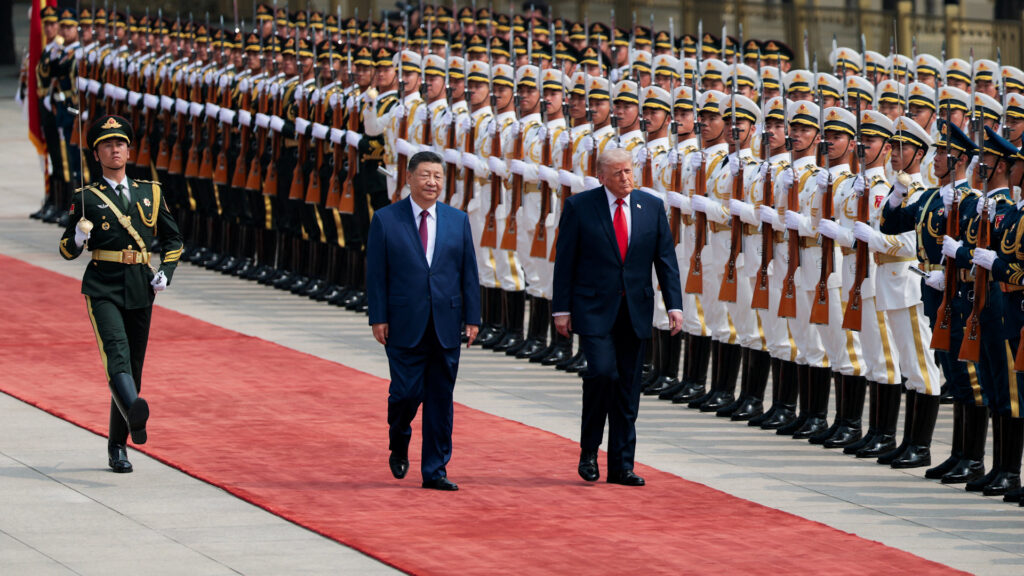
Chinese President Xi Jinping warmly welcomed US President Donald Trump to Beijing amidst an elaborate ceremony, setting the stage for critical high-level talks between the world’s two largest economies. The meeting comes at a pivotal moment as both nations grapple with complex issues such as tariffs, trade competition, and broader geopolitical implications.
The US delegation, led by President Trump, arrived in Beijing amid intense scrutiny from global markets and political observers. The ceremonial welcome underscored the significance China places on this meeting, highlighting hopes for progress on longstanding economic and diplomatic challenges.
China and the United States have been locked in a challenging trade relationship marked by tariffs imposed by both sides, affecting billions in goods. These tariffs have contributed to economic uncertainty worldwide, making the talks not just a bilateral concern but one of global significance.
President Xi Jinping’s invitation and the lavish ceremony signal Beijing’s commitment to dialogue and resolution. He emphasized the importance of stable relations that respect each country’s development paths and economic interests, aiming to find common ground despite fierce competition.
President Trump, for his part, is expected to press for more favorable trade terms for the US, seeking to reduce the trade deficit and protect American industries. His administration has been vocal about the need to address intellectual property issues and forced technology transfers, topics likely high on the agenda.
Analysts suggest the talks will delve deep into strategic issues beyond tariff disputes, including technology rivalry, military presence in the Asia-Pacific region, and climate change cooperation. Both leaders recognize the stakes: a failure to reach mutual understanding could escalate tensions and disrupt global economic stability.
The international community is watching closely, aware that decisions made in Beijing could influence global markets, supply chains, and diplomatic alliances for years to come. Many hope these discussions will soften hostilities and pave the way for constructive engagement.
Despite the ceremonious start, experts caution that negotiations will be complex and may require compromises uncomfortable for both sides. However, the willingness to engage signals a mutual recognition that cooperation is preferable to confrontation in an increasingly interconnected world.
This visit marks an important chapter in US-China relations, encapsulating the challenges and possibilities that define one of the most consequential international relationships today. The outcomes of these discussions will reverberate beyond the immediate parties, shaping the geopolitical and economic landscape well into the future.