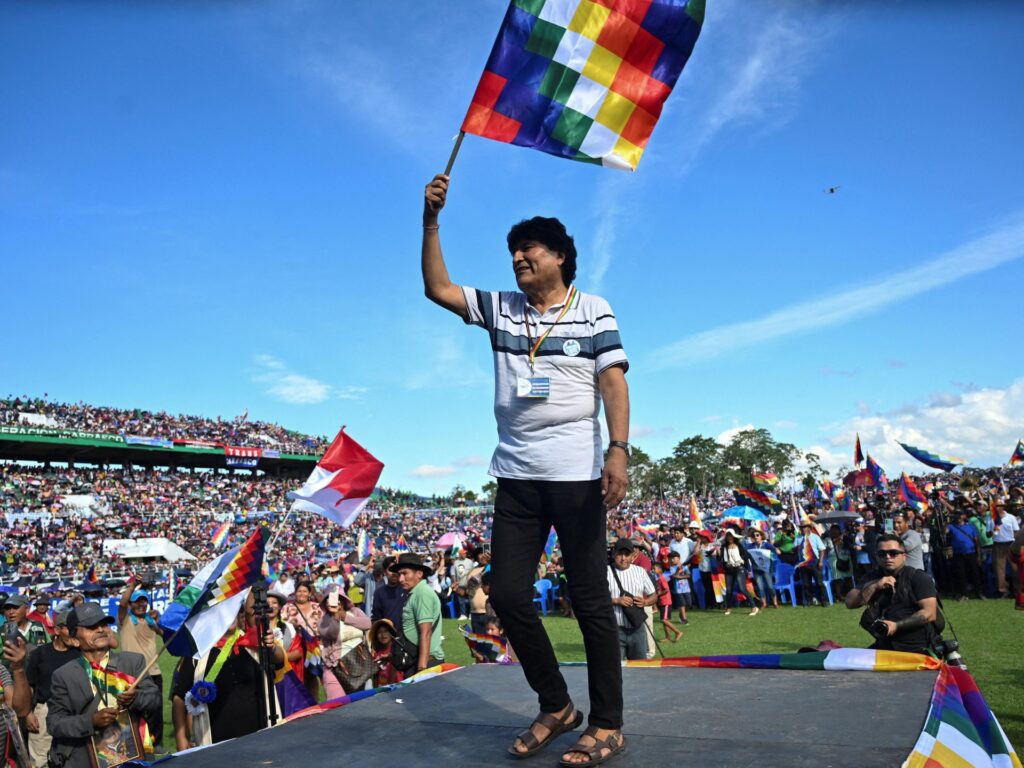
Bolivia has issued an arrest warrant against former President Evo Morales after he failed to appear in court amid serious allegations. Morales is currently facing trial for allegedly fathering a child with a 15-year-old girl during his time in office—a charge that has shocked the nation and attracted widespread media attention.
The case emerged as a significant legal and political crisis in Bolivia, stirring public debate and raising questions about the conduct of the ex-president. The court’s decision to issue the warrant underscores the seriousness of the accusations and the legal system’s commitment to pursuing justice regardless of political stature.
Details of the case reveal that the alleged incident occurred while Morales was serving as Bolivia’s president, a tenure marked by both economic reforms and controversies. The young girl involved reportedly came forward with her story, prompting an investigation that culminated in the formal charges against Morales.
Morales, whose presidency lasted from 2006 to 2019, has been a polarizing figure in Bolivian politics. Supporters praise his efforts to reduce poverty and increase social inclusion, while critics accuse him of authoritarian tendencies and corruption. This latest scandal further complicates his legacy.
The issuance of the arrest warrant follows Morales’s repeated absences from court hearings. Authorities have expressed frustration over his non-compliance with judicial processes, interpreting it as an attempt to evade accountability.
Legal experts note that Morales’s case could have far-reaching implications for political accountability in Bolivia. It signals that even the highest officials are not immune to prosecution for alleged crimes committed during office.
The government has reaffirmed its commitment to uphold the rule of law and to ensure that justice is served transparently and without bias. Meanwhile, Morales remains outside the country, and his legal team has yet to release an official statement regarding the warrant or the allegations.
Public reaction in Bolivia has been mixed, with some citizens expressing shock and disappointment, while others question the timing and motivation behind the charges. The political opposition has seized on the case to call for greater reforms and accountability in government.
Observers are watching closely to see how this case will unfold in the coming months. The trial and Morales’s legal battles are likely to dominate Bolivia’s political landscape, influencing both domestic policy and international perceptions of the country.
In sum, the arrest warrant for Evo Morales marks a dramatic chapter in Bolivian history, highlighting the complexities of justice, power, and morality at the highest levels of government.