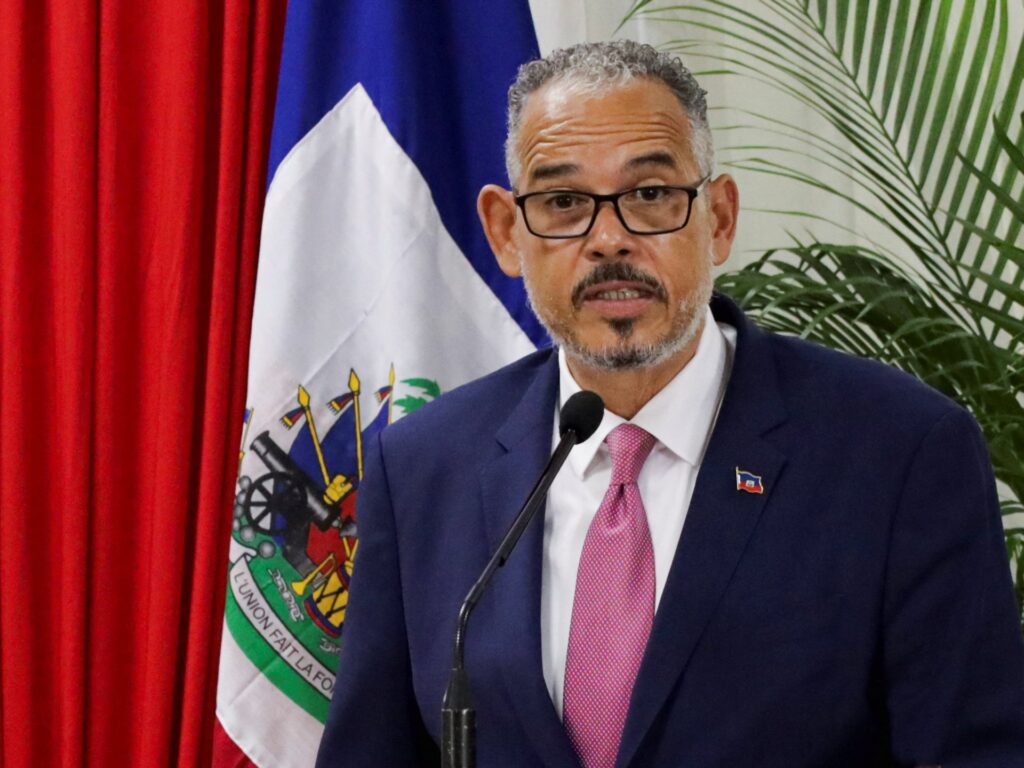
Amid escalating gang violence and deteriorating security conditions in Haiti, Prime Minister Alix Didier Fils-Aime has expressed serious doubts about the country’s ability to hold the scheduled presidential election by August. The surge in violence, predominantly involving rival gangs, has intensified in recent weeks, leading to widespread instability and an environment deemed too dangerous for conducting the vote.
Fils-Aime highlighted that the security situation has worsened to such an extent that hospitals have been forced to evacuate patients, underscoring the severity of the conflict. These developments have severely hampered the government’s capacity to maintain order and ensure the safety necessary for a free and fair election.
Haiti has been grappling with political turmoil and violence for several years. The interim government has faced challenges in managing the escalating threats posed by armed gangs who control large parts of the capital, Port-au-Prince, and other areas. The gangs’ control over territories has disrupted daily life, hindering access to essential services and crippling efforts to restore civic order.
The scheduled presidential election was seen as a crucial step toward stabilizing the country following the assassination of President Jovenel Moïse in July 2021. Nevertheless, the continuing clashes among gangs have raised questions about the feasibility of the electoral process in the near term.
Prime Minister Fils-Aime’s statement signals a significant setback for Haiti’s political roadmap. The uncertainty surrounding the election timeline could exacerbate the country’s governance vacuum, further complicating efforts to establish a stable and democratic government.
International observers and human rights groups have voiced concern over the worsening humanitarian conditions bred by the violence. The evacuation of hospital patients is just one example of how deeply the crises have permeated all facets of Haitian society.
Efforts to mediate peace and improve security have encountered numerous obstacles. The government, alongside international partners, is attempting to forge a strategy to restore order and create conducive conditions for elections.
However, the immediate future remains bleak, as the gang rivalries continue to inflict suffering on civilians, disrupting everyday activities and threatening to plunge Haiti deeper into chaos.
Experts warn that unless urgent and effective measures are taken to dismantle gang networks and secure communities, the prospect of holding a credible election this year remains doubtful.
The Haitian government is now under increased pressure to prioritize security reforms and engage in dialogue with key political actors and civil society groups to chart a path forward.
In the meantime, the humanitarian situation continues to degrade, emphasizing the need for both national and international efforts to support vulnerable populations during this challenging period.
Prime Minister Fils-Aime’s remarks underscore the complex interplay between security, governance, and democratic processes in Haiti. The path to stability will likely require coordinated efforts addressing all these dimensions comprehensively.
As the August election date approaches, the Haitian people and the international community await clarity on if and how the electoral process can proceed safely and legitimately amid growing insecurity.