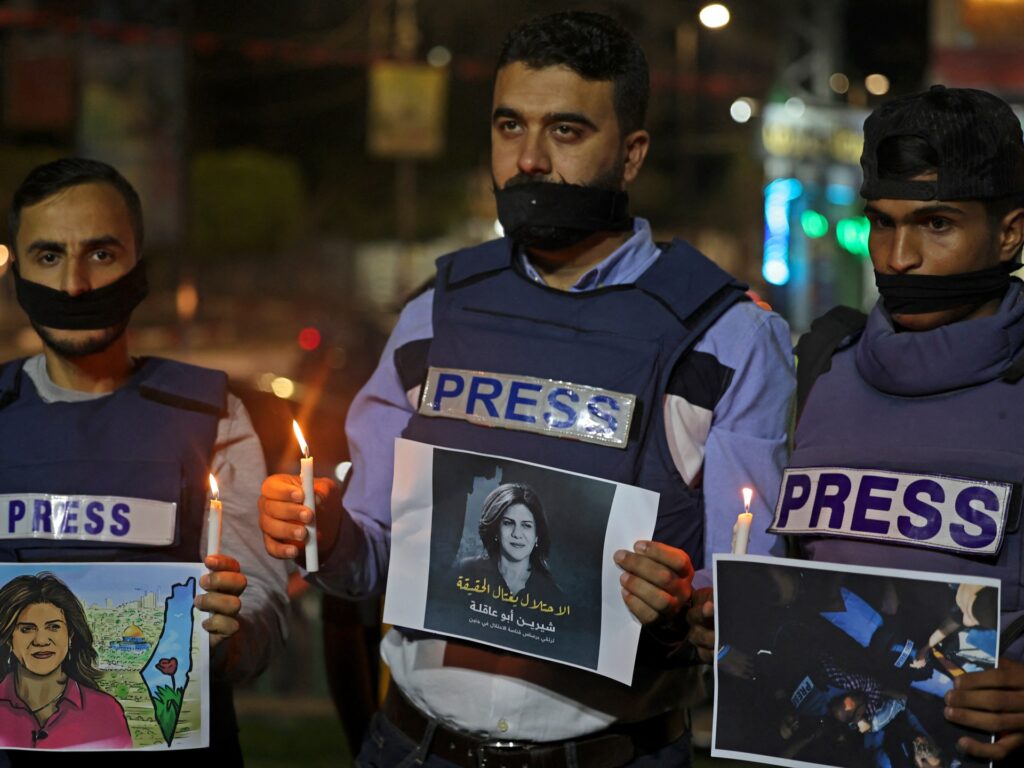
The killing of Shireen Abu Akleh, a US citizen and renowned Al Jazeera journalist, has sparked global outrage and highlighted the chronic issue of impunity surrounding attacks on the press in conflict zones. Abu Akleh was shot while covering an Israeli raid in the occupied West Bank, and since her death, rights advocates have pointed to a disturbing pattern: the lack of accountability only emboldens further abuses against journalists.
Shireen Abu Akleh was a respected veteran reporter known for her fearless coverage of the Israeli-Palestinian conflict. On the day of her death, she was wearing a press vest and was clearly identified as a journalist. Despite this, she was fatally shot, and investigations into the circumstances of her death have been marred by obstructions and conflicting narratives.
Rights groups argue that the failure to hold the perpetrators accountable sends a dangerous message. It signals to Israeli forces that journalists are vulnerable and that attacks on the media may go unpunished. This environment of impunity creates a chilling effect, hindering journalists’ ability to report freely and safely from volatile regions.
The international community has also expressed concern, calling for transparent and thorough investigations. However, years of inaction and the absence of meaningful consequences have contributed to a culture where violations against press freedom persist with little fear of retribution.
This issue is not isolated to Abu Akleh’s case. Journalists covering the Israeli-Palestinian conflict frequently face threats, harassment, and violence. These frontline reporters are essential in bringing to light the realities on the ground, and undermining their safety is tantamount to undermining the public’s right to information.
Experts emphasize that accountability mechanisms must be strengthened, and that states occupying territories have a legal and moral duty to protect journalists and ensure justice when crimes occur against them. Without accountability, the cycle of violence against the press is likely to continue, risking further erosion of press freedoms and the vital role the media plays in conflict zones.
In conclusion, the impunity linked to Shireen Abu Akleh’s killing exemplifies a broader problem of systemic disregard for journalists’ safety in conflict areas, notably under Israeli operations. Holding perpetrators accountable is critical not just for justice in her case but also as a deterrent to protect journalists worldwide from similar fate. The international community, local authorities, and human rights organizations must unite efforts to demand transparency, uphold the rule of law, and guarantee press freedom in the face of increasing violence.