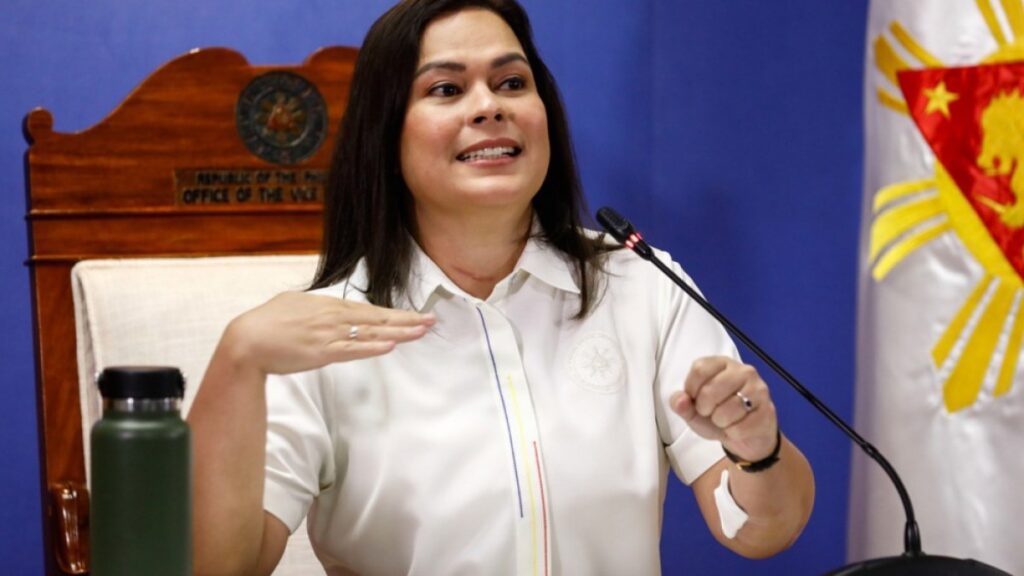
In a dramatic turn of events in Philippine politics, Vice President Sara Duterte has been impeached for the second time by the Congress. This unprecedented move comes amid a complex political struggle involving allies of Duterte who have staged a coup to wrest control of the Philippine Senate.
The impeachment of Sara Duterte marks a significant moment in the country’s political landscape. The impeachment process, which is typically a rare and serious procedure, has now been initiated against the vice president twice, reflecting deep divisions and tensions within the government.
The backdrop to these events includes a power struggle where Duterte’s allies successfully orchestrated a takeover of the Senate. This maneuver has led to questions regarding the stability of the government and the balance of power within the legislative branch.
The Senate, a critical institution in Philippine governance, has seen its leadership challenged and restructured as a result of these political maneuvers. The coup has effectively shifted the dynamics of power, complicating the vice president’s position and the overall political environment.
The impeachment trial, currently in question due to the Senate coup, will be a focal point for political observers and citizens alike. It raises concerns about legislative independence, the rule of law, and the impact of political factionalism on governance.
Sara Duterte, who is the daughter of former President Rodrigo Duterte, has been a prominent figure in Philippine politics. Her role as vice president has been closely watched, and these developments cast uncertainty over her political future and the administration’s stability.
This second impeachment follows a prior attempt that highlighted the contentious nature of Duterte’s vice presidency. Repeated impeachment attempts signal ongoing political strife and a highly polarized environment.
Legal experts and political analysts are closely monitoring the situation, noting that the Senate’s control following the coup complicates the impeachment process. Questions about the fairness and legitimacy of the trial have been raised, with some critics warning of potential abuses of process.
Public reaction has been mixed, with some supporting the impeachment as a necessary step for accountability, while others view it as politically motivated and destabilizing.
The international community is also keeping an eye on the Philippines, given the country’s strategic importance and the implications of its internal political crises on regional stability.
As the impeachment trial proceeds, the Philippines faces a critical test of its democratic institutions. The lawmakers’ ability to navigate the political tension and uphold democratic principles will be instrumental in shaping the country’s future.
In sum, the impeachment of Vice President Sara Duterte for the second time amidst a Senate coup highlights the volatile and dynamic nature of Philippine politics. It underscores the challenges faced by the nation in maintaining political stability and democratic governance in a time of internal conflict.