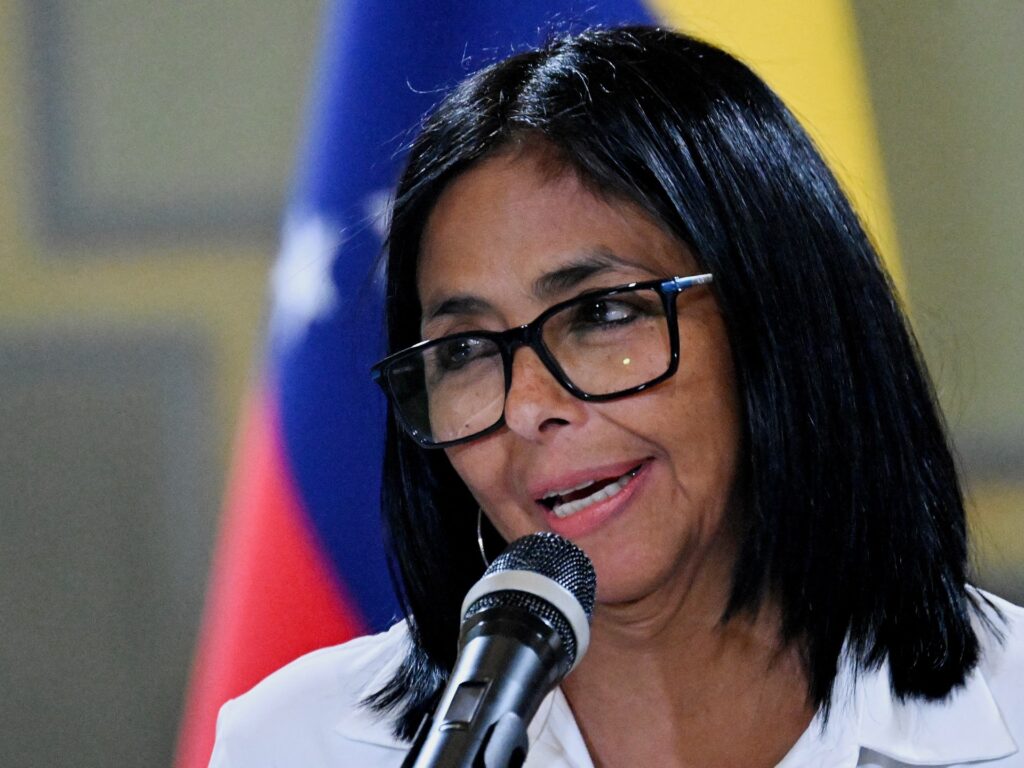
Delcy Rodriguez, the prominent Venezuelan official, is set to make a significant international trip to The Hague to attend a crucial case at the International Court of Justice (ICJ) concerning a longstanding land dispute between Venezuela and Guyana. This trip marks Rodriguez’s first time leaving the Caribbean region since the controversial incident involving the alleged abduction orchestrated by Venezuela’s President Nicolás Maduro.
The dispute centers on territorial claims over a rich and contested area between the two countries, a conflict that has persisted for decades. Rodriguez, who plays a vital role in Venezuela’s government, is expected to actively participate in the hearings of the ICJ, advocating for Venezuela’s position in the dispute.
The case draws international attention due to the economic and geopolitical implications tied to the contested land, which is believed to hold significant natural resources including minerals and possibly oil reserves. The ICJ’s handling of this dispute could set a precedent for resolving similar territorial conflicts worldwide.
Rodriguez’s journey to The Hague is laden with political symbolism, especially coming after a period during which her movements appeared restricted following accusations linked to the Maduro regime’s handling of dissenters and political opponents. Her presence at the court underscores Venezuela’s intent to engage through judicial means at an international level, seeking a peaceful resolution to the conflict.
Observers and analysts note that the case could also impact regional relations within South America as nations watch closely how the ICJ addresses the competing claims. The court’s decision will likely shape diplomatic negotiations and the geopolitical landscape for years to come.
The ICJ case proceedings are expected to be detailed and thorough, with both nations presenting historical documents, treaties, and evidence to substantiate their claims. The international legal community eagerly anticipates the outcome, hoping it reinforces the rule of law in international relations.
For Venezuela, the case represents both a diplomatic challenge and an opportunity to assert sovereignty over its territory while navigating complex political dynamics at home and abroad. Delcy Rodriguez’s role in the proceedings is pivotal, positioning her as a central figure in one of the most critical legal battles facing the Venezuelan government today.