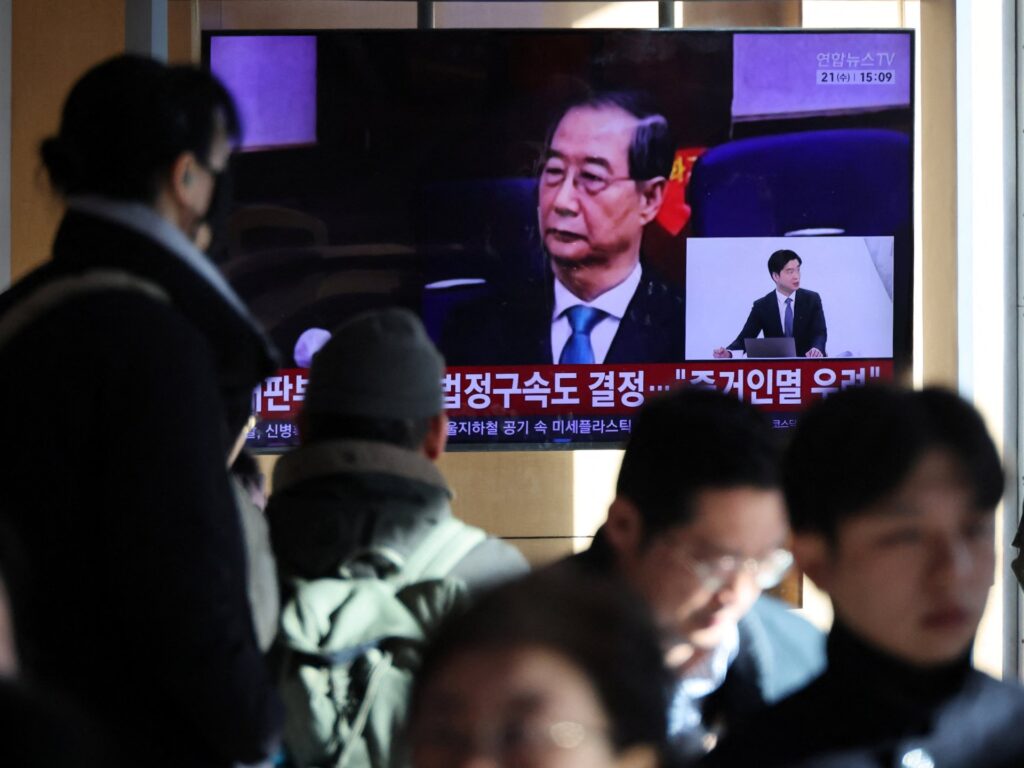
In a significant judicial development, a Seoul appeals court has decided to reduce the prison sentence of Han Duck-soo, a prominent figure implicated in a martial law case. Originally sentenced to 23 years, Han Duck-soo’s term has been cut to 15 years upon appeal.
This case stems from allegations linked to Han’s involvement in the imposition of martial law in South Korea, a period marked by political and civil unrest. The appeals court reviewed the details and evidence of the case and concluded that a reduced sentence was more appropriate given the circumstances and considerations presented.
Han Duck-soo, a former high-ranking official, had been a central figure in the original trial, which drew widespread attention due to the historical and political implications surrounding martial law enforcement in the country. His sentence, initially considered severe, reflected the gravity of the accusations and the broader context of state authority misuse during a troubled era.
The reduction in Han’s sentence may reflect judicial acknowledgment of mitigating factors or new legal interpretations that emerged during the appeal process. It underscores the court’s role in balancing justice with fairness, especially in cases with deep historical significance and public interest.
Legal experts suggest that the reduction could set a precedent for similar cases involving former officials linked to controversial government actions. It also highlights the evolving nature of legal scrutiny on past political decisions and the accountability of public servants under the law.
The decision has sparked varied reactions across South Korea. Supporters of Han Duck-soo view the sentence reduction as a fair adjustment, possibly considering his past contributions and the context of his actions. Critics, however, argue that any reduction may undermine the seriousness of the violations committed during the martial law period and could affect public trust in the judicial process.
Human rights organizations and political analysts continue to monitor the implications of this ruling, noting its potential impact on ongoing debates about governance, rule of law, and historical reconciliation in South Korea.
Han Duck-soo’s legal team has expressed relief and an anticipation of eventual release following the sentence adjustment. Meanwhile, discussions around further legal avenues and possible changes in detention conditions are expected as the case progresses.
This ruling serves as a reminder of the country’s complex history with martial law and the continuing efforts by the legal system to address past injustices while navigating contemporary judicial standards.
As the case continues to unfold, it will likely remain a focal point in South Korea’s ongoing dialogue about democracy, justice, and the role of the judiciary in interpreting historical events and their consequences.