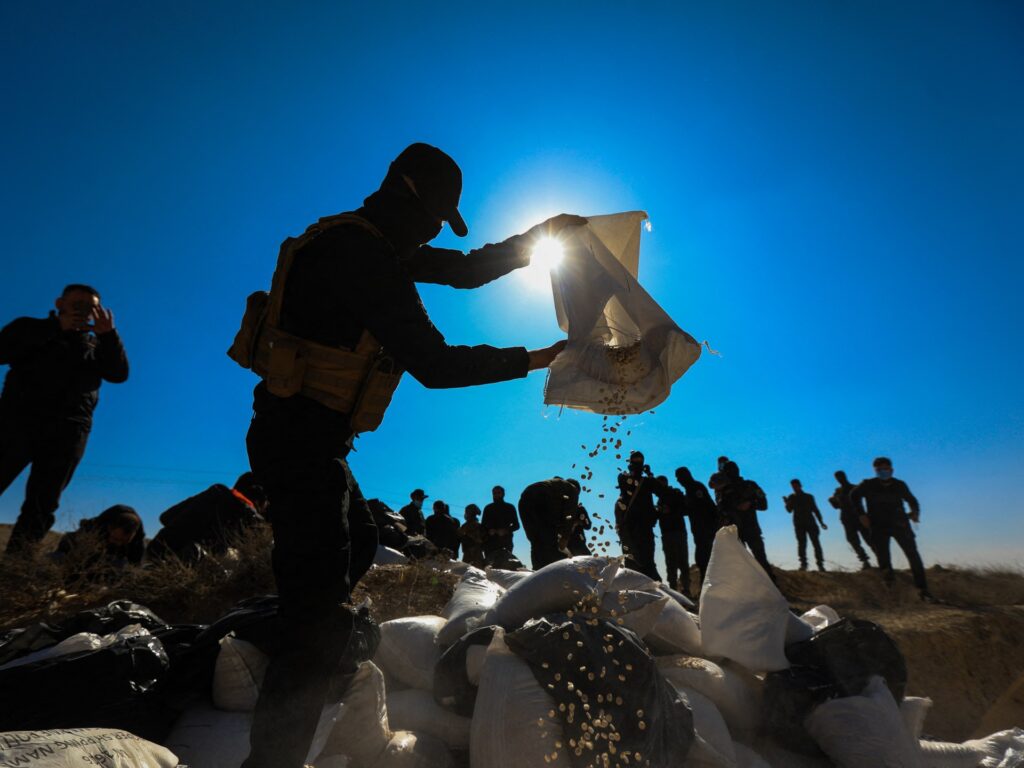
Suwayda, a province in southern Syria, has increasingly become a significant hub for the production and trafficking of Captagon, the illicit amphetamine widely consumed and trafficked across the Middle East and beyond. This development marks a troubling expansion in the captive drug trade, intensifying regional security concerns and sparking military reactions, including strikes by neighboring Jordan.
Captagon, a synthetic drug combining amphetamine and caffeine, has risen in prominence not just for its high demand but also for its lucrative market, generating billions of dollars in revenue for criminal networks and militant groups operating in Syria. Suwayda’s geographical location and the weakening control of central authorities amid the ongoing Syrian conflict have enabled organized groups to exploit the region effectively.
Jordan, which shares a border with southern Syria, has reported a sharp increase in drug-smuggling attempts emanating from Suwayda. The Jordanian government has launched a series of military strikes targeting production facilities and smuggling routes in an attempt to curb the drug flow and assert regional stability.
The implications of Suwayda’s emergence as a Captagon hub are complex and multifaceted. Economically, the trade injects vast sums of illicit funds into the local economy but also fuels corruption and undermines legitimate business activities. Politically, it challenges the authority of the Syrian government and accentuates the role of non-state actors who benefit from and perpetuate the drug trade.
Regionally, the situation exacerbates tensions among neighboring countries, particularly between Jordan and Syria, and raises concerns about the broadening reach of criminal networks. The Captagon trade is now not only a health crisis impacting youth consumption but also a significant security threat due to its financing of extremist groups, including those linked to Hezbollah and other militant organizations.
International observers warn that the proliferation of Captagon production in Suwayda could destabilize nearby regions and increase the flow of narcotics beyond the Middle East, into Europe and Africa. Efforts to combat this challenge require robust cooperation among regional powers, enhanced border security, intelligence sharing, and effective law enforcement initiatives.
The emergence of Suwayda as a Captagon hub illustrates the dark intersection of war, poverty, and illicit economies in Syria. As the Syrian conflict continues, addressing these criminal enterprises will be critical for any meaningful progress toward stability and peace in the region.
In conclusion, the rise of Suwayda in the Captagon trade epitomizes the complexity and severity of drug trafficking in conflict zones. It highlights the urgent need for coordinated international response to dismantle these networks and mitigate the devastating impacts on regional security, governance, and societal health.