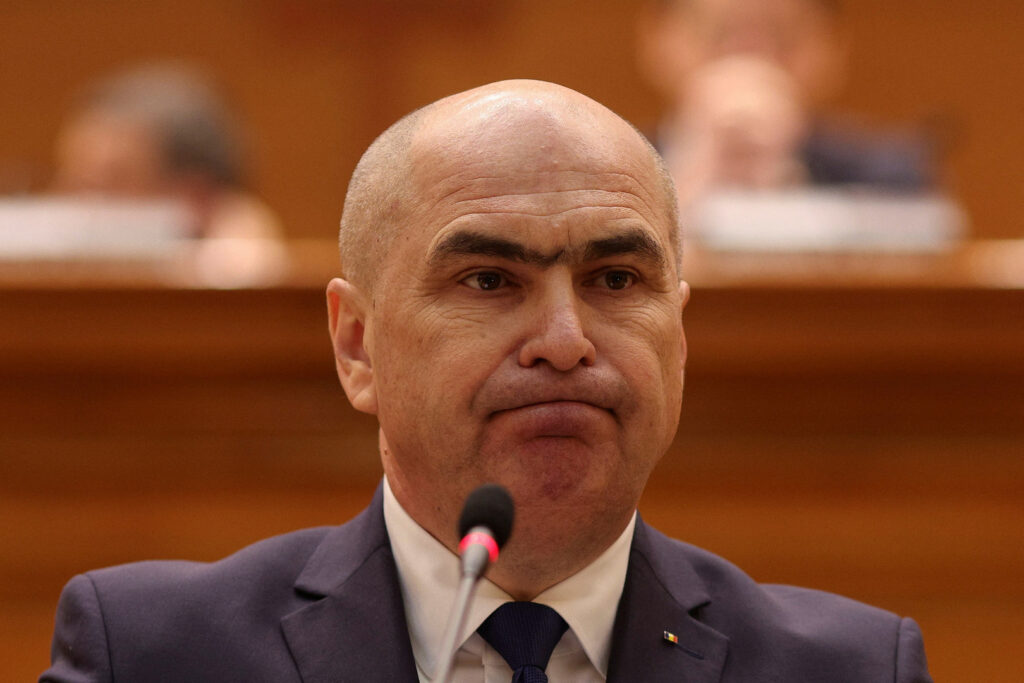
Ousted Romanian PM Ilie Bolojan delivers a speech before a vote of no confidence, in Bucharest, Romania, May 5, 2026. Inquam Photos/Octav Ganea via REUTERS ATTENTION EDITORS - THIS IMAGE WAS PROVIDED BY A THIRD PARTY. ROMANIA OUT. NO COMMERCIAL OR EDITORIAL SALES IN ROMANIA
Romania’s pro-European Union government, led by Prime Minister Ilie Bolojan, has been ousted following a decisive vote of no confidence in Parliament. This event marks a significant political shift in the country, as the coalition advocating closer ties with the EU loses its mandate to govern.
The government, formed on a pro-EU platform, faced mounting challenges while trying to navigate internal political disputes and external pressures related to EU policies and reforms. The coalition, which had been in power for some time, struggled to maintain unity among its member parties amid increasing public dissent and political opposition.
Prime Minister Bolojan’s administration prioritized European integration, aiming to harmonize Romania’s laws and economic policies with those of the EU. This approach garnered support from the EU and many segments of Romanian society but also sparked controversy among nationalist factions and opposition parties, who viewed some reforms as concessions that might undermine national sovereignty.
The no-confidence motion, tabled by opposition forces, succeeded after a series of critical defections within the coalition and intensified parliamentary debates. Lawmakers cited dissatisfaction with government performance, delays in implementing promised reforms, and concerns about transparency and accountability.
The fall of the government raises questions about Romania’s political stability and its future relationship with the European Union. Analysts predict a period of uncertainty, with new elections or a reformation of government coalitions likely on the horizon. Stakeholders within the EU express cautious concern about the potential impact on ongoing cooperation and funding agreements.
Following the vote, political leaders began discussions to form a new government capable of commanding parliamentary confidence. The president of Romania is expected to play a crucial role in this process, potentially appointing an interim administration until new elections can be organized.
The situation reflects broader challenges faced by EU member states balancing national interests with European integration goals. Romania’s experience underscores the complexities of domestic politics in shaping the continent’s unity and progress.
Observers will be closely monitoring developments in Romania as the country navigates this critical juncture. The outcome will likely influence domestic policy directions, Romania’s EU engagement, and its position within regional and international frameworks.