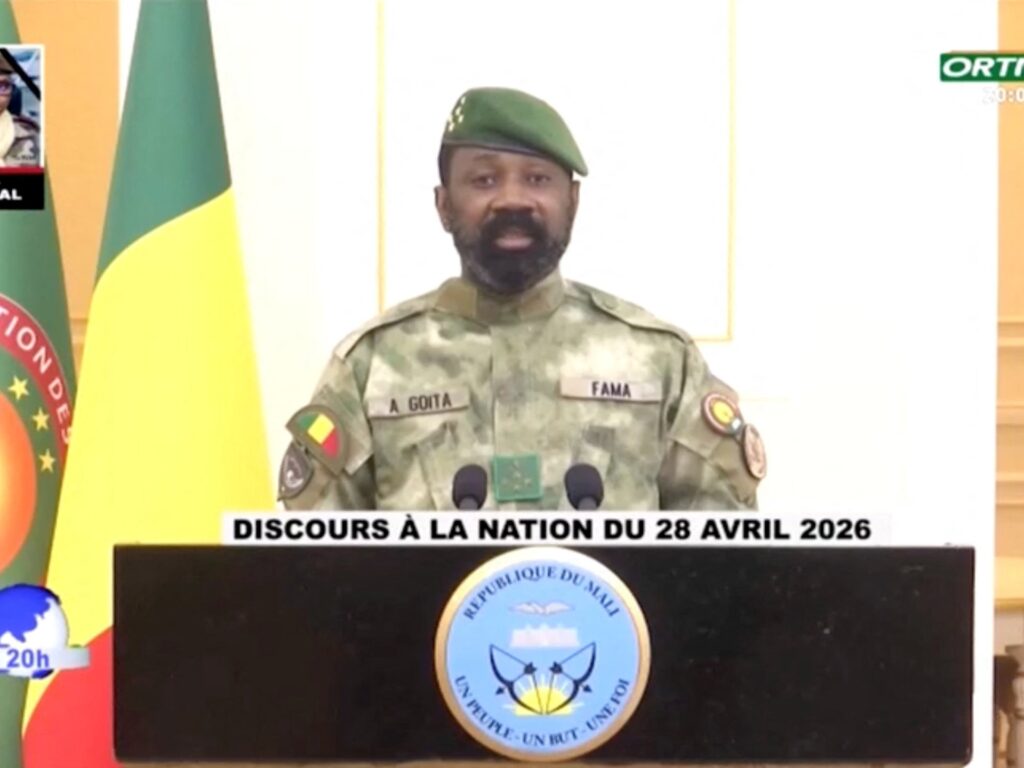
In a significant development in Mali’s political and military landscape, the country’s military leader, Goita, has taken over the defense ministry following the assassination of the sitting defense minister. This move comes after deadly attacks believed to be orchestrated by al-Qaeda affiliates and Tuareg separatist groups, highlighting the continuing instability and complex security challenges faced by Mali.
The late defense minister was killed during a series of attacks that have intensified tensions in the region. These attacks underscore the persistent threat posed by extremist groups and the ongoing struggle between the central government and various insurgent factions, including Tuareg separatists who seek autonomy.
Goita, who has previously held significant sway in Mali’s military and political circles, has decisively promoted himself to the critical defense post, signaling an attempt to consolidate control and respond robustly to security threats. This appointment is seen as a strategic effort to strengthen military leadership amid ongoing violence and insecurity.
Mali has been grappling with a fragile security situation for years, with intermittent outbreaks of violence disrupting governance and development efforts. The northern and central regions have been particularly affected by insurgent activities, causing displacement and humanitarian crises.
The self-promotion of Goita to the defense ministry has elicited mixed reactions domestically and internationally. Supporters argue that strong leadership is essential for restoring stability and combating terrorism, while critics warn of potential power consolidation that could undermine democratic processes.
Internationally, Mali’s situation remains a concern, with various countries and organizations advocating for coordinated responses to address terrorism and support the nation’s political stability. The recent killing of the defense minister and Goita’s assumption of the role spotlight the urgency of these efforts.
Analysts suggest that Goita’s move may be driven by the need to centralize command during this turbulent period to effectively manage military operations against insurgent groups. His leadership will be critical in navigating the complex dynamics involving al-Qaeda-linked entities and Tuareg separatists.
The path ahead for Mali remains challenging, with the government needing to balance military actions with political dialogue and development initiatives to achieve lasting peace. The international community’s engagement and support will be vital in assisting Mali to overcome its security and governance challenges.
In summary, the assassination of Mali’s defense minister by hostile groups has precipitated a rapid reshuffling of military leadership. Goita’s assumption of the defense role marks a pivotal moment in Mali’s ongoing conflict and efforts to restore order, with significant implications for the country’s future stability and security.