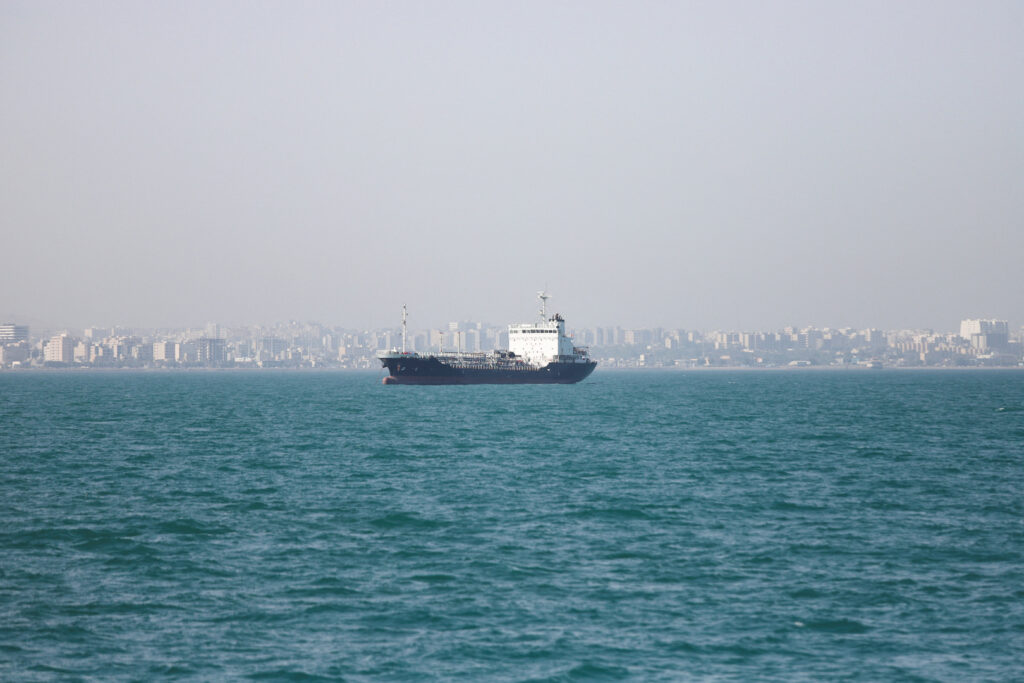
A vessel in the Strait of Hormuz near Bandar Abbas, Iran, May 4, 2026. Amirhosein Khorgooi/ISNA/WANA (West Asia News Agency) via REUTERS ATTENTION EDITORS - THIS PICTURE WAS PROVIDED BY A THIRD PARTY
The strategic Strait of Hormuz has once again become a flashpoint of international tension as Iran and the United States dispute an alleged confrontation involving a US warship. Iran’s navy claims that it forced the American vessel to turn back, an assertion that Washington has categorically denied.
The Strait of Hormuz, a narrow passageway connecting the Persian Gulf to the Gulf of Oman and the Arabian Sea, is a critical chokepoint through which a significant portion of the world’s petroleum passes. Given its strategic importance, the narrow waterway has frequently been the center of military and diplomatic contention.
According to Iranian military sources, an incident occurred recently when a US warship approached Iranian waters in the Strait. The Iranian navy reportedly engaged in maneuvers to compel the US vessel to alter its course away from the area. They described the action as a defensive measure to protect their maritime boundaries and sovereignty.
On the other hand, the United States Navy has refuted these claims. Officials from Washington stated that no such incident took place and that their ship navigated international waters without impediment. The US emphasizes the importance of freedom of navigation in global maritime routes and has accused Iran of attempting to escalate regional tensions through misinformation.
This incident comes amid a backdrop of longstanding hostility and mistrust between the two nations, dating back to the Iranian Revolution and the subsequent severance of diplomatic relations. Over the years, encounters in the Strait of Hormuz have sometimes escalated into more serious conflicts, raising fears of potential military confrontations.
International observers have expressed concern regarding the repeated tensions in the Strait, urging both countries to exercise restraint and engage in dialogue to prevent any unintended escalation. Shipping companies and global energy markets remain alert, recognizing that instability in the Strait can have far-reaching consequences on oil prices and supply chains.
Experts suggest that the current standoff could be indicative of broader geopolitical struggles in the Persian Gulf region, including Iran’s assertion of its territorial rights and the US’s commitment to its strategic interests and allies in the Middle East.
The US administration is expected to continue monitoring the situation closely, with potential diplomatic and military responses under consideration if the area continues to be a locus of conflict. Meanwhile, Iran’s leadership has maintained a firm stance on defending its territorial integrity.
As the situation develops, the international community watches closely, hoping for a peaceful resolution that safeguards both the sovereignty of nations and the stability of one of the world’s most vital maritime corridors. The Strait of Hormuz remains a delicate balance point where diplomacy and military prowess intersect, underscoring the importance of careful navigation in more ways than one.