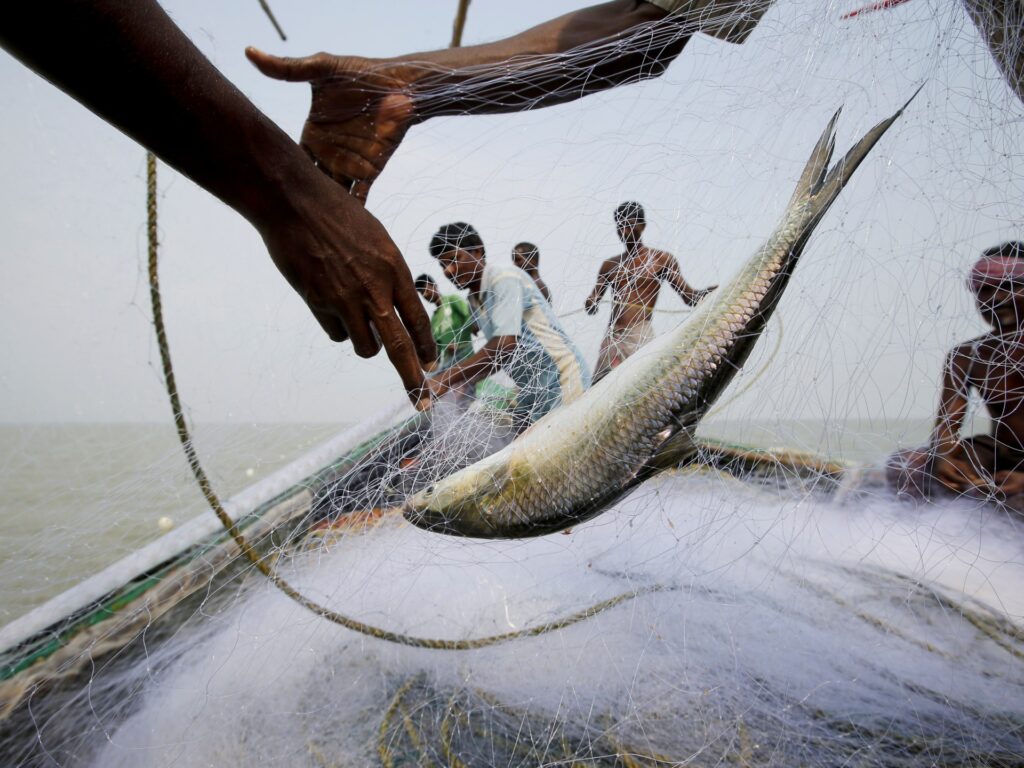
In the fiercely contested elections in West Bengal, India, political strategies have taken an unusual turn with Prime Minister Narendra Modi’s party representatives campaigning with literal fish in hand. This novel approach aims to connect with voters on a more personal and cultural level, especially appealing to the state’s significant fishing community.
West Bengal, known for its rich riverine and coastal culture, has a substantial population dependent on fishing for their livelihood. Recognizing this, the BJP (Bharatiya Janata Party) has tried to leverage the socio-economic identity of fishermen to broaden its voter base.
Campaigning with fish is symbolic and practical. Fish symbolize prosperity, sustenance, and cultural identity in Bengal. Holding fish during rallies and street campaigns serves as a unique visual tool to resonate with local voters who identify strongly with the fishing profession.
This tactic comes amidst intense political rivalry. West Bengal has traditionally been a stronghold of the Trinamool Congress (TMC), led by Chief Minister Mamata Banerjee. The BJP’s efforts to penetrate this base have included community-specific outreach programs, with fishermen being a key demographic due to their numbers and socio-political influence.
The strategy reflects a broader trend in Indian elections where parties focus on micro-targeting specific voter groups by connecting with their cultural and economic realities. It exemplifies an attempt to move beyond generic political promises to tangible engagement with everyday issues affecting communities.
However, the effectiveness of such a campaign remains to be seen. Critics argue that symbolic gestures like holding fish may not translate into actual votes without addressing broader developmental concerns such as infrastructure, income security, and social welfare.
Local fishermen and voters have mixed reactions. Some appreciate the attention to their community and feel valued, while others are skeptical, seeing it more as a photo opportunity than a commitment to their problems.
As election day approaches, both the BJP and TMC are intensifying their campaigns, with the BJP emphasizing inclusivity and economic development tailored to all sectors, including fishermen. The TMC, meanwhile, continues to capitalize on its longstanding grassroots connections and social welfare schemes.
This fish-centered campaign strategy underlines the increasing importance of culturally sensitive political marketing in India’s diverse electoral landscape. Whether it can truly hook voters or will simply be a fleeting image remains a pivotal question in West Bengal’s political contest.
Ultimately, the elections will reveal if fishing for votes with fish in hand is a stroke of genius or a gimmick. But it certainly highlights the innovative and eclectic nature of India’s democracy, where every voter group is approached in uniquely resonant ways to secure political allegiance.