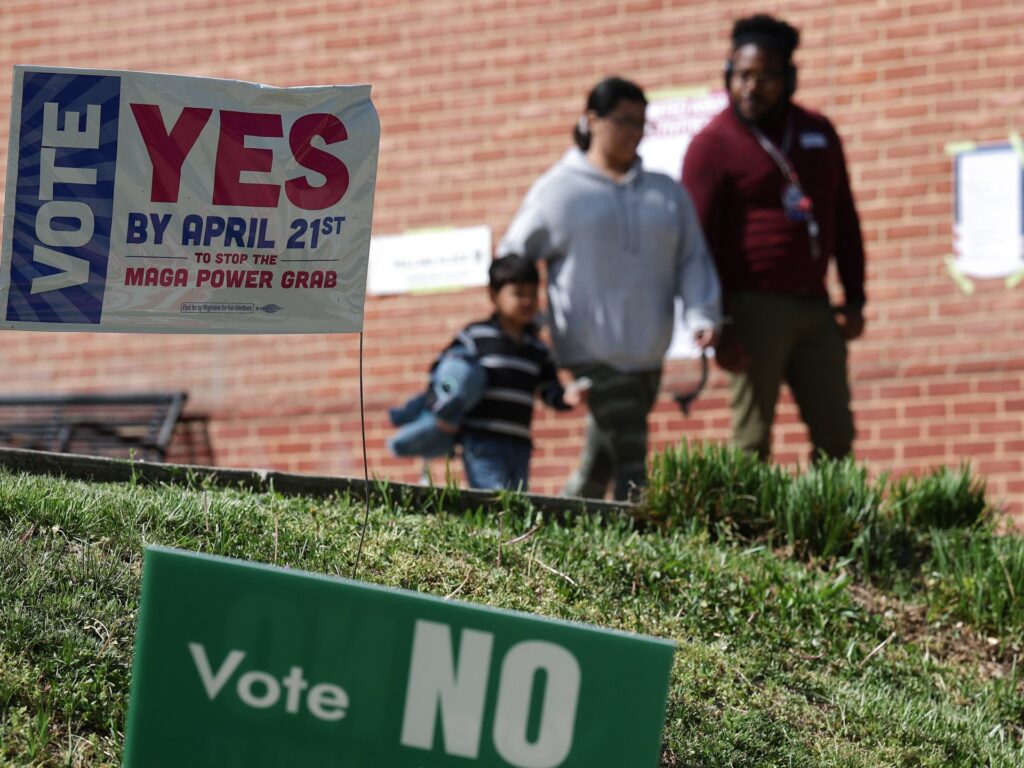
In the latest electoral developments in Virginia, the Democratic Party has made significant gains, reflecting shifting political dynamics in the state. However, experts warn that these advancements may come at a cost to overall democratic fairness due to an ongoing and intense battle over congressional redistricting.
The process of redistricting, which involves redrawing the boundaries of congressional districts, has become increasingly contentious. Both major parties, Democrats and Republicans, have engaged in a tit-for-tat war characterized by legal challenges and strategic map drawing, each aiming to maximize their electoral advantages. This unprecedented flurry of activity is raising alarms about a potential surge in gerrymandering — the manipulation of district boundaries to favor one party over another.
Virginia exemplifies this complex tension. After Democrats made notable advances in recent elections, Republicans have contested district maps and pushed for redraws that could even the playing field. Conversely, Democrats have also sought to reshape districts to consolidate their newfound strength. Legal battles and political fights over these maps have delayed final decisions, creating uncertainty for voters and candidates alike.
Experts caution that this redistricting war is not isolated to Virginia. Across the United States, similar disputes are unfolding as control of state legislatures alternates between parties. These power struggles lead to aggressive gerrymandering efforts, often disadvantaging voters by diluting electoral competitiveness and undermining representative democracy.
The impact on voters could be profound. Gerrymandered districts may result in less responsive representatives, reduced policy innovation, and a polarization of political discourse. Citizens may find their votes carry less weight, leading to decreased political engagement and trust in public institutions.
In addition to political ramifications, the legal landscape surrounding redistricting is becoming increasingly complex. Courts are frequently called upon to adjudicate disputes, but rulings vary widely and often provide only temporary resolutions. The absence of clear, consistent standards for fair redistricting exacerbates the problem.
Some advocate for reforms to address these challenges, including independent redistricting commissions designed to remove partisan bias from the process. Such commissions have been implemented in a few states with mixed success, but their broader adoption could help restore public confidence.
Meanwhile, Virginia’s experience serves as a microcosm for national debates about the integrity of electoral systems. The state’s political shifts remind us of democracy’s vibrancy, but the redistricting conflicts highlight vulnerabilities that need urgent attention.
As the country prepares for upcoming elections, stakeholders must grapple with the consequences of redistricting battles. Ensuring fair representation, protecting voter rights, and maintaining competitive political environments are essential for a healthy democracy.
In summary, while Democrats have gained ground in Virginia, the escalating war over congressional redistricting poses serious risks. Without intervention, the surge in gerrymandering could undermine the very foundations of voter representation and electoral fairness across the United States.