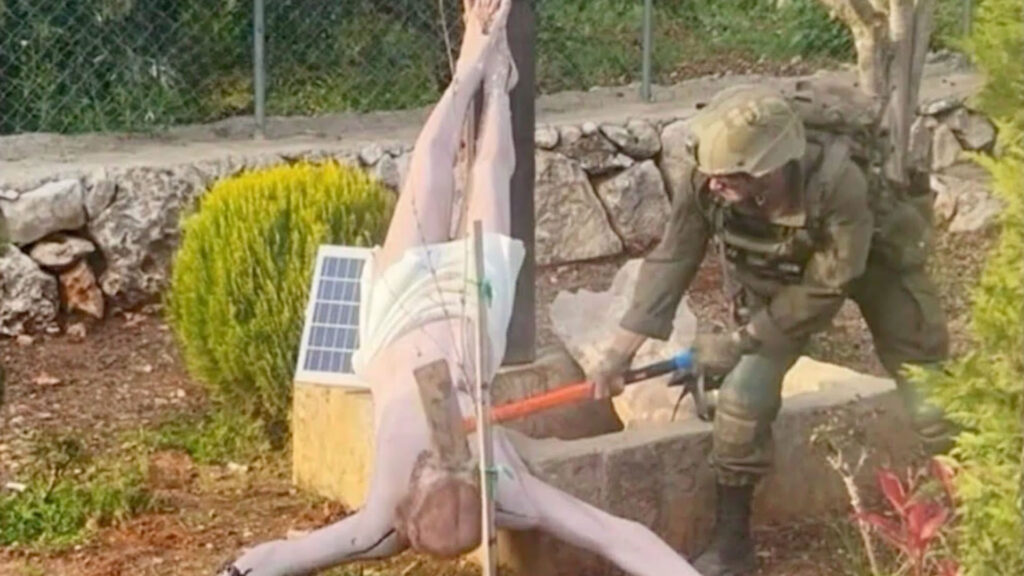
The incident of an Israeli soldier smashing a statue of Jesus Christ in Lebanon has ignited widespread outrage globally, stirring deep emotional and political tensions. The act, captured in a photograph, has quickly spread across social media and news outlets, provoking condemnation from various communities, religious groups, and international observers.
The statue, located in a predominantly Christian area of Lebanon, was targeted amidst already strained relations between Israel and Lebanon. The image of the soldier’s actions has become a potent symbol of disrespect and desecration, sparking protests and calls for accountability.
Lebanese authorities condemned the incident, emphasizing the need to protect religious symbols that hold significant cultural and spiritual value. Religious leaders from Christian denominations in Lebanon have expressed profound sorrow and called for calm, urging communities to channel their grief into peaceful dialogue.
International human rights organizations have also weighed in, decrying the act as a violation of religious freedom and an aggravation in an already volatile region. Some groups are demanding thorough investigations and repercussions for those involved.
The Israeli military issued a statement acknowledging the incident, promising to conduct an internal inquiry while stressing that such behavior does not reflect the values of the institution. They reiterated their commitment to respecting religious sites and symbols, though critics remain skeptical about the sincerity and effectiveness of such assurances.
Social media users around the world have expressed anger and disappointment, with many calling for diplomatic and social measures to prevent similar occurrences in the future. The incident has become a flashpoint in the broader Israeli-Lebanese conflict, highlighting the deep-seated animosities and sensitivities surrounding religious and cultural heritage.
In Lebanon, community leaders are mobilizing to rebuild the damaged statue, and initiatives are underway to foster greater interfaith understanding to mitigate future incidents. The episode serves as a sobering reminder of how acts perceived as disrespectful can inflame existing conflicts and deepen divisions.
The global community watches closely as tensions continue to rise, urging restraint and encouraging dialogue between conflicting parties. The hope remains that through mutual respect and recognition of shared humanity, peace and reconciliation may eventually prevail despite the current turmoil.
This episode underscores the fragile nature of peace in regions marked by historical conflicts and the powerful role that symbols play in identity and cultural memory. It is a call to all to uphold respect for religious and cultural monuments as a cornerstone of coexistence and mutual respect.