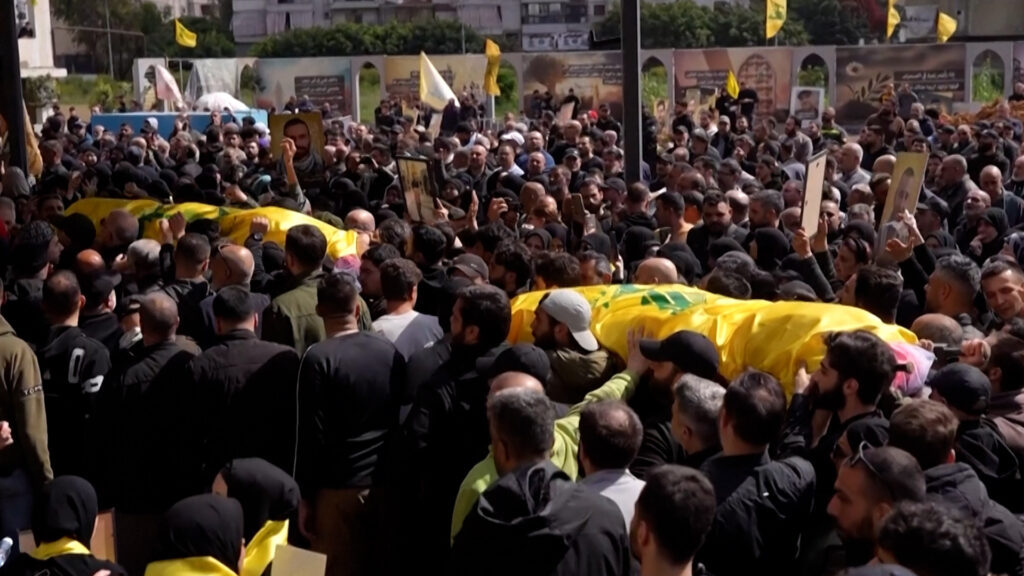
Across Lebanon, communities are coming together to mourn the victims of recent conflicts with Israel as a 10-day ceasefire provides a temporary respite from hostilities. These funerals, held in various parts of Lebanon, reflect the nation’s collective grief and the profound impact of the war on its population.
The ceasefire has allowed families the time and space to mourn their loved ones in a traditional manner, which was not possible during active fighting. Mosques, community centers, and local cemeteries have become focal points for these somber events, where hundreds gather to pay their respects.
The conflict with Israel has resulted in significant casualties, leaving many families devastated. The funerals serve not only as a moment of mourning but also as a poignant reminder of the human cost of the conflict. In neighborhoods heavily affected by the war, the atmosphere is marked by sorrow and solidarity.
Religious leaders and community figures have played a crucial role during this period, offering prayers and support to the bereaved. Their presence underscores the importance of unity and resilience in the face of adversity.
The ceasefire has also brought a brief moment of peace, allowing for essential humanitarian aid to reach affected areas and for the initial steps of rebuilding to commence. However, the underlying tensions and the potential for renewed violence remain a concern for many.
Lebanon’s political and social landscape continues to be shaped by these events, with calls for lasting peace growing louder. The funerals, while deeply personal, are also a collective expression of hope for a future free from conflict.
As the ceasefire progresses, the country stands at a crossroads—balancing mourning with the aspiration for reconciliation and stability. The resilience demonstrated by the Lebanese people during these funerals highlights their enduring spirit amid ongoing challenges.
In summary, the funerals held across Lebanon during the 10-day ceasefire are a powerful testament to the nation’s grief, unity, and hope for peace. They encapsulate the profound effects of the conflict and the collective desire to move forward towards a more stable and peaceful future.