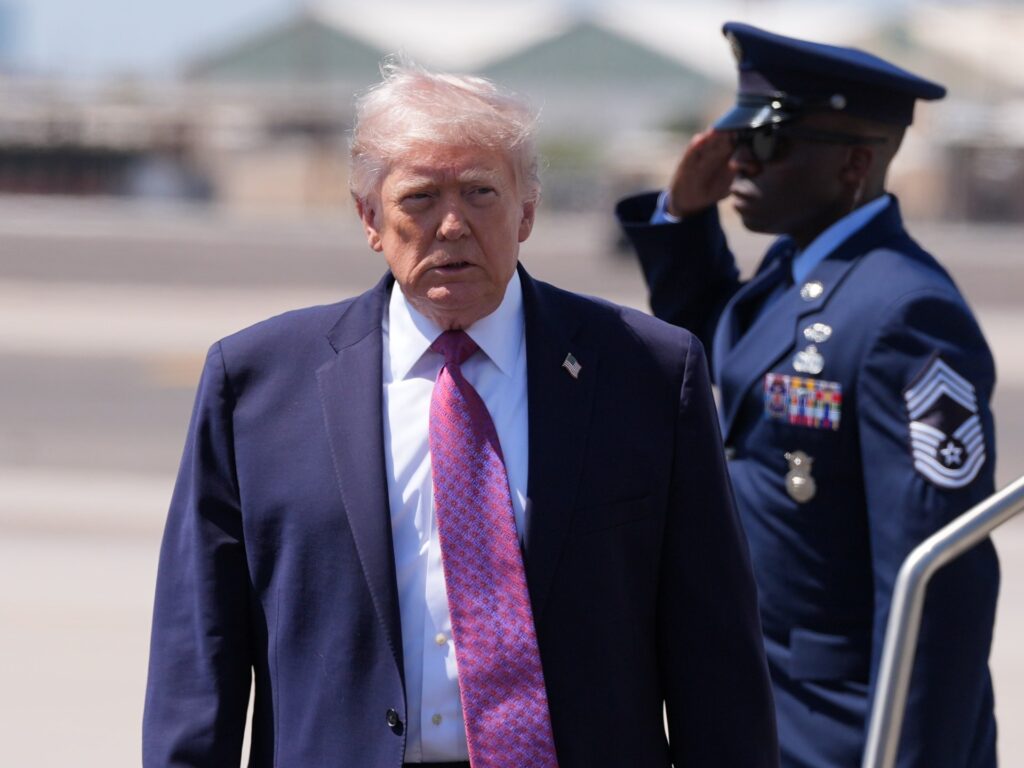
Former President Donald Trump is actively seeking a resolution to his ongoing $10 billion lawsuit against the Internal Revenue Service (IRS), a move that has sparked significant concern among critics and legal observers. The lawsuit, which centers around allegations of unfair treatment and procedural violations by the IRS, has been a high-profile legal battle highlighting tensions between Trump and federal tax authorities.
The lawsuit’s substantial financial stakes—$10 billion—reflect the magnitude of the dispute, possibly related to audits, alleged discrepancies in tax assessments, or perceived overreach by federal tax authorities. Trump’s pursuit of a resolution indicates a potential turning point in the long-running legal struggle, but it has raised eyebrows due to the possible implications of how such a settlement might be negotiated and finalized.
Critics are cautioning that if Trump were to negotiate a settlement through the U.S. Justice Department while exerting influence over that very department, it could pose serious conflicts of interest and undermine the integrity of the justice system. This scenario, they warn, risks enabling Trump to shape the terms of his settlement under potentially favorable conditions, rather than undergoing an impartial legal resolution.
The Justice Department traditionally plays a critical role in defending federal agencies like the IRS in legal battles. If Trump, who has been a highly polarizing figure in U.S. politics, were to control or heavily influence this department during the lawsuit, there are fears that the outcome could be skewed.
Legal experts emphasize the importance of transparency and the need for clear ethical boundaries to prevent any abuse of power in such high-stakes cases. They argue that a fair resolution must be conducted independently, with no undue influence from the parties involved.
The broader implications extend beyond just one lawsuit. Observers point out that handling the case in a way that appears biased or self-serving could erode public trust in the IRS, the Justice Department, and the rule of law in general.
Trump’s quest for a resolution to this lawsuit underscores his ongoing contentious relationship with federal institutions. The situation remains fluid, with many anticipating developments that will clarify whether the dispute will end through negotiation or proceed further into the courts.
This case highlights the delicate balance between the powers of government officials and the institutions tasked with upholding legal and ethical standards. The outcome could set precedents for how similar conflicts are managed in the future, particularly when former or current government officials are involved.
As the story unfolds, all eyes remain on the intersection of legal strategy, political influence, and the pursuit of justice in one of America’s most consequential legal confrontations.