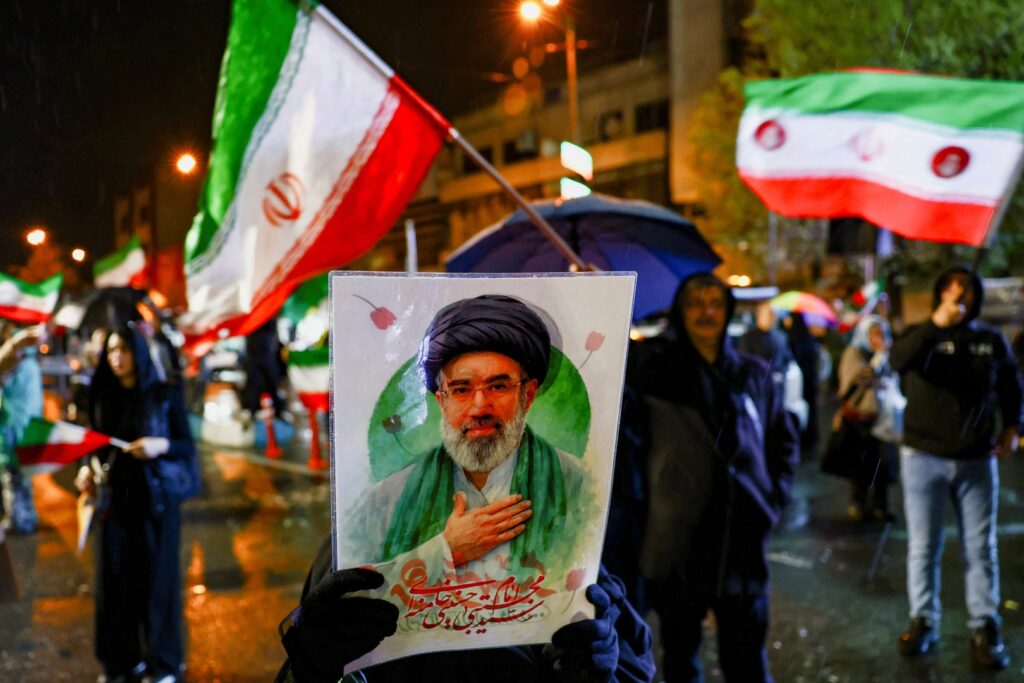
FILE PHOTO: A woman holds a poster depicting Iran’s new Supreme Leader Mojtaba Khamenei during an anti-U.S. and anti-Israeli rally, amid the U.S.-Israeli conflict with Iran, in Tehran, Iran, March 26, 2026. Majid Asgaripour/WANA (West Asia News Agency) via REUTERS ATTENTION EDITORS - THIS PICTURE WAS PROVIDED BY A THIRD PARTY/File Photo
Iran has firmly rejected the claims made by former U.S. President Donald Trump that it agreed to hand over its stockpile of enriched uranium. The issue revolves around Iran’s nuclear program and its enriched uranium reserves, which have been a key point of contention in international negotiations.
According to Trump’s statement, Iran was said to have consented to surrendering its uranium stockpiles as part of broader efforts to curb its nuclear ambitions. However, Iranian officials promptly dismissed this assertion, emphasizing that no such agreement has been reached.
This denial comes amid ongoing tensions between Iran and the United States over nuclear policies. The 2015 Joint Comprehensive Plan of Action (JCPOA), commonly known as the Iran nuclear deal, aimed to limit Iran’s nuclear capabilities in exchange for sanctions relief. Yet, the deal has been fraught with challenges, particularly after the U.S. withdrawal under Trump’s administration in 2018.
Iranian authorities maintain that their nuclear activities are within peaceful and regulatory boundaries and that any claims of unilateral surrender of nuclear materials are unfounded. Their refusal to comply with Trump’s claim highlights the complexities in diplomatic communications and the fragile state of nuclear negotiations.
International observers and various governments continue to monitor Iran’s nuclear developments closely. These developments influence geopolitical stability, nuclear proliferation concerns, and global security arrangements.
The conflicting narratives over Iran’s enriched uranium illustrate the broader struggle in reaching consensus on nuclear non-proliferation in the Middle East. While the Trump administration took a hardline stance, emphasizing maximum pressure on Iran, Tehran insists on its sovereign rights to nuclear technology for peaceful purposes.
This public dispute underscores the challenges in diplomatic dialogue and the importance of verification mechanisms imposed by international bodies such as the International Atomic Energy Agency (IAEA). The IAEA plays a critical role in ensuring transparency and compliance with nuclear agreements.
As talks and tensions persist, the international community remains cautious and engaged, seeking a framework that prevents nuclear escalation while respecting national sovereignties. In this context, Iran’s rejection of Trump’s claim signals the enduring complexities of the nuclear issue and the ongoing efforts needed to achieve diplomatic resolutions.