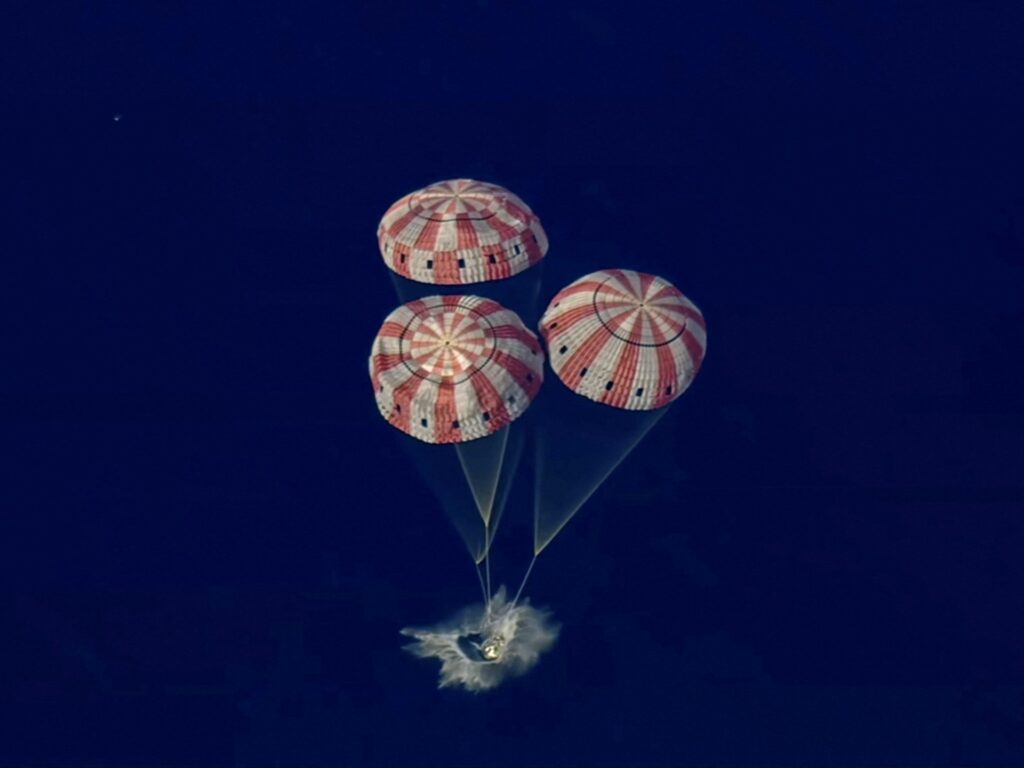
NASA’s Artemis II mission has successfully marked the first crewed voyage around the Moon in over 50 years, with astronauts safely splashing down back on Earth. This mission is a significant milestone in the Artemis program, which aims to return humans to the lunar surface and eventually establish a sustainable presence there.
The crew of Artemis II launched aboard the Orion spacecraft and completed a lunar flyby mission, testing vital systems that will be crucial for future deep-space exploration. This journey demonstrated the spacecraft’s capabilities in navigation, communication, and life support while operating around the Moon’s environment.
After circling the Moon, the astronauts re-entered Earth’s atmosphere and parachuted safely into the ocean, where recovery teams quickly secured them. The successful splashdown signals a new era for human space exploration, building on the legacy of the Apollo missions from the 1960s and 1970s.
Artemis II’s achievements validate the spacecraft’s design and crew systems for upcoming missions, including Artemis III, which aims to carry astronauts to the lunar surface—highlighting NASA’s commitment to inclusivity by planning to land the first woman and the next man on the Moon.
The mission also sets the stage for future objectives, such as the establishment of the Lunar Gateway, which will serve as an orbiting outpost to facilitate longer stays and deeper space missions. Artemis II’s journey has advanced not only space technology but also international collaboration and human scientific discovery.
In summary, with Artemis II’s successful splashdown, NASA has reinvigorated lunar exploration, inspiring a new generation of scientists, engineers, and explorers while paving the way for humanity’s next giant leap beyond Earth.