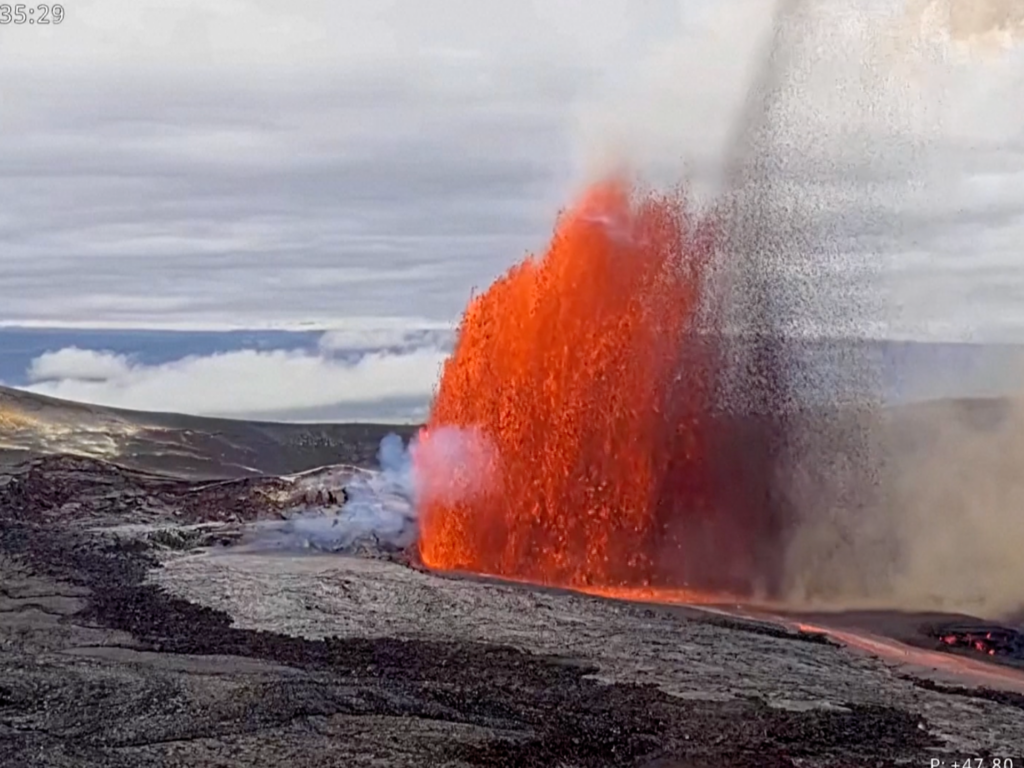
Hawaii’s Kīlauea, one of the most active volcanoes in the world, has erupted once again, captivating observers with spectacular displays of lava shooting high into the air. This eruption illuminated the night sky, creating a mesmerizing yet powerful scene visible from miles around.
The eruption began unexpectedly, with molten lava bursting sky-high from the volcano’s vent, creating a fiery spectacle against the darkness. Residents and tourists alike were drawn to witness the natural phenomenon, which showcases the immense forces at play beneath the Earth’s surface.
Kīlauea Volcano, located on the Big Island of Hawaii, has a long history of frequent eruptions, contributing to the island’s growth over millennia. These eruptions result from the movement of magma from deep within the Earth’s mantle, traveling through conduits to the surface.
Authorities have been monitoring Kīlauea closely, maintaining vigilance due to the potential risks eruptions pose to nearby communities. Evacuation plans and safety measures are in place to ensure the protection of residents and visitors.
The recent outburst did not come as a surprise to volcanologists, who had been observing increased seismic activity and ground deformation in the region. These indicators often precede eruptions, allowing scientists to forecast such events with reasonable accuracy.
The volcanic activity has brought both awe and concern. On one hand, it offers a rare glimpse into natural geological processes and contributes to scientific understanding. On the other, it raises safety concerns for those living near the volcano, as lava flows and ash clouds can disrupt daily life and pose hazards.
Local authorities have issued warnings regarding air quality due to volcanic smog, known as “vog,” which can affect respiratory health. Residents are advised to stay informed and heed safety advisories.
In addition to the spectacular lava fountains, the eruption has caused lava flows that may alter the landscape and impact local ecosystems. The slow-moving rivers of molten rock consume everything in their path, reshaping the environment at a dramatic pace.
Scientists continue to study the eruption closely, utilizing satellite imagery, seismic data, and aerial surveys to track changes in the volcano’s behavior. These efforts aim to improve predictive models and enhance preparedness for future eruptions.
Tourism in the area experiences mixed effects during such volcanic events. While some visitors are deterred due to safety concerns, others are drawn by the rare opportunity to see active lava flows, contributing to the local economy.
The Kīlauea eruption serves as a potent reminder of the Earth’s dynamic nature and the ongoing creation of new landmasses. Despite the challenges it presents, the event underscores the importance of respecting and understanding natural forces.
As Kīlauea continues to evolve and erupt, scientists and residents remain vigilant, balancing awe with caution. The volcano’s activity is a natural part of the island’s life and a testament to the powerful geological forces shaping our planet.